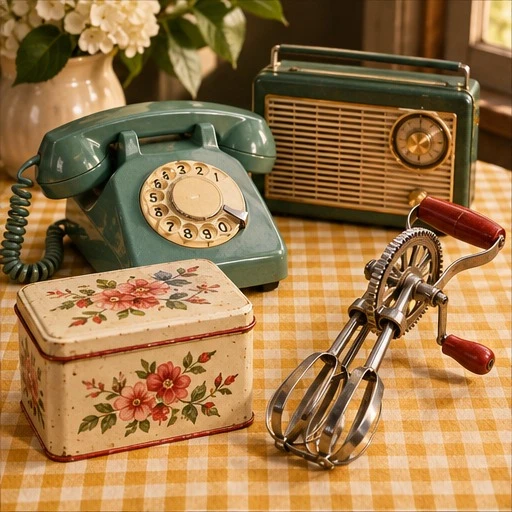
Can You Name These Everyday Objects From the Past?
10 questions. A few smiles. No ticking clock.
Take the quiz Dear Old Days
10 questions. A few smiles. No ticking clock.
Take the quiz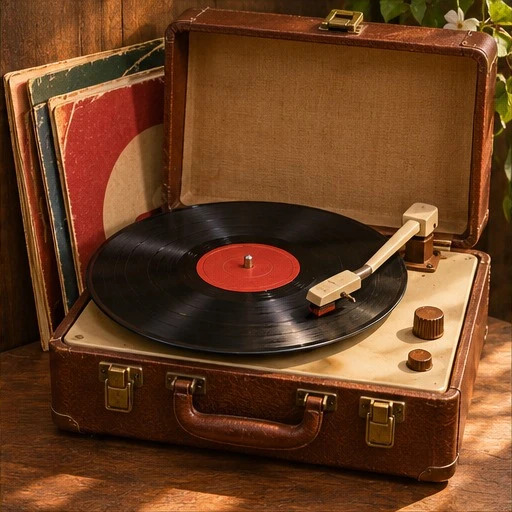
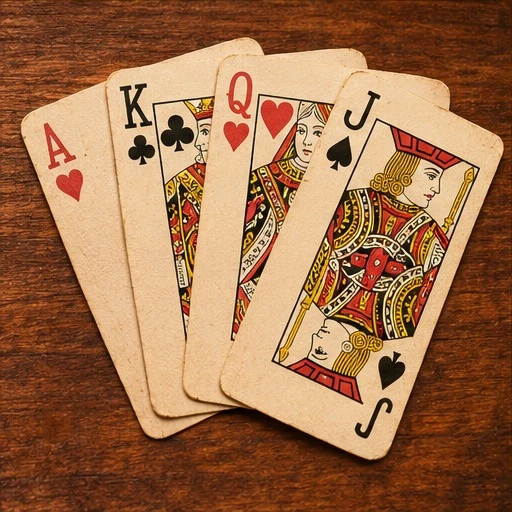
Card pairs that add to 13.
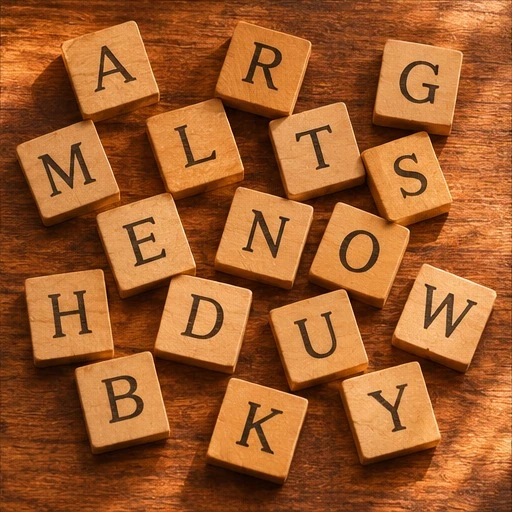
Familiar words, mixed up for a little fun.
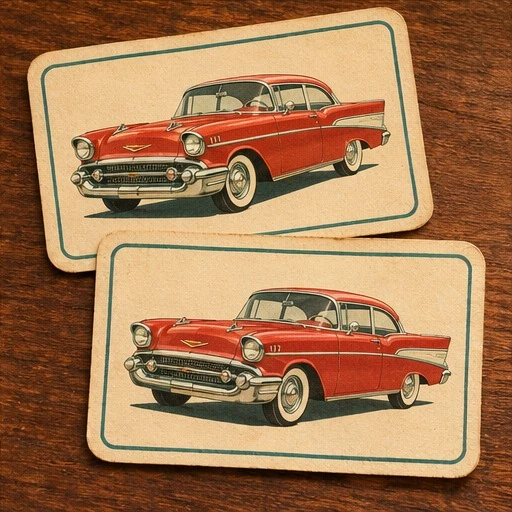
Find the pairs. Enjoy every little discovery.
The sleeve, the soft crackle, the song you played again. Remember listening with your whole attention?
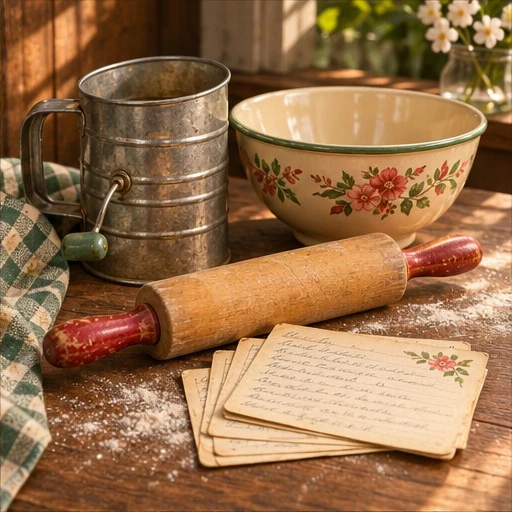
A recipe tin, a well-used apron, and a table where there was always room for one more.
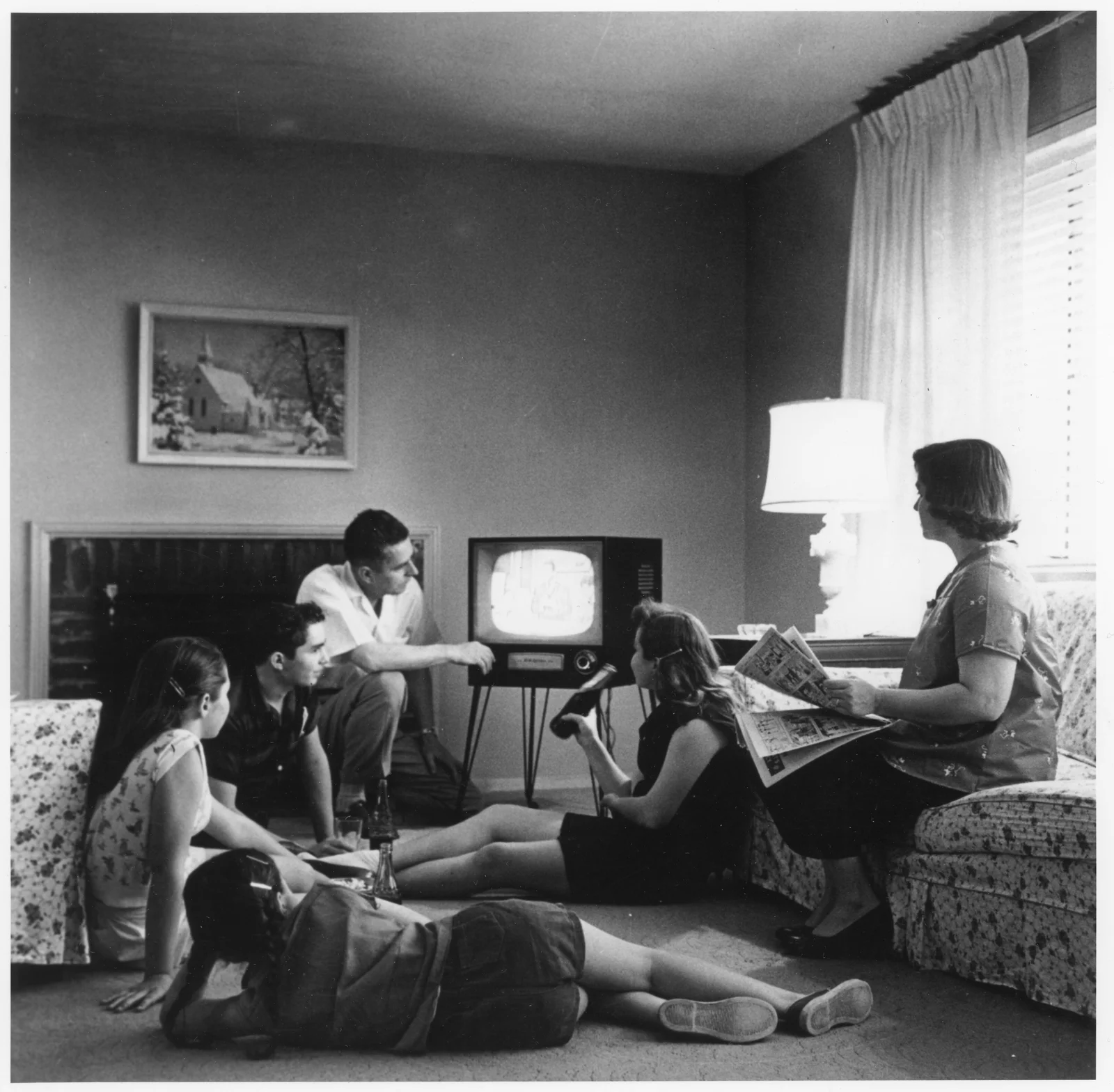
One television, a favorite seat, and a theme tune that brought everyone into the room.
A blank cassette, a favorite song, and the patience to make something personal.
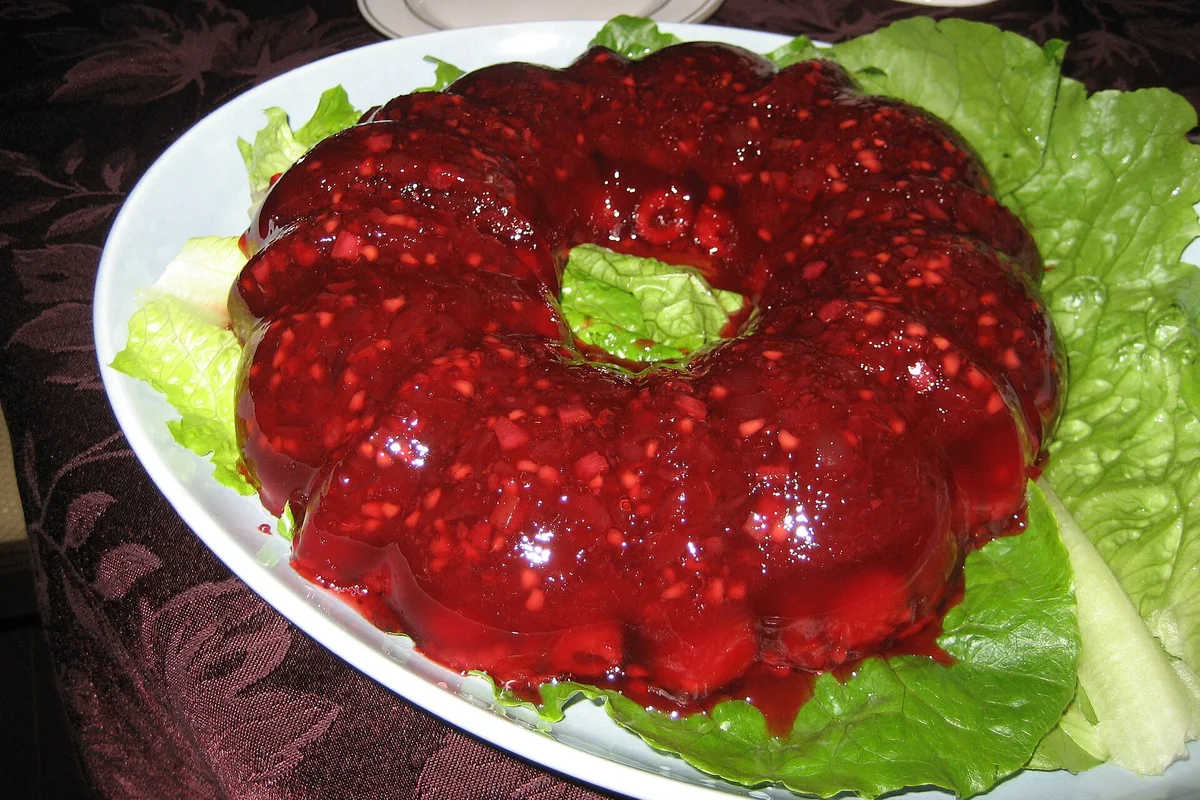
A wobbling mold, a little foil compartment, a cake turned upside down. Which of these dishes takes you straight back to your family's table?
לחצו על משחק להתחיל
הופכים קלפים ומוצאים זוגות.
מצאו את הסמל השונה.
חיבור וחיסור קלים.
מצאו מילות סתר.
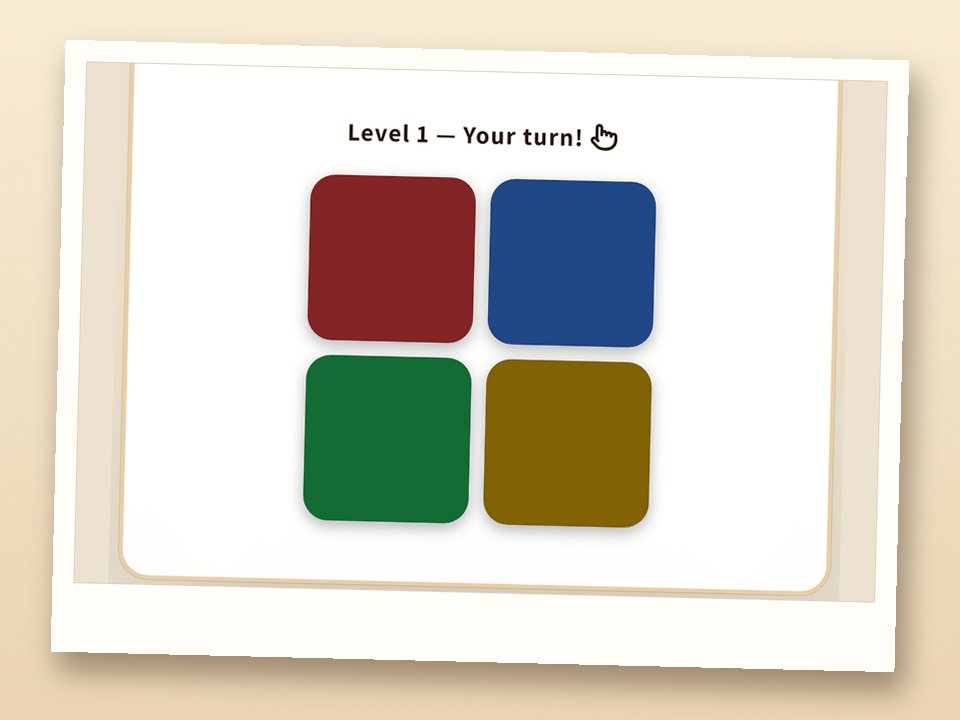
חיזרו על הרצף המואר.
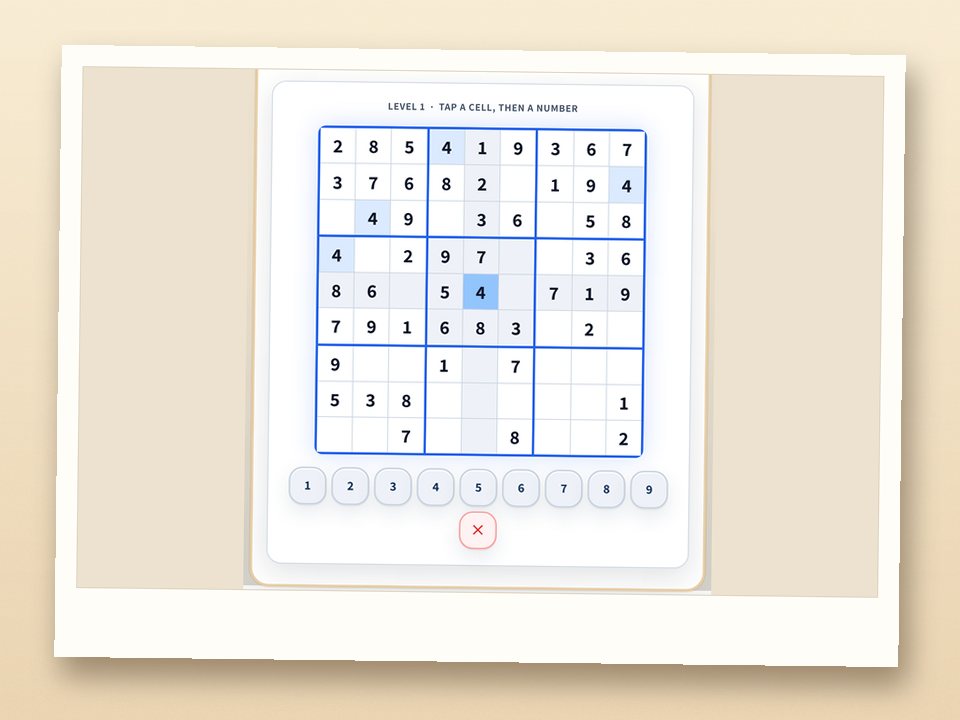
פאזל לוגי 4×4.
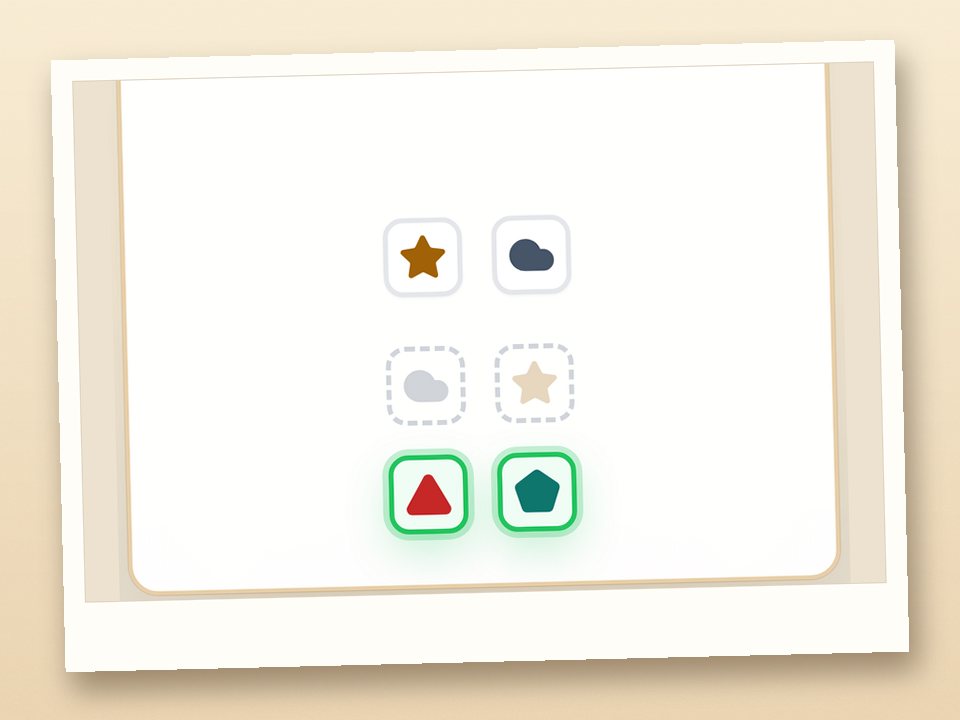
התאמת צורות למקומן.
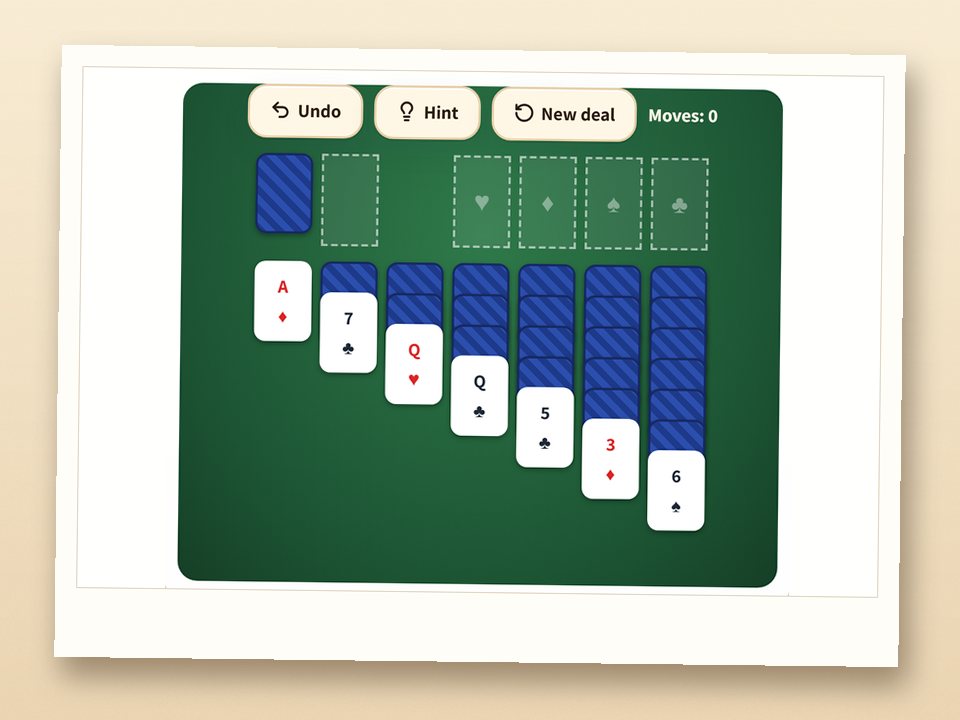
הקלונדייק האמיתי — בלי גרירה, רק לחיצות.
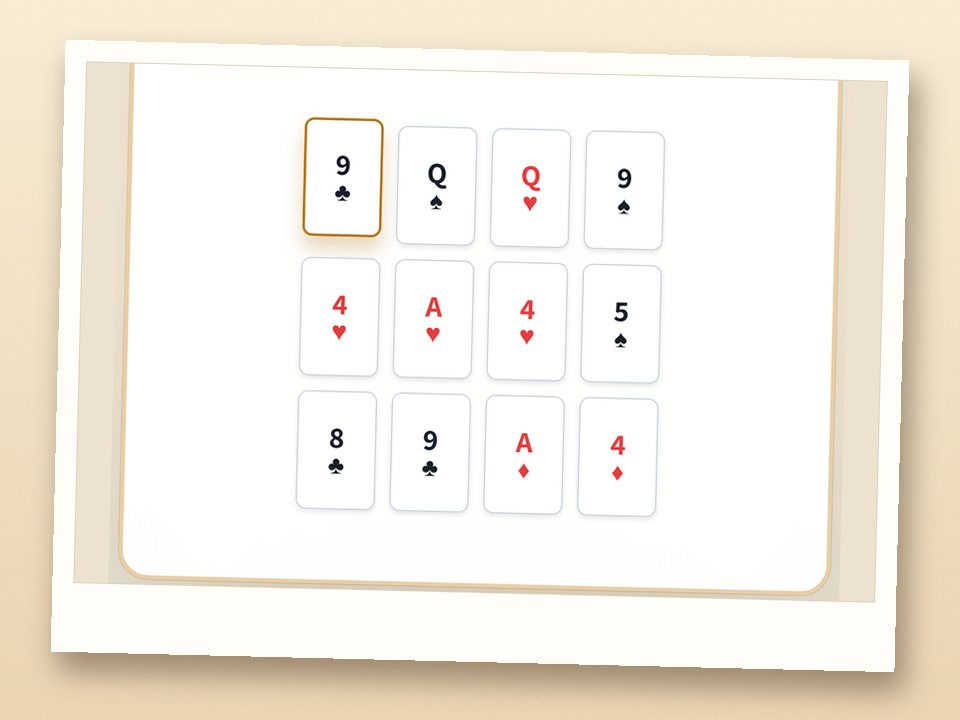
זוגות קלפים = 13.
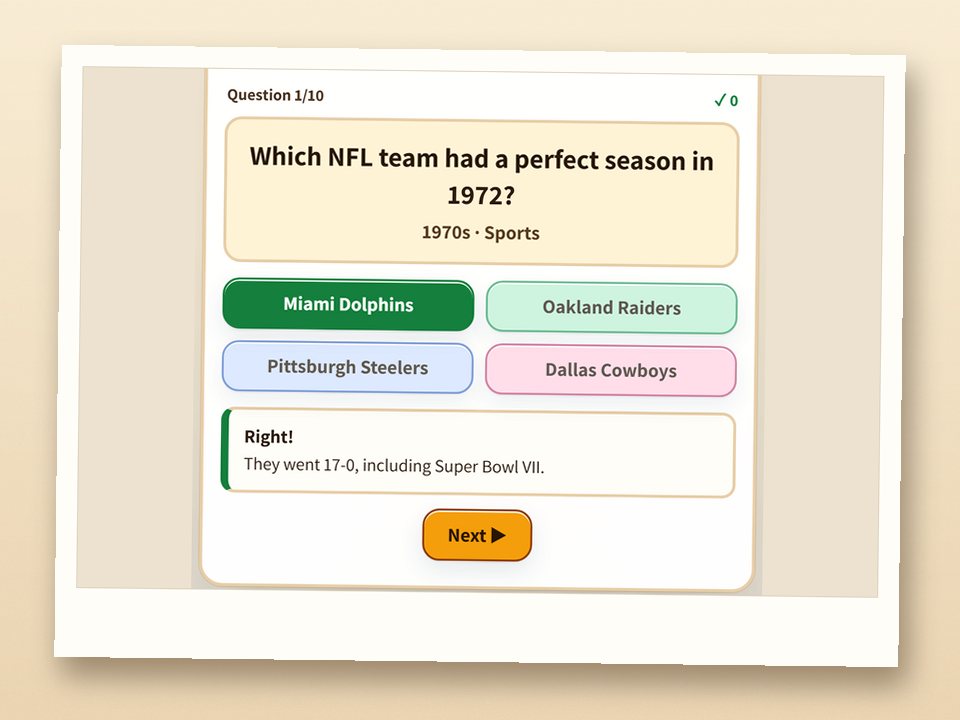
ידע כללי ושאלות מרתקות.
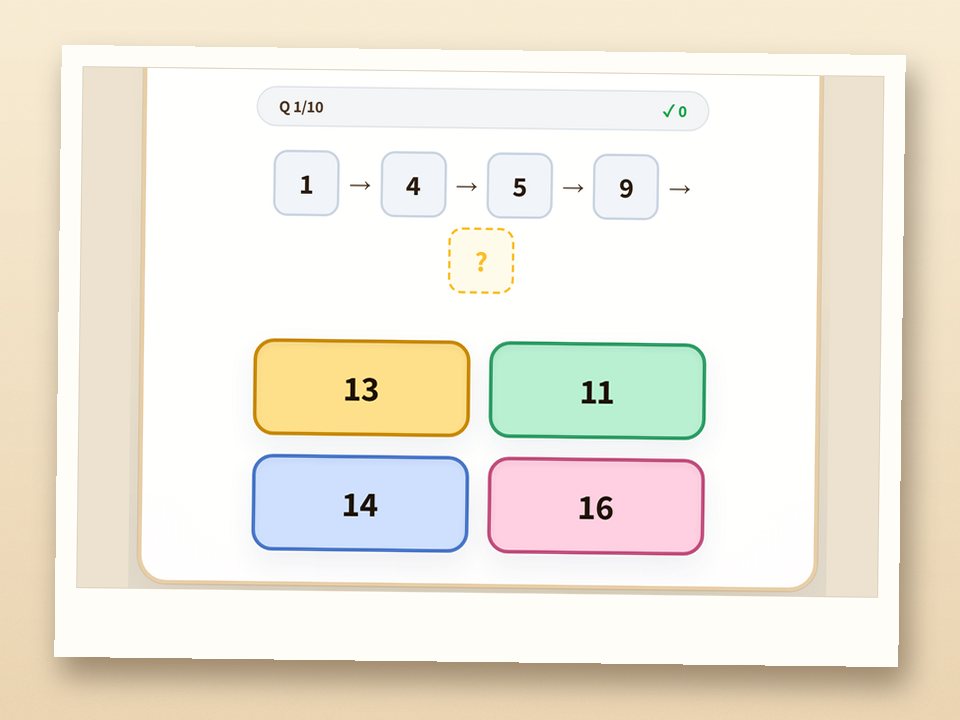
מצאו את המספר הבא ברצף. מחדד חשיבה לוגית.
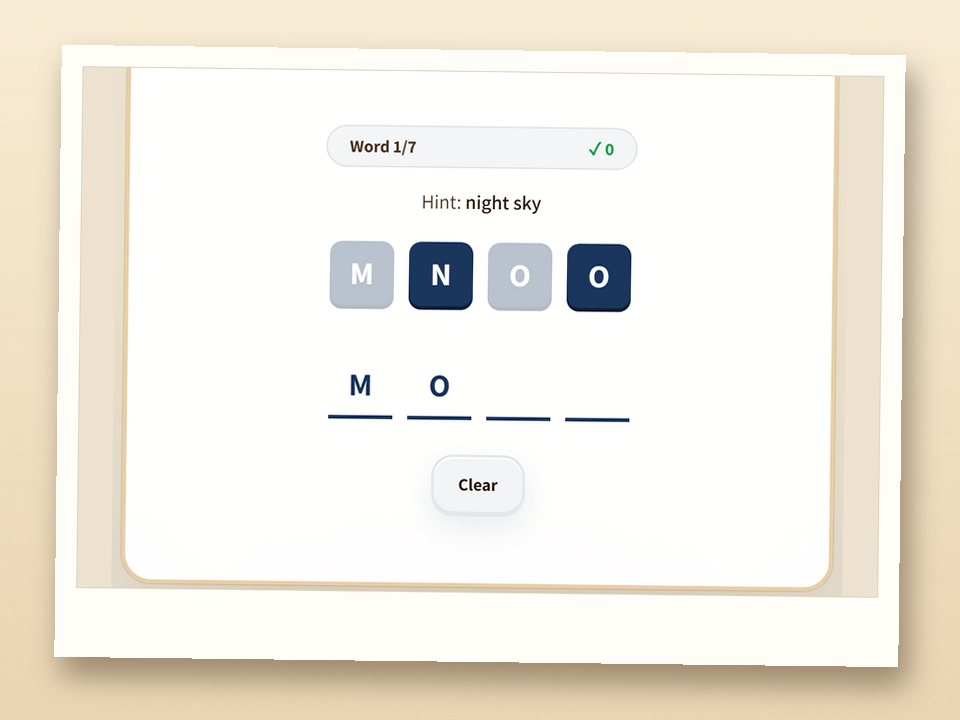
סדרו את האותיות לכדי מילה.
חברו כל מילה להפכה.
האמת או שקר? בחנו את הידע הכללי.
זהו את המדינה לפי הדגל.
מצאו את הסוף הנכון של הפתגם.
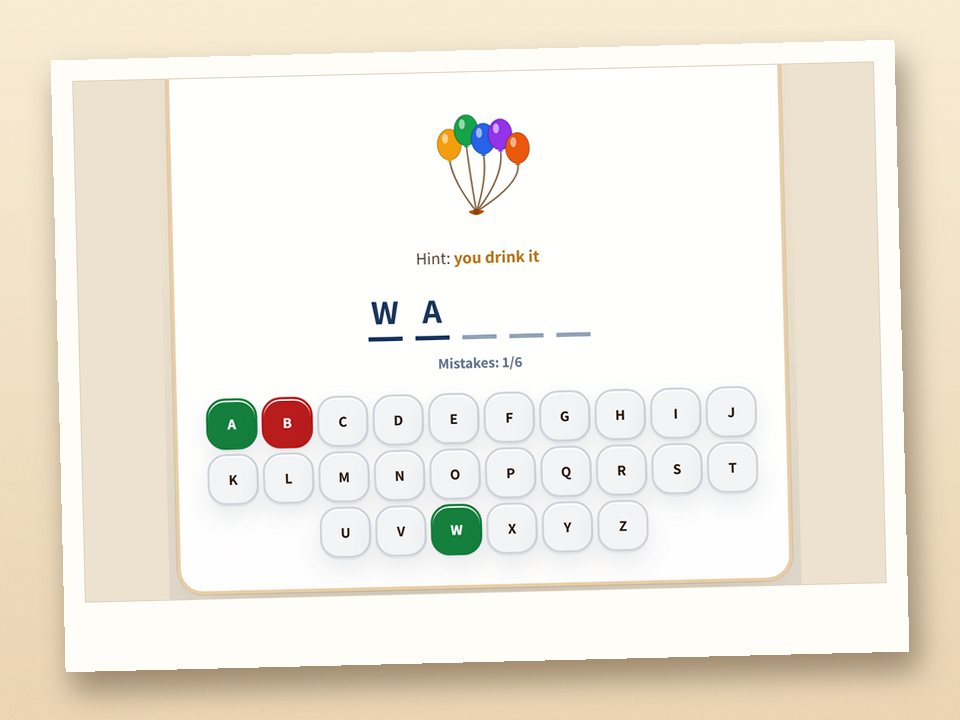
נחשו את המילה לפני שיגמרו הניסיונות.
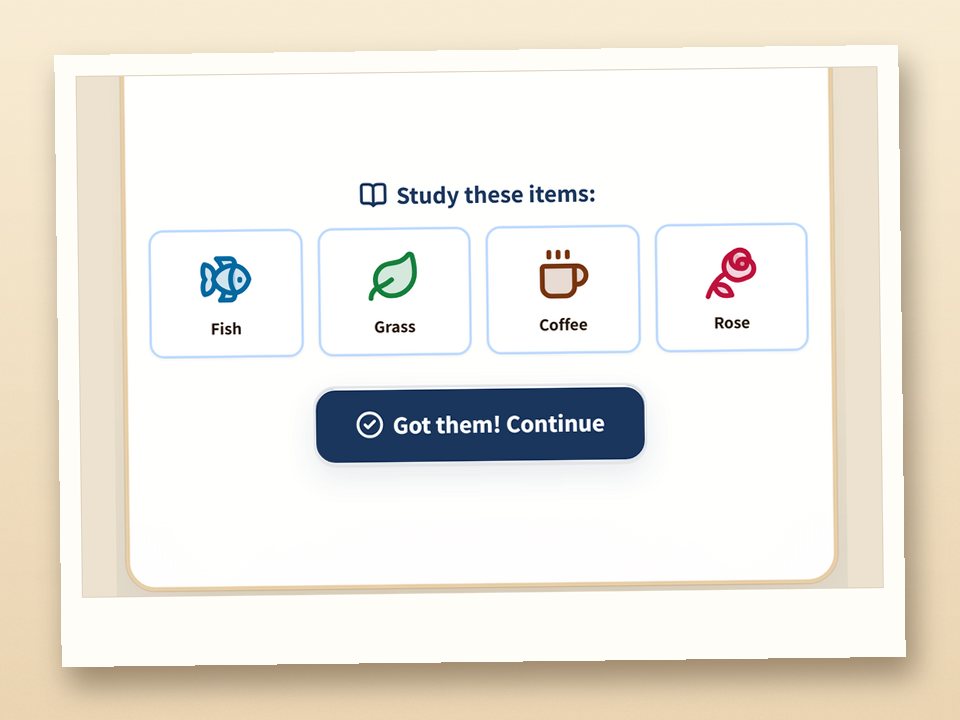
זכרו אילו פריטים ראיתם.
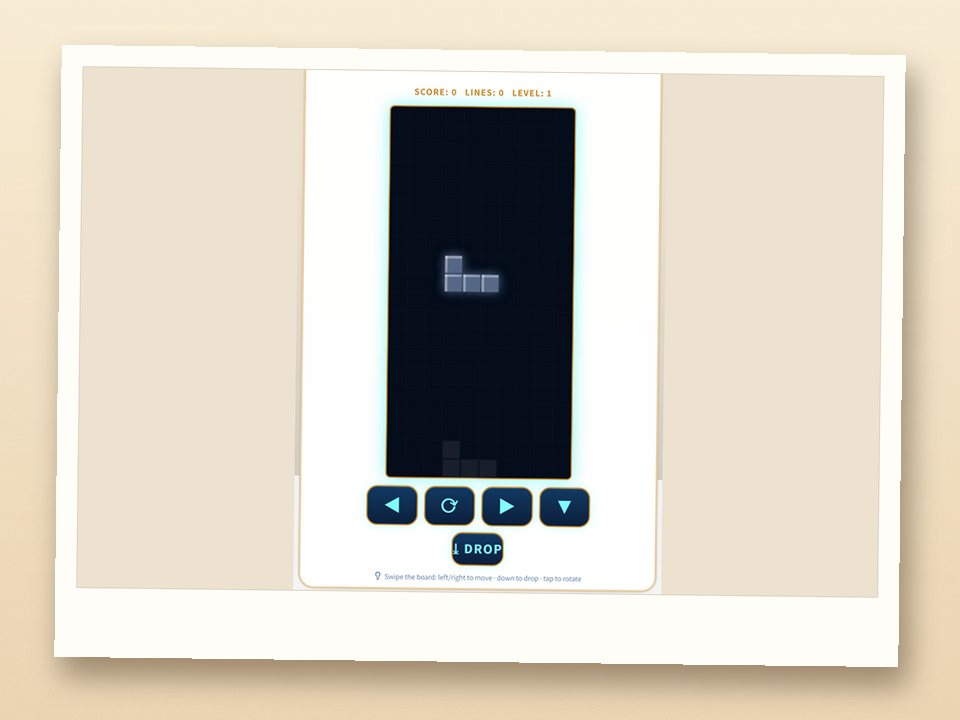
הרכיבו שורות שלמות עם הצורות הנופלות.
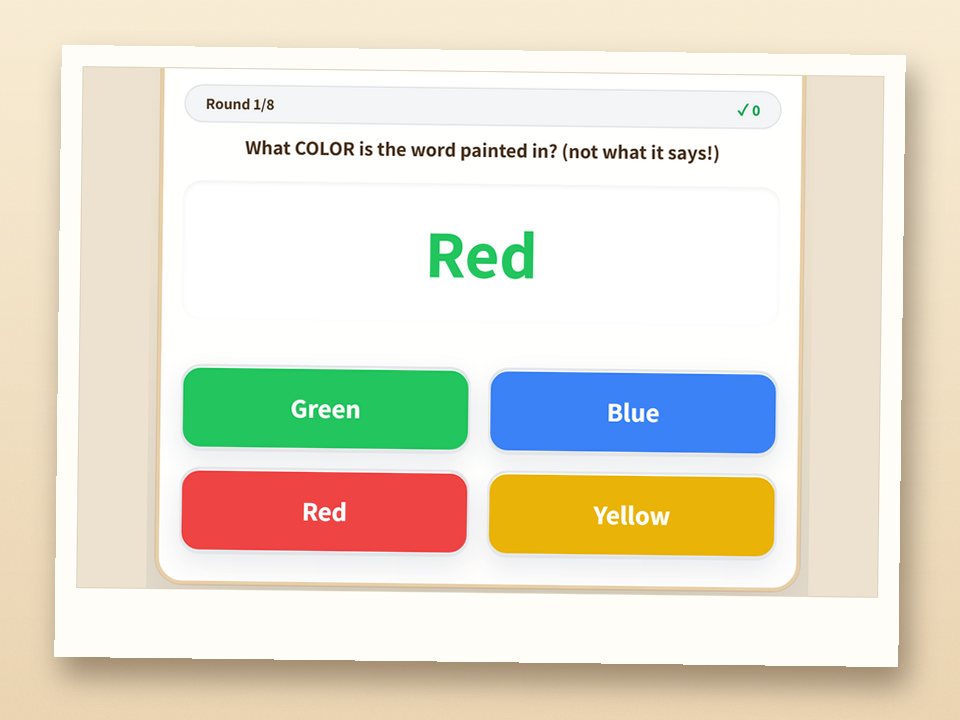
הקישו על הצבע — לא על המילה!
זכרו את המספר והקלידו אותו.
מה השעה? קראו את השעון.
כמה פרפרים בתמונה? ספרו מהר!
איזו מילה שייכת לקטגוריה?
השלימו את האות החסרה במילה.
מבוגרים משחקים צעירים, צעירים משחקים סבתא.
חיות נעות בסוואנה — מצאו אותן!
הרכיבו פאזל מהתמונה שלכם — בחרו כמה חלקים!
The table games you know by heart, against a patient computer.
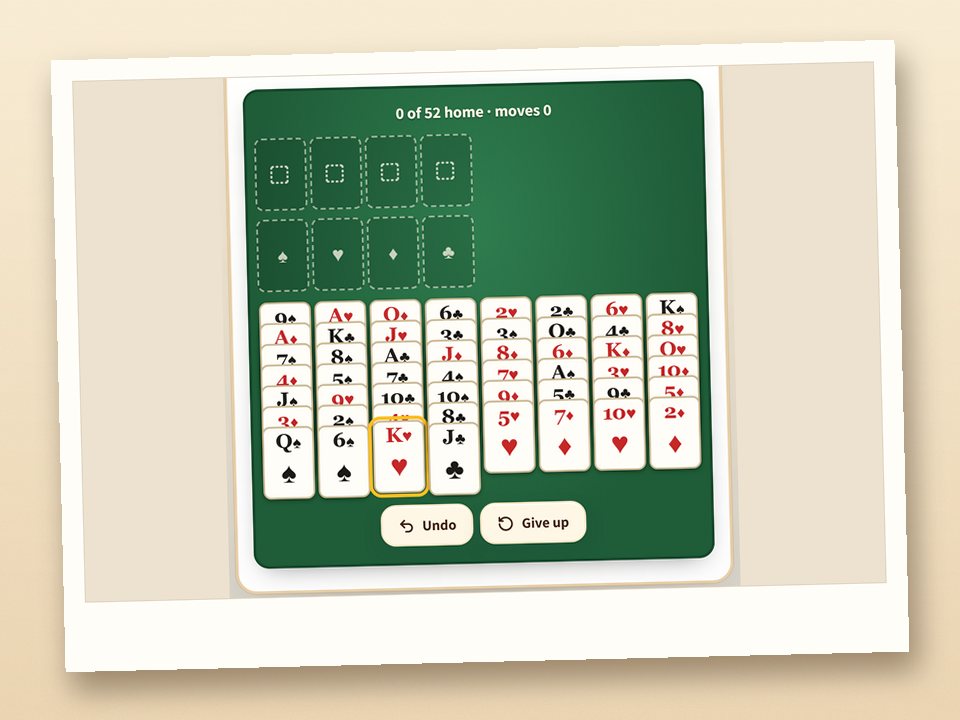
The solitaire where every card is face up.
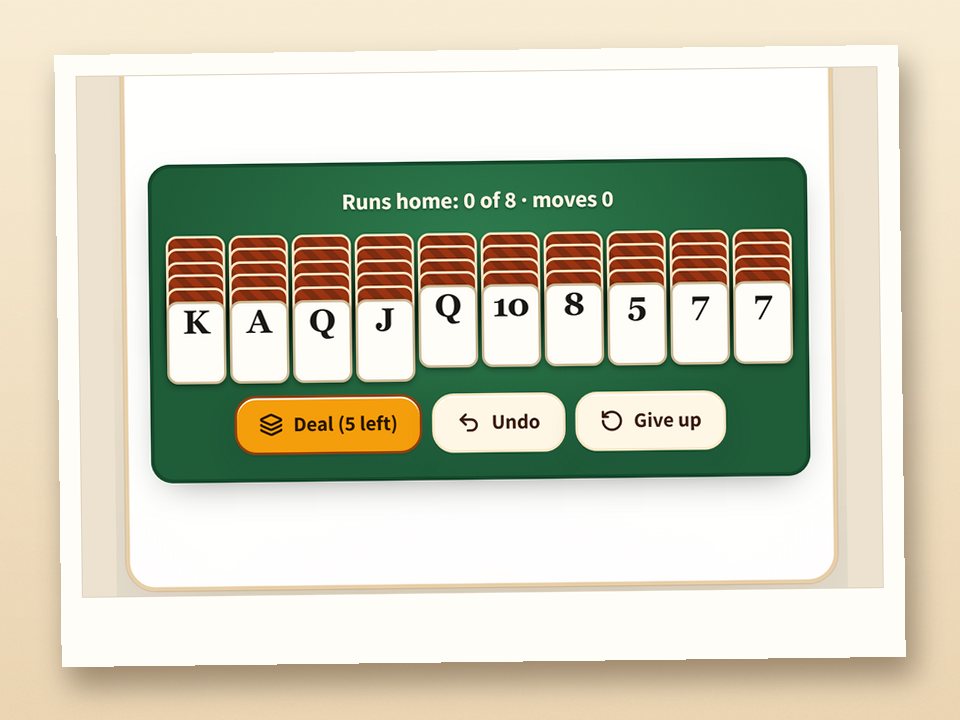
One suit: build runs from King down to Ace.
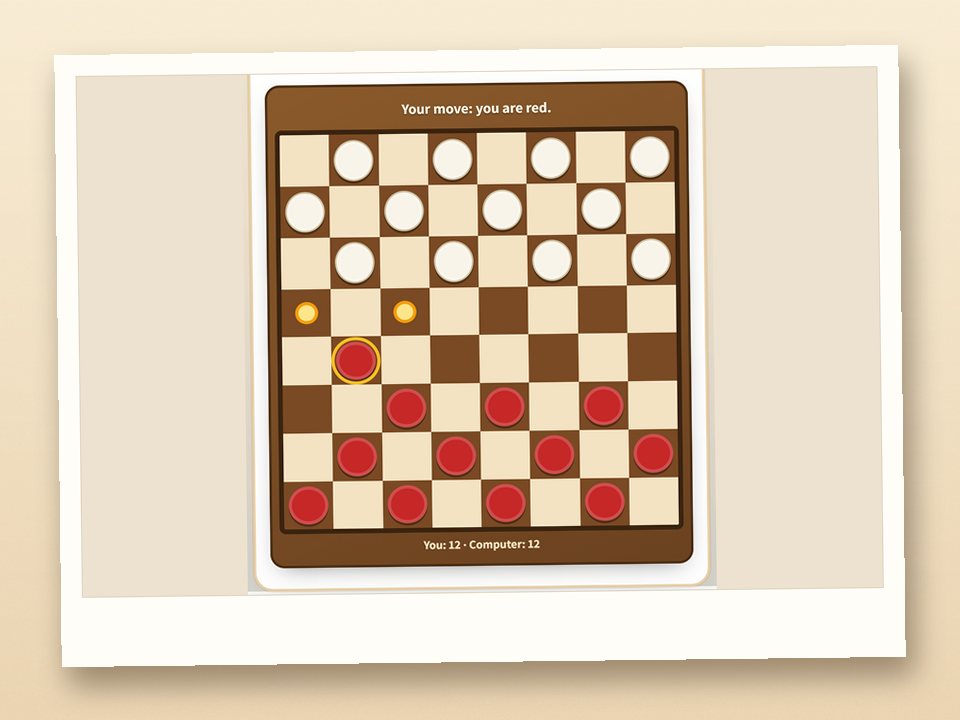
The classic board game against a friendly computer.
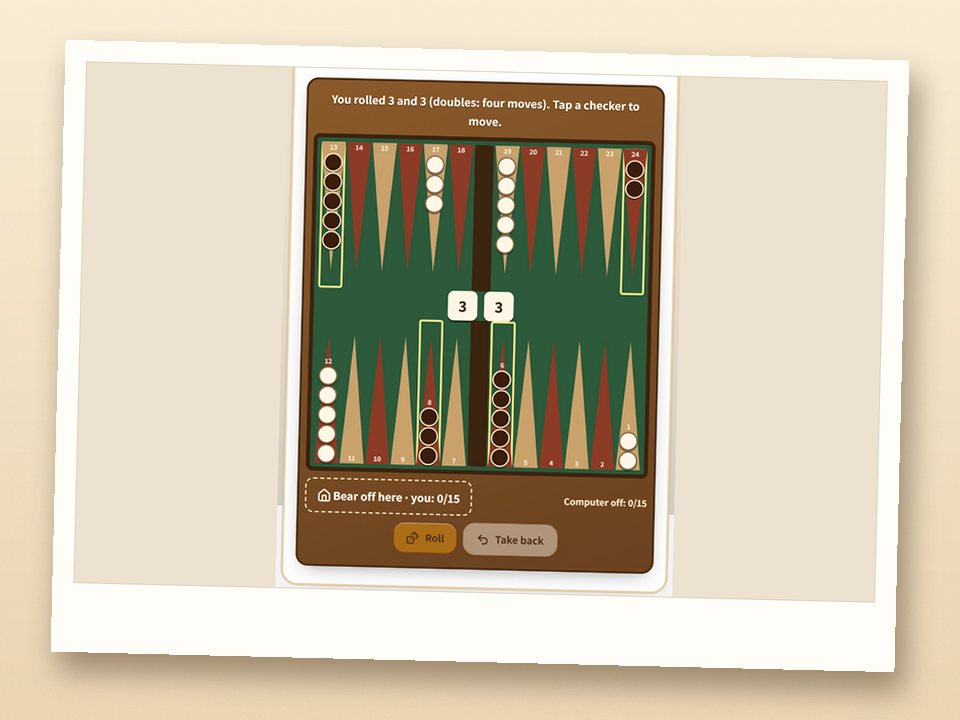
Race your checkers home against the computer.
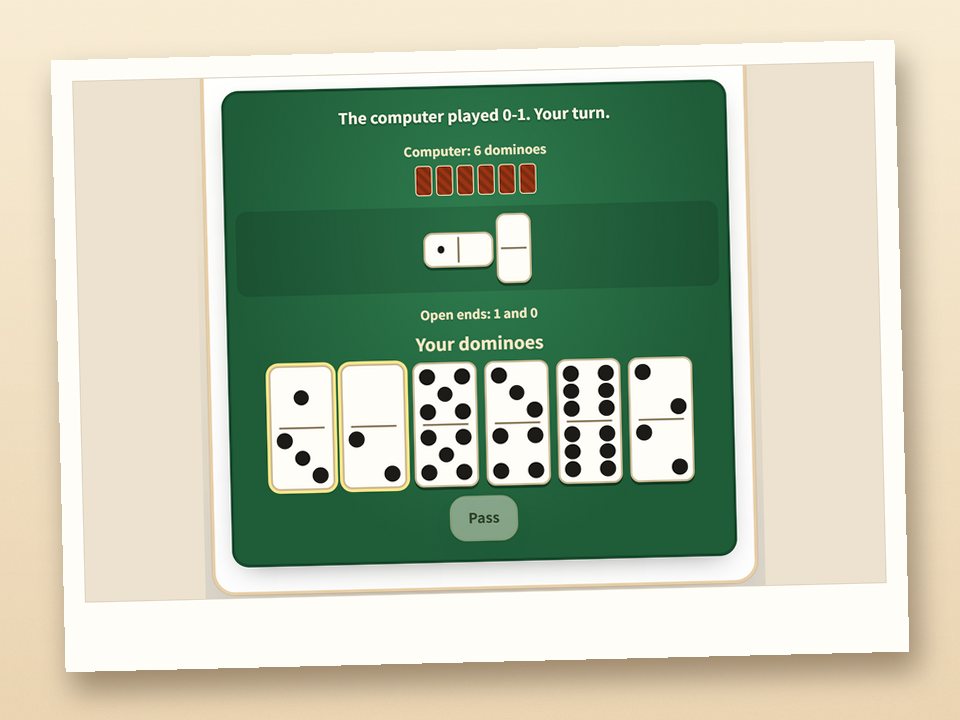
The block game: match the ends and play out your hand first.
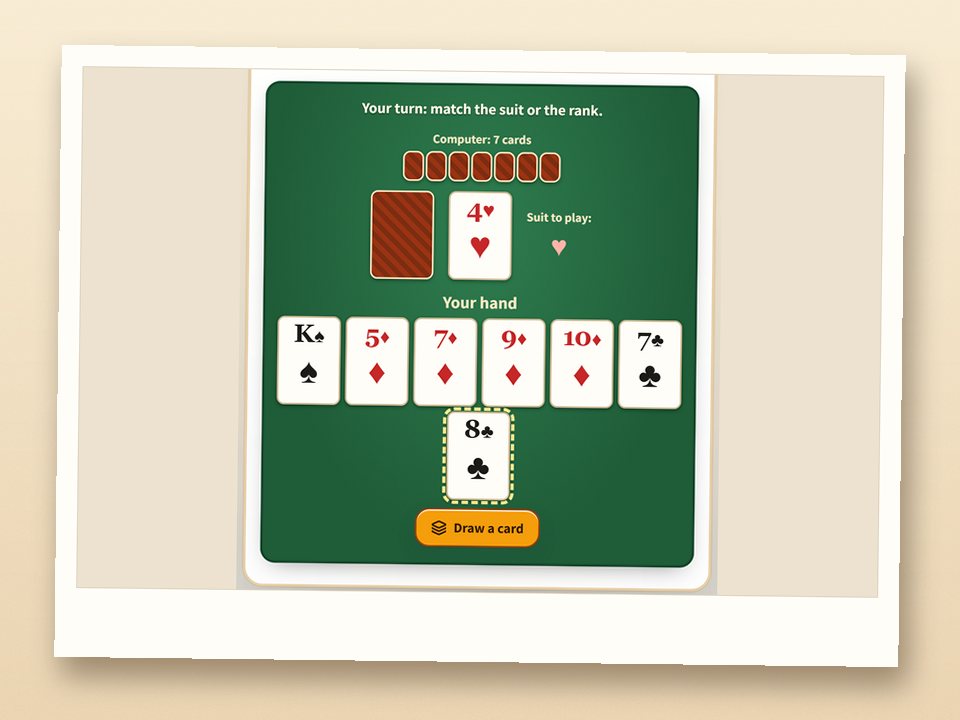
Match the suit or the rank. Eights are wild.
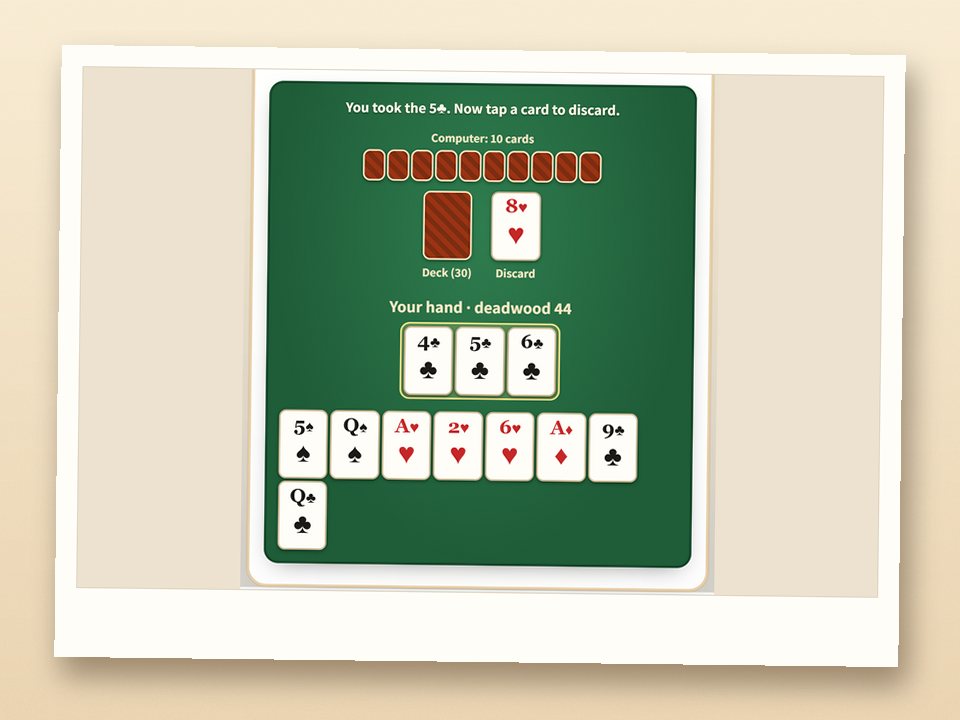
Make sets and runs, then knock before the computer does.
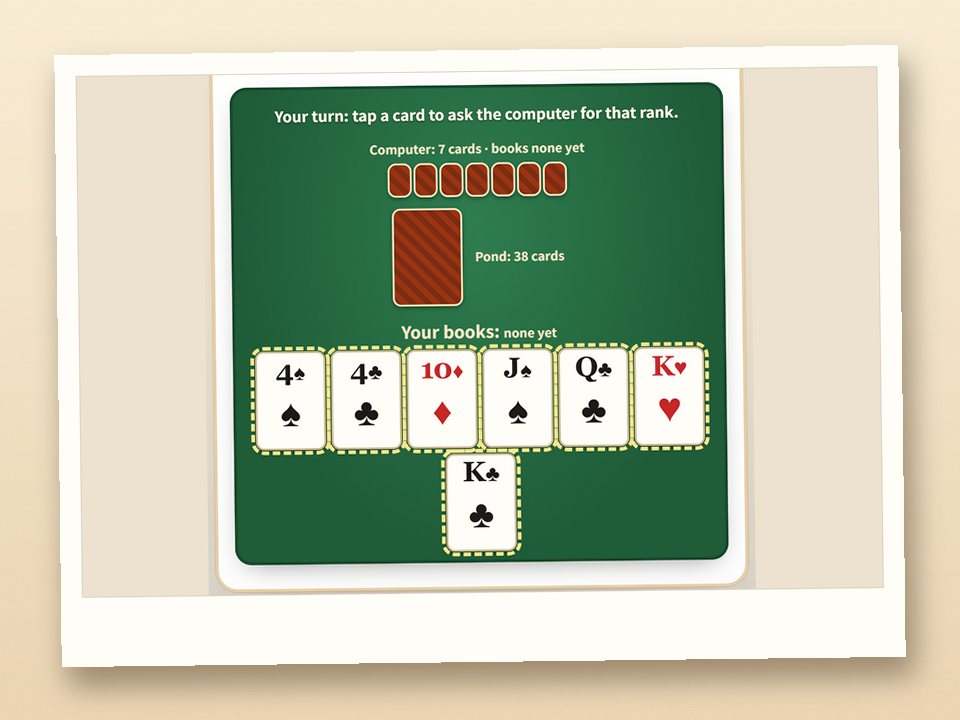
Ask for cards and collect sets of four.
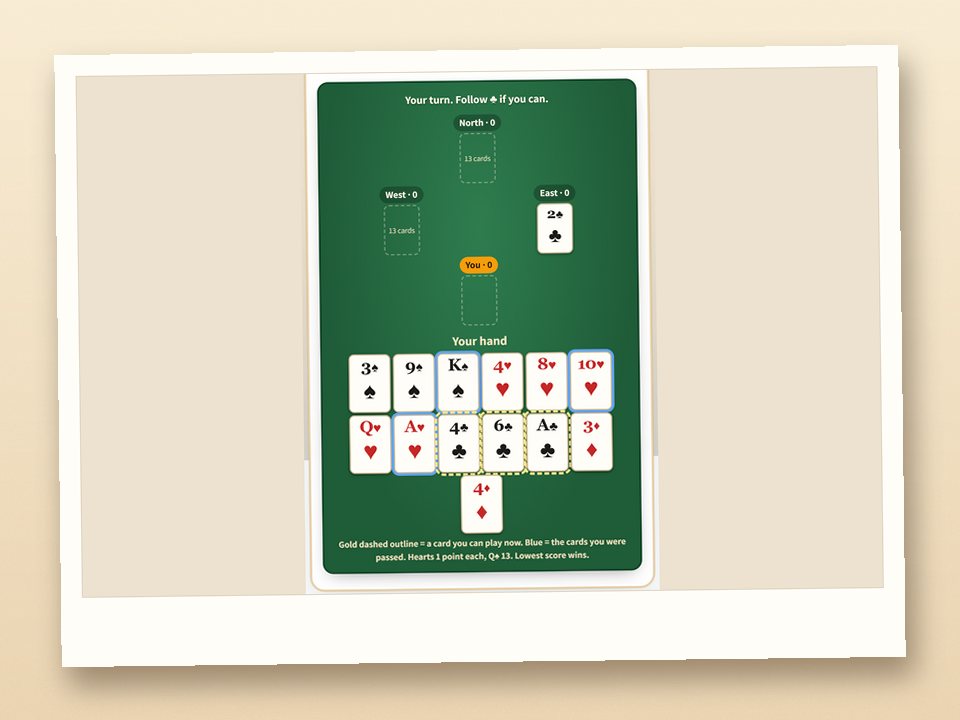
Dodge the hearts and the Queen of Spades against three computer players.
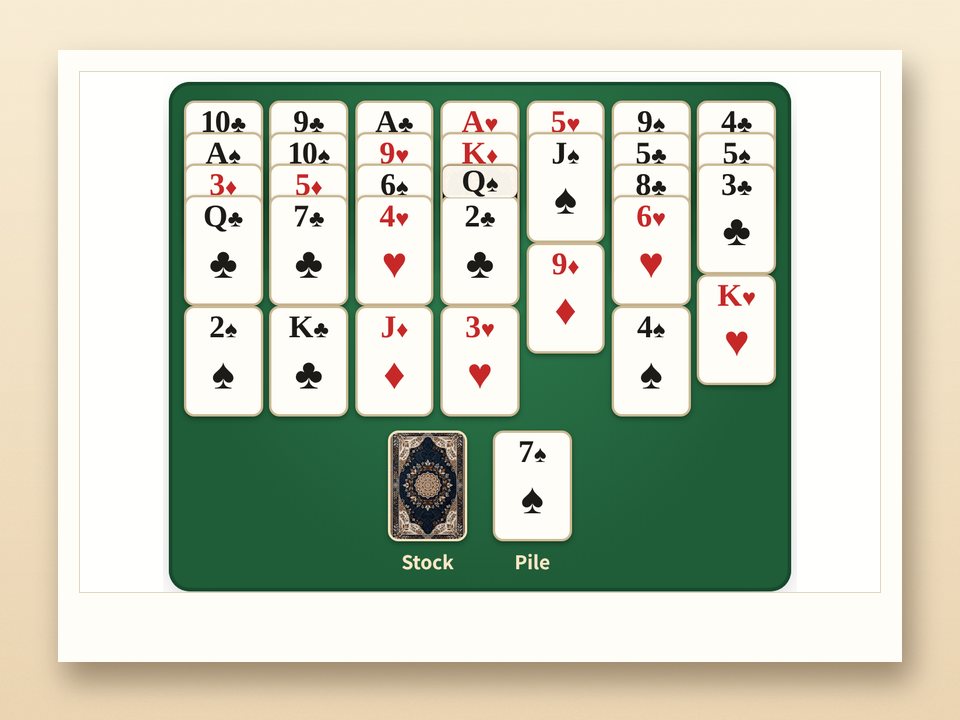
Clear the seven columns one card higher or lower at a time.
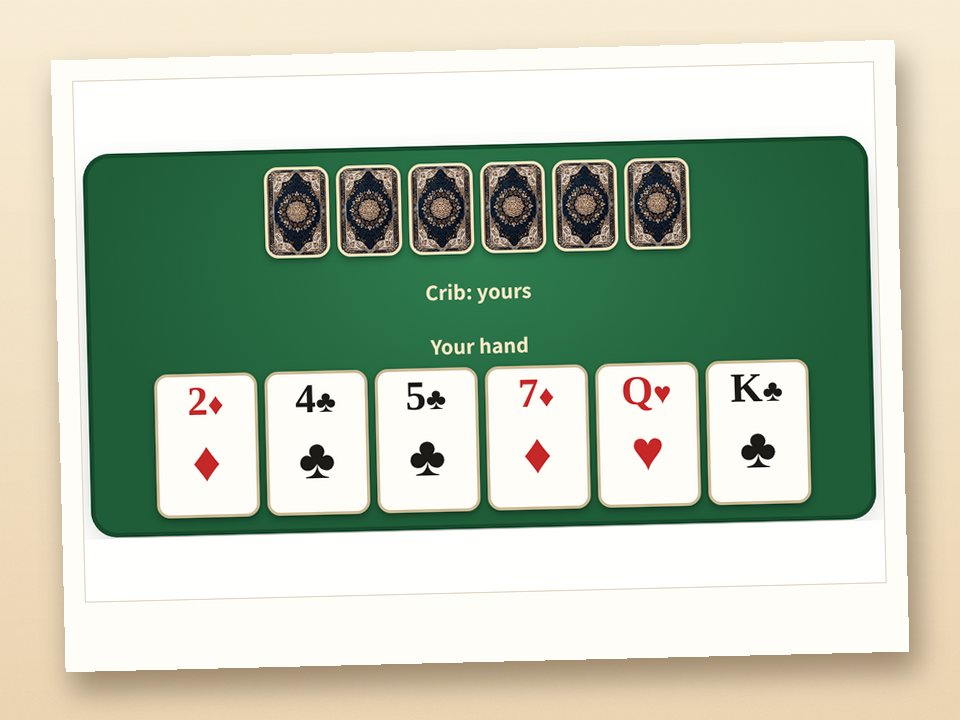
The pegging card game: fifteens, pairs and runs, first to 61.
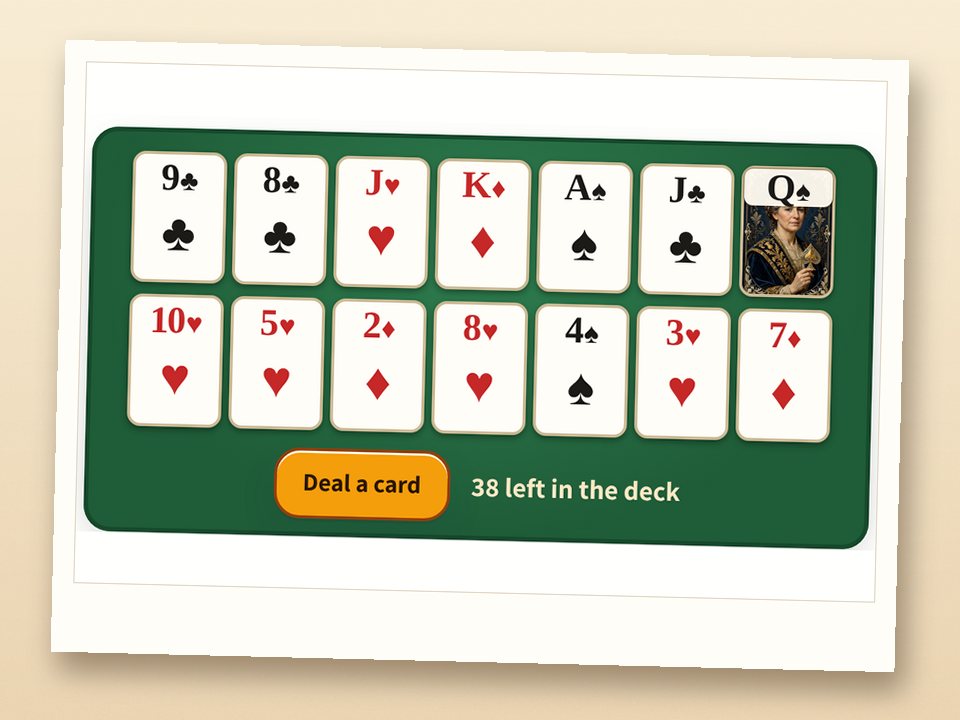
Fold a long row of cards into a few piles by suit and rank.
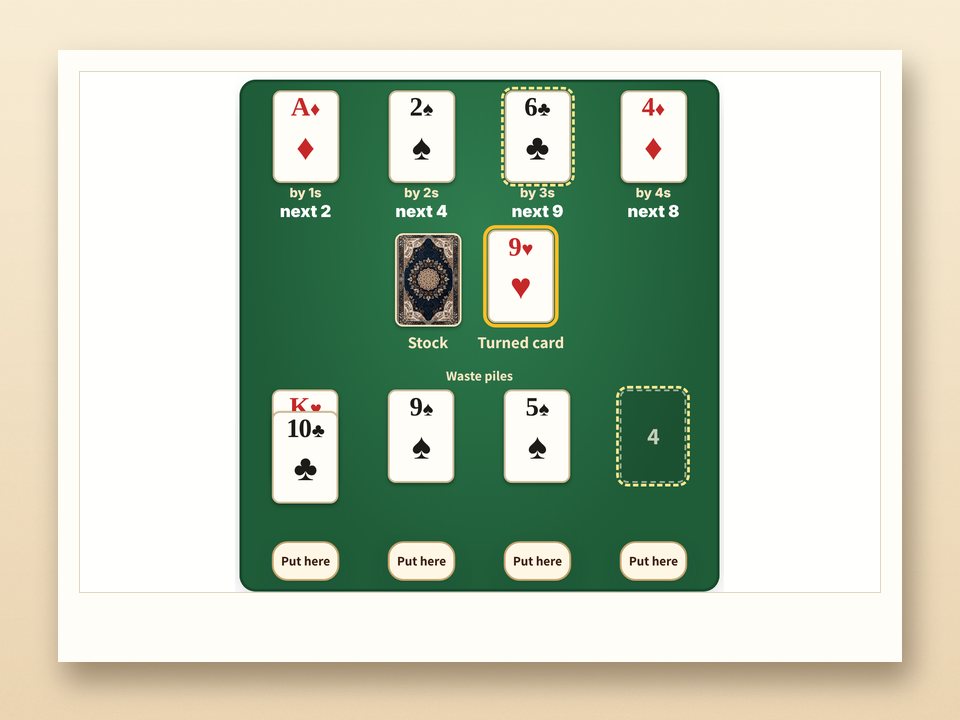
Build four piles counting by ones, twos, threes and fours.
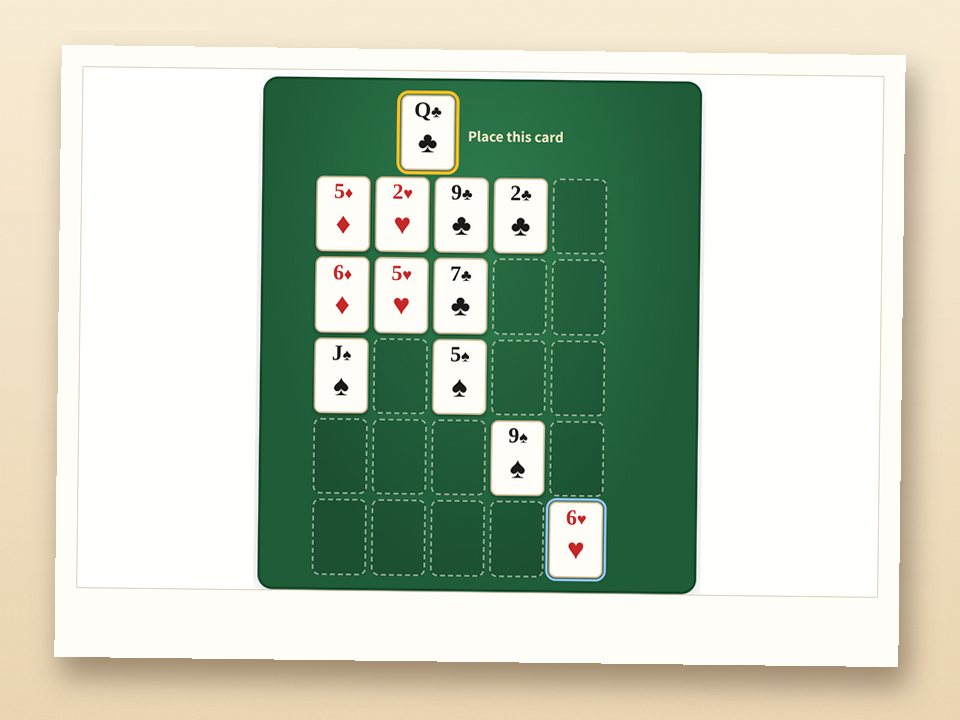
Place 25 cards in a grid to score poker hands both ways.
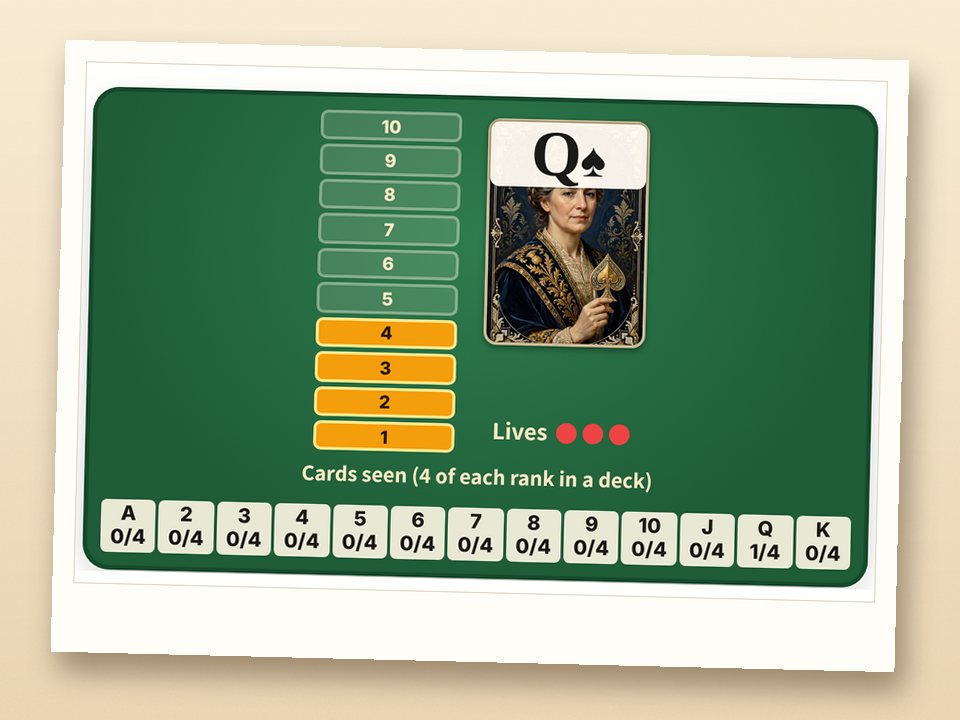
Guess higher or lower to climb ten rungs with one deck.
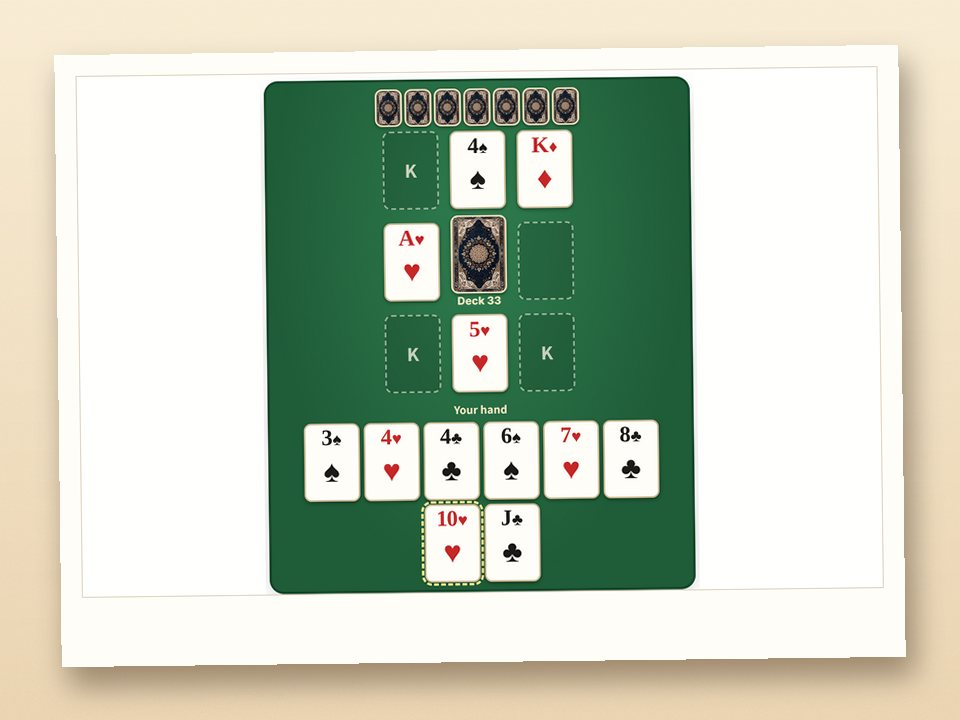
The family game: build down in alternating colors and empty your hand first.
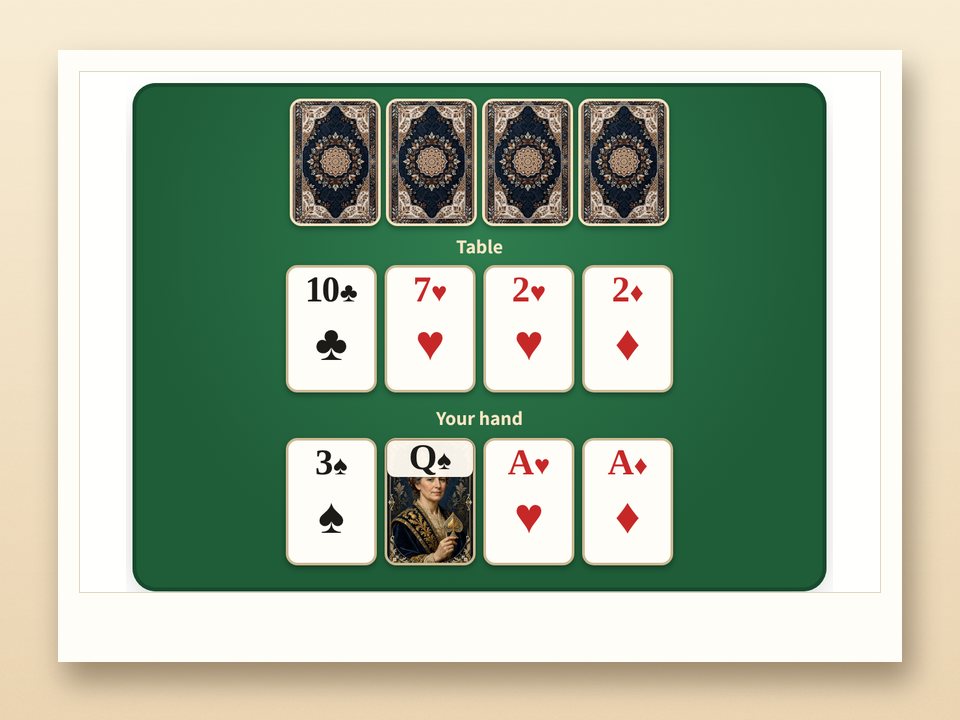
The old fishing card game: capture table cards that match or add up.
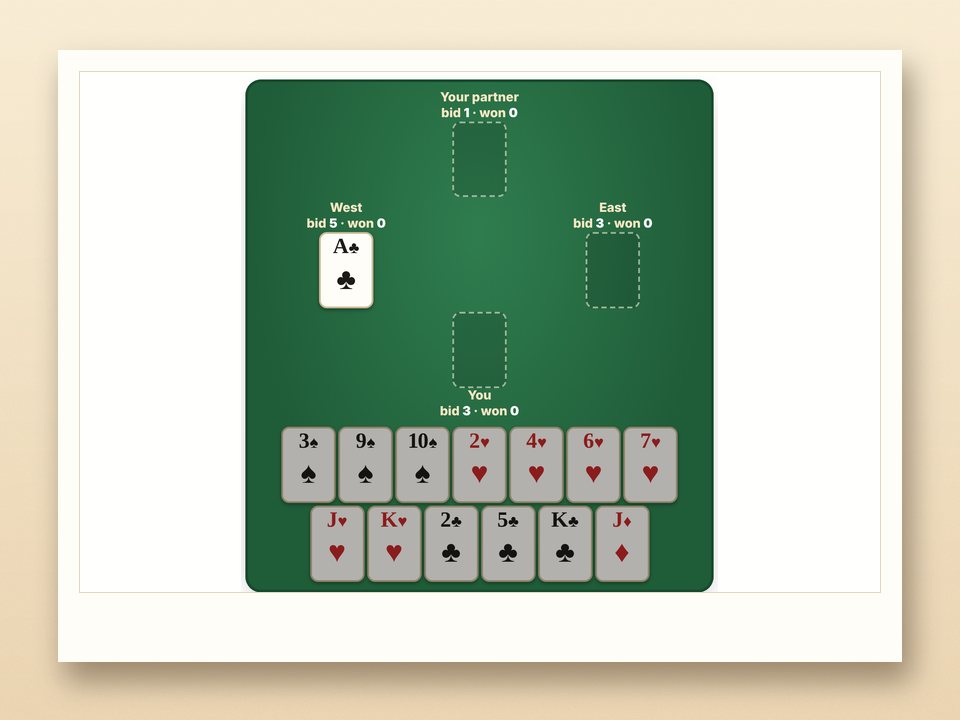
Bid and take tricks with your partner; spades are always trump.
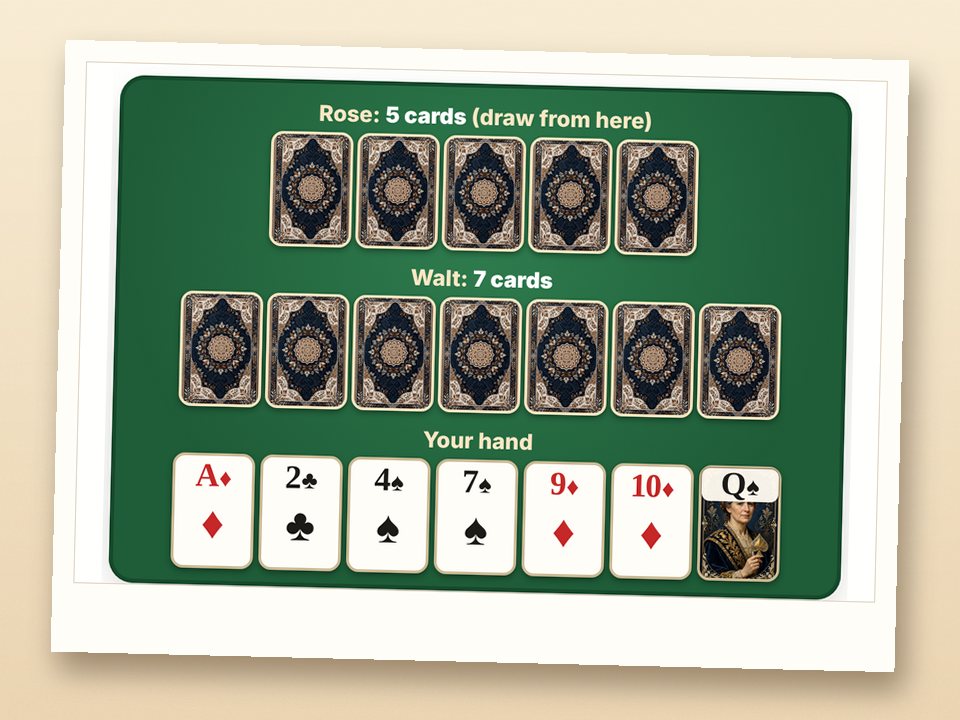
Make pairs and don't be left holding the last Queen.
Puzzles to sit down with, at your own pace.
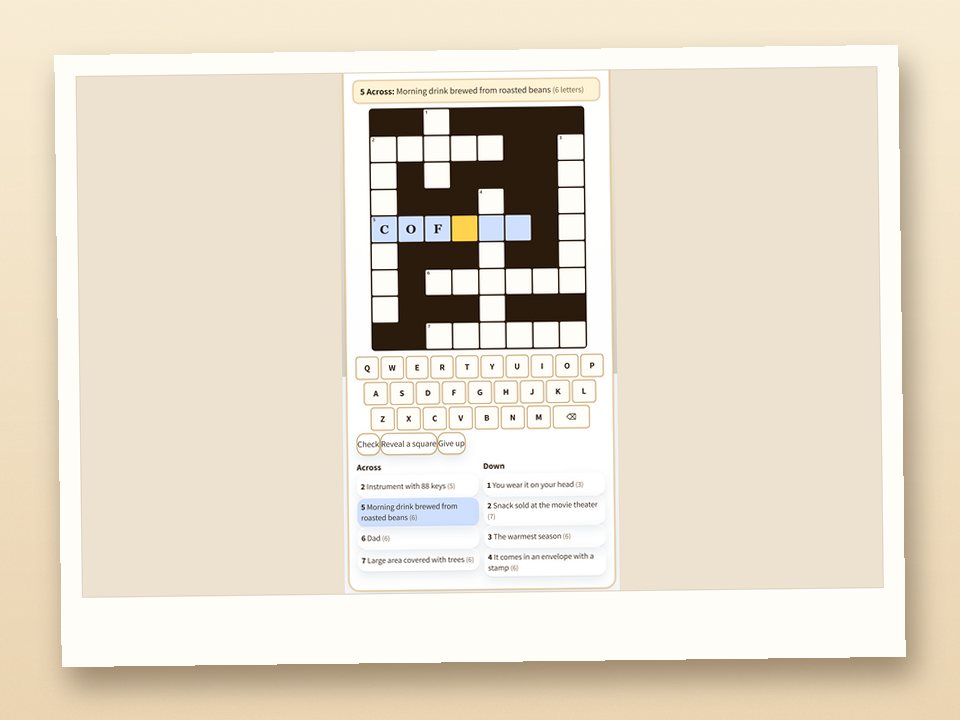
A small American crossword with friendly clues.
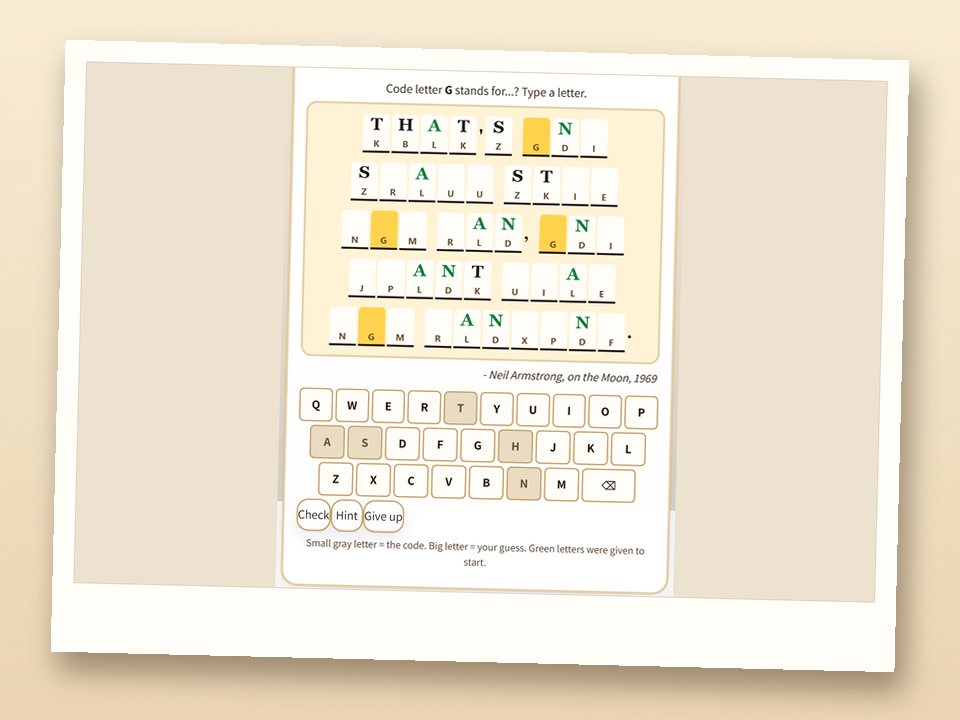
Crack the letter code to reveal a famous American quote.
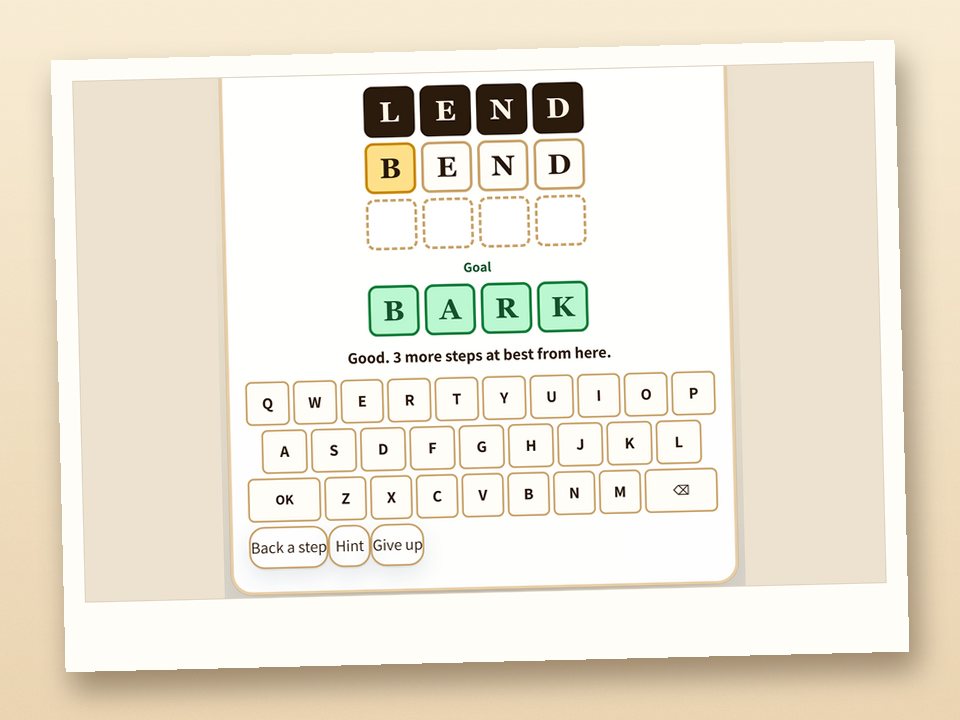
Change one letter at a time to climb from one word to another.
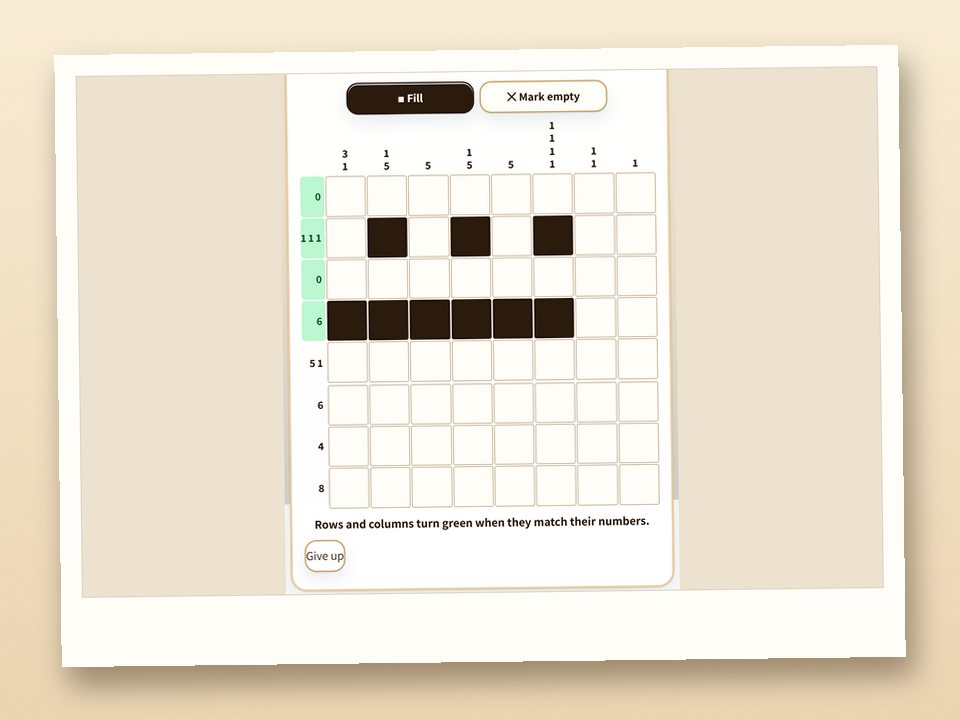
Fill the grid by the numbers to reveal a picture.
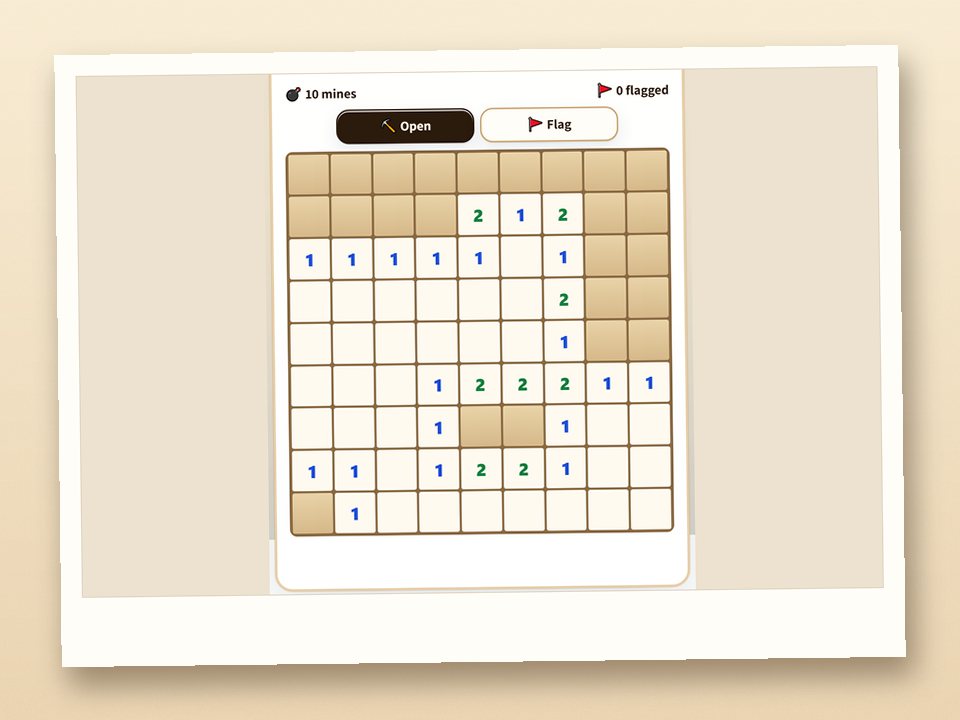
Clear the field without touching a mine.
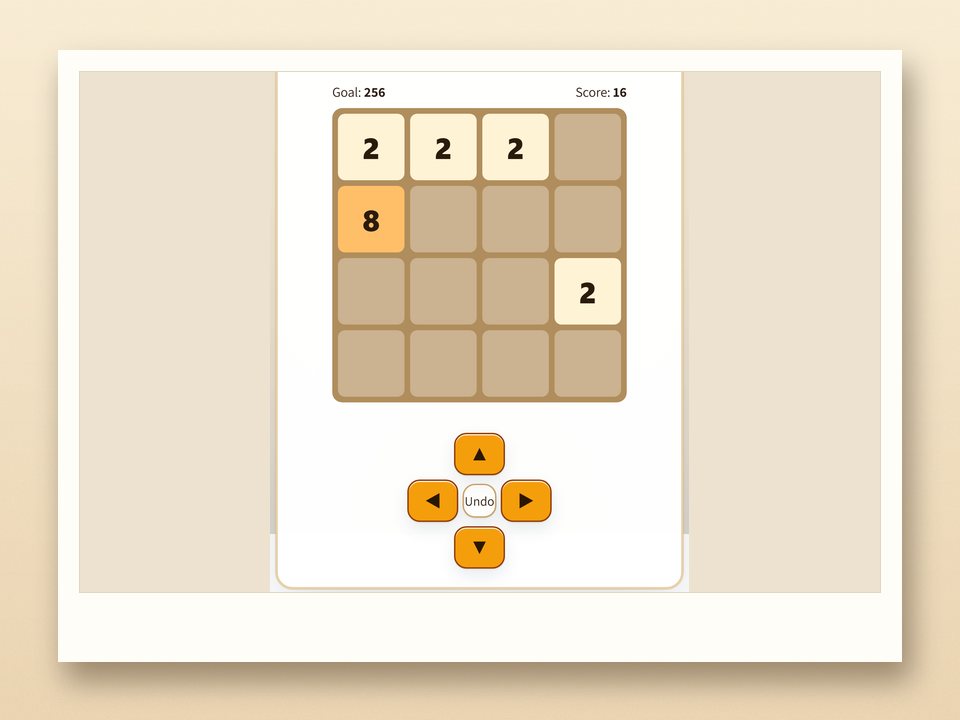
Slide and join matching tiles to reach 2048.
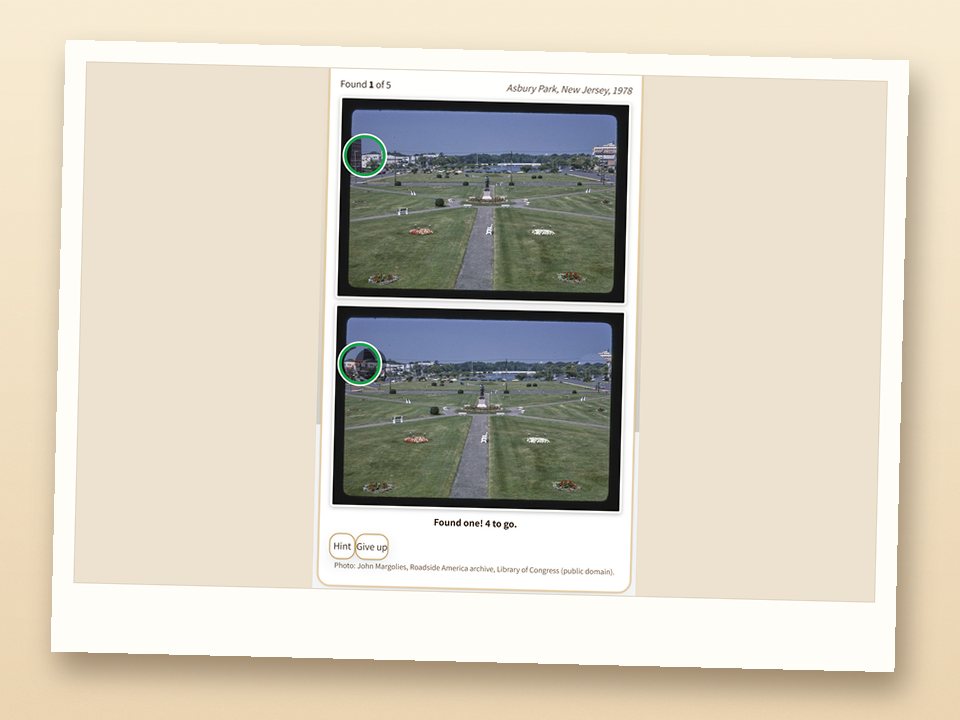
Real American street photos from the 1970s: find the five differences.
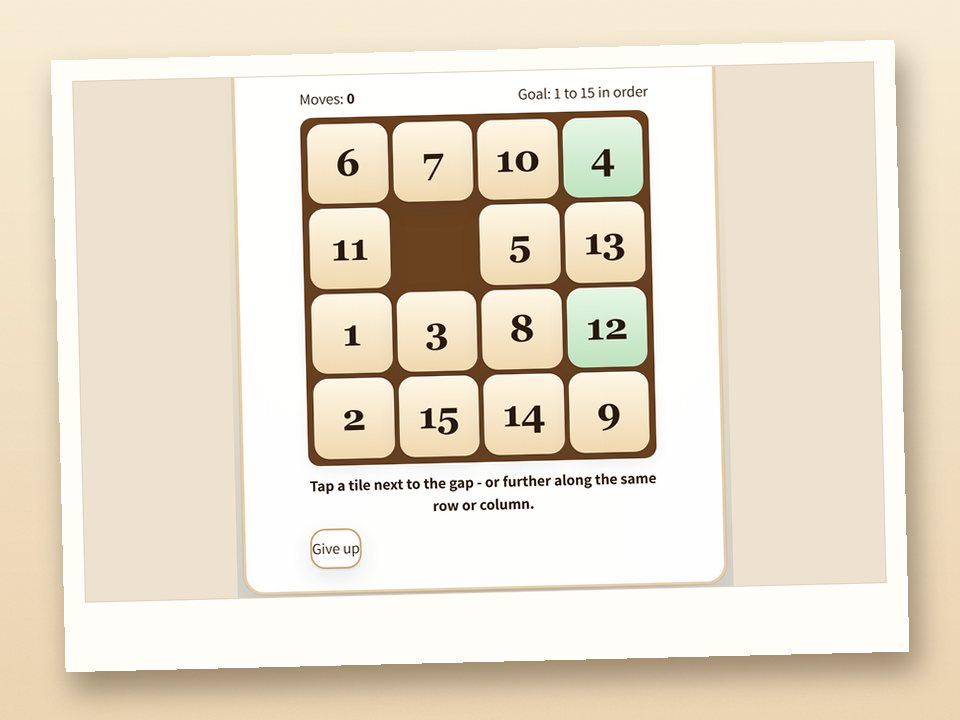
The sliding-tile puzzle from the toy box: put the numbers in order.
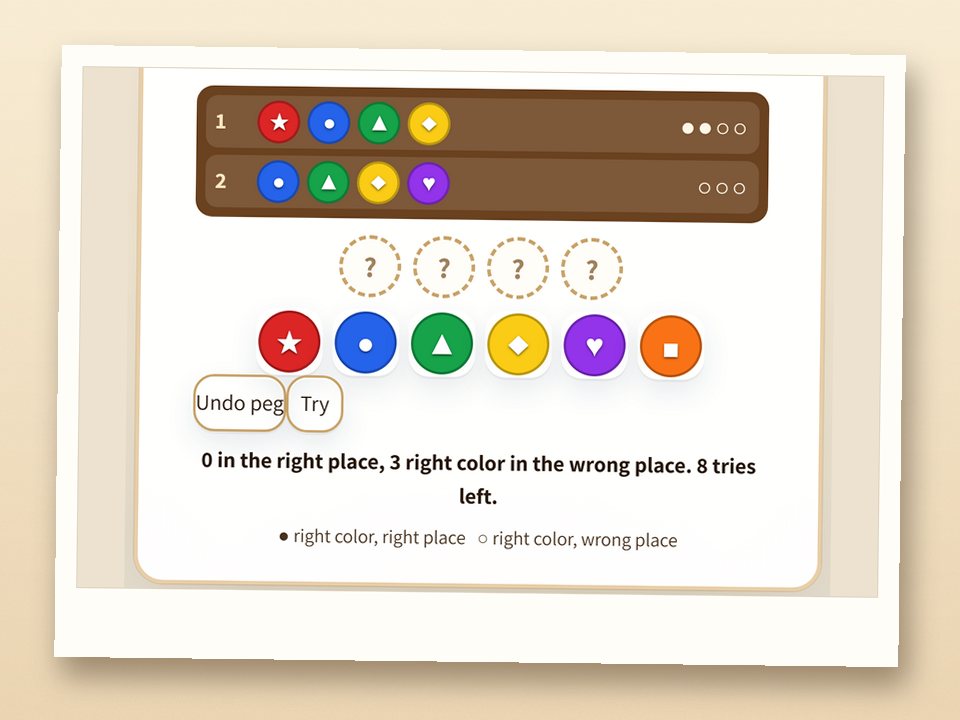
The classic code-breaking game: find the hidden colors in 10 tries.
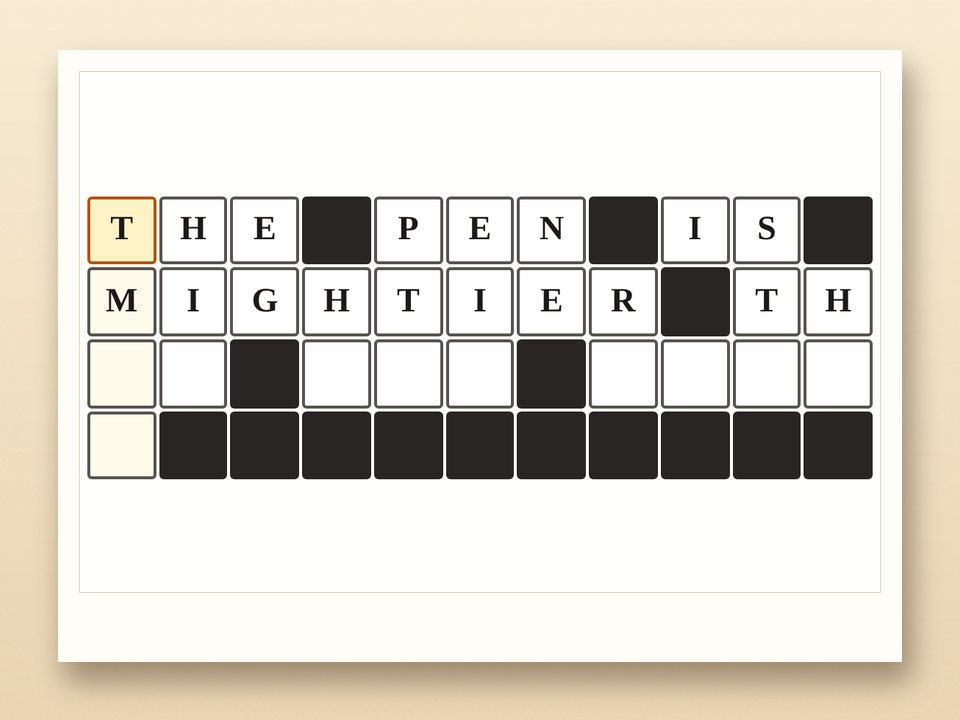
Put the fallen letters back in their columns to rebuild an old saying.
Pastimes from the kitchen table, the back of the placemat and the boardwalk. No clock unless you want one.
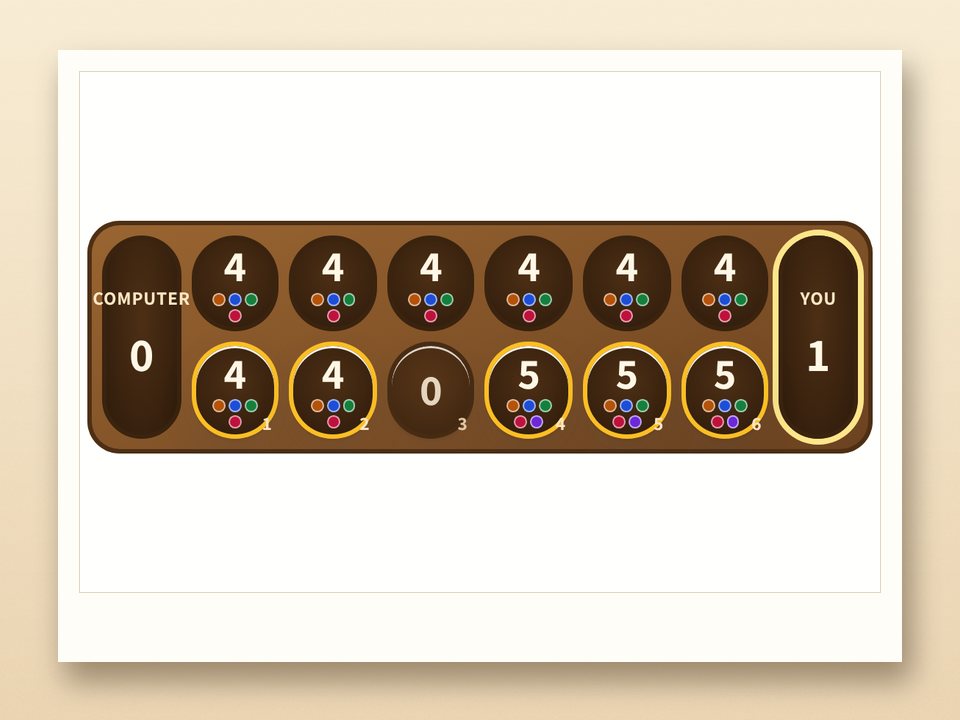
The old stone-sowing board game, against a patient computer.
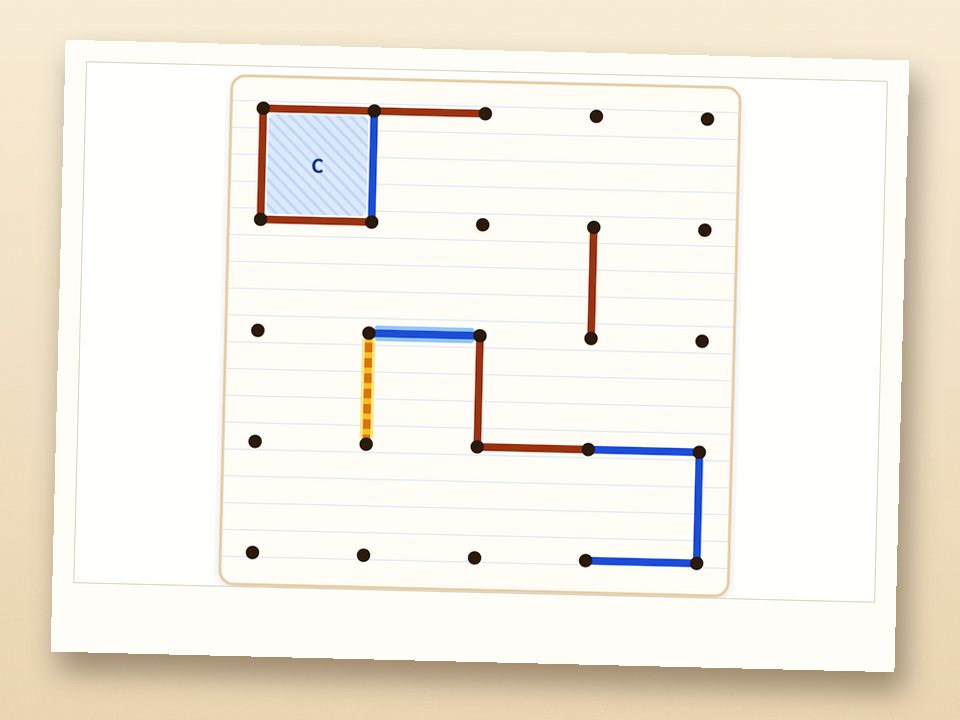
The pencil-and-paper game from the back of the placemat.
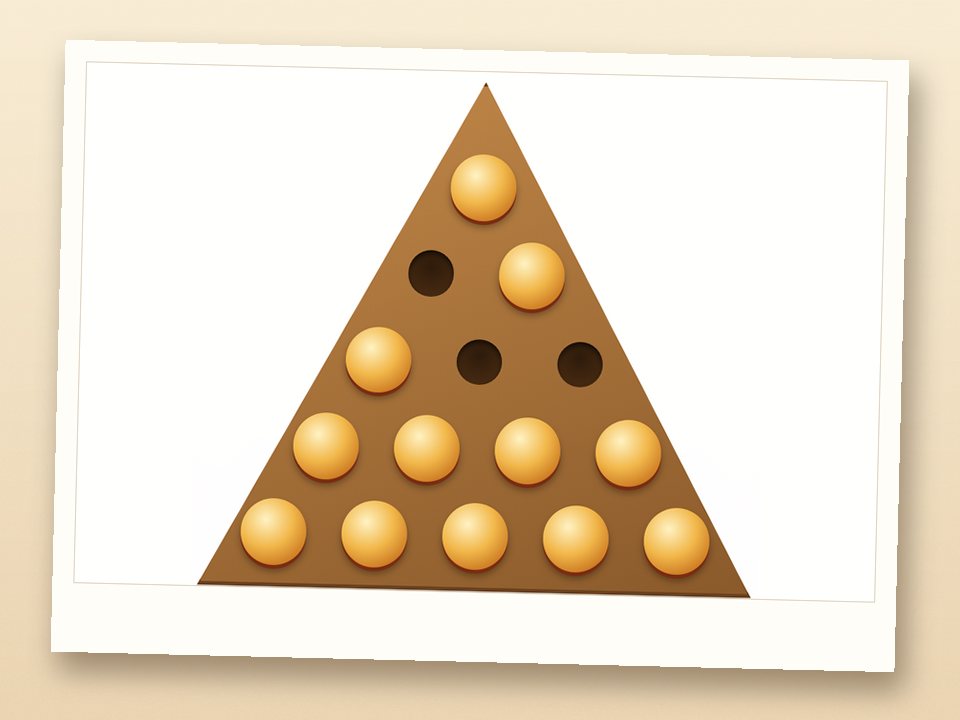
The wooden peg puzzle from the diner table: leave as few pegs as you can.
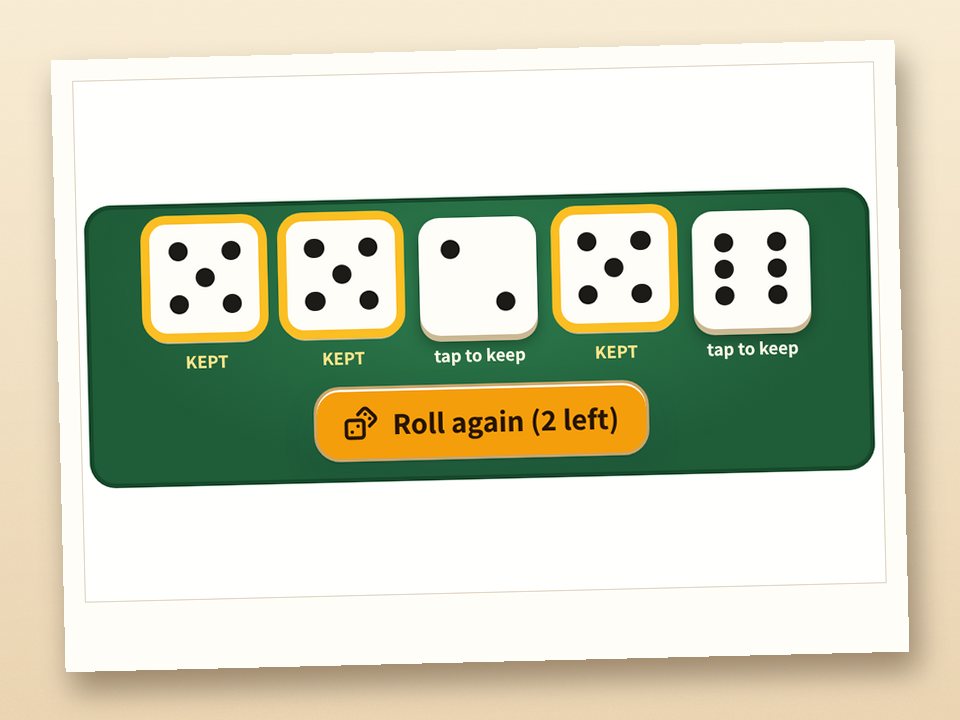
Roll five dice up to three times and fill in the score card.
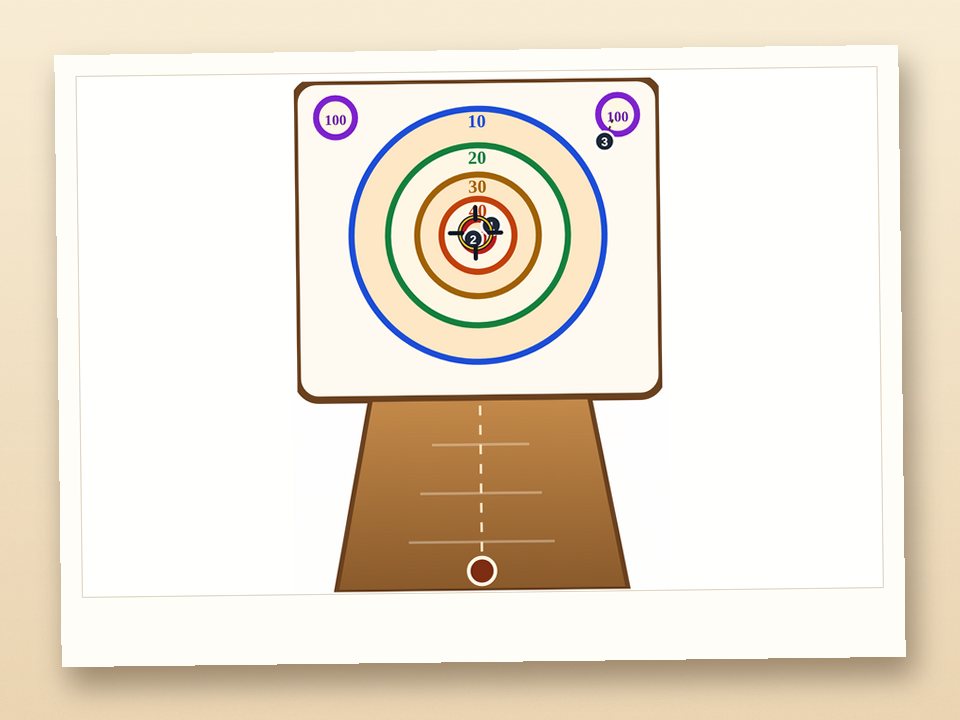
The arcade-lane ball roll from the boardwalk: aim for the high rings.
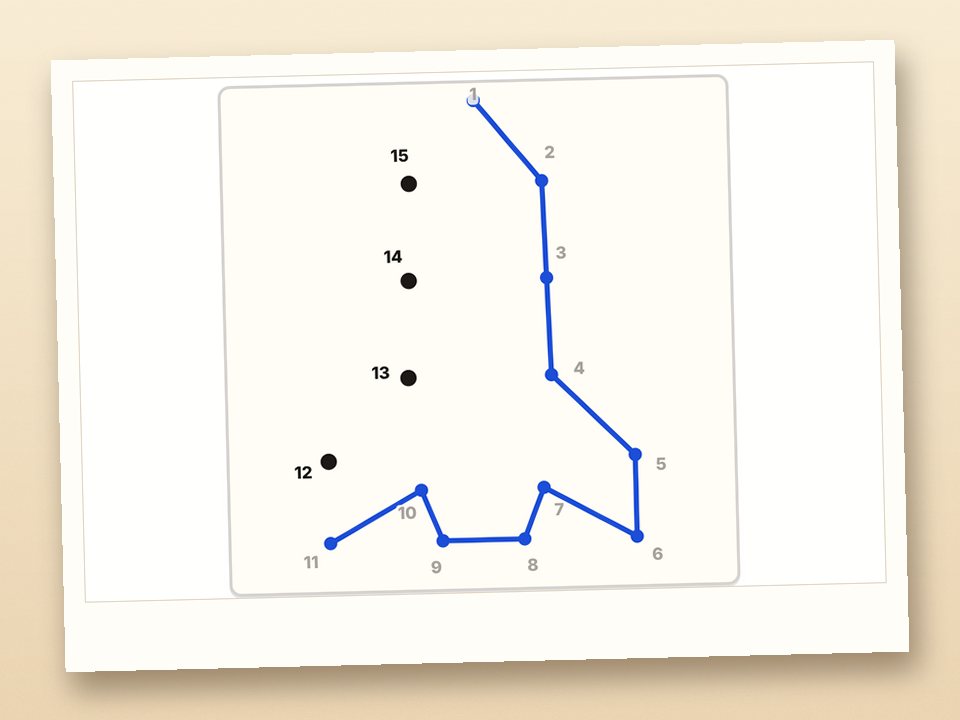
Join the numbered dots in order and watch a picture appear.
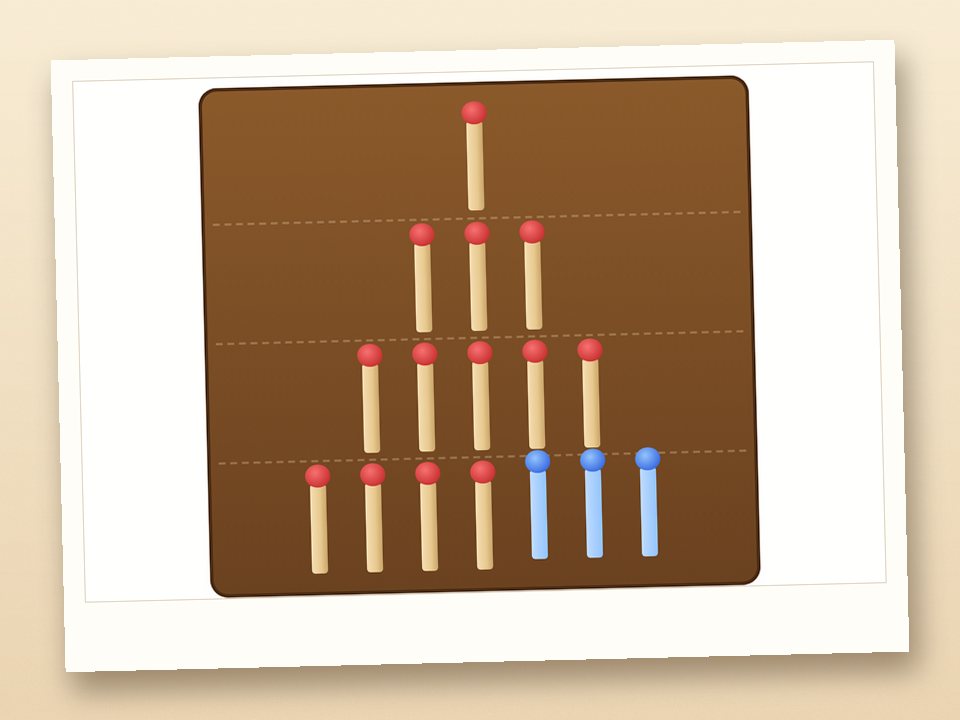
The take-away game with matches: leave the last stick for the computer.
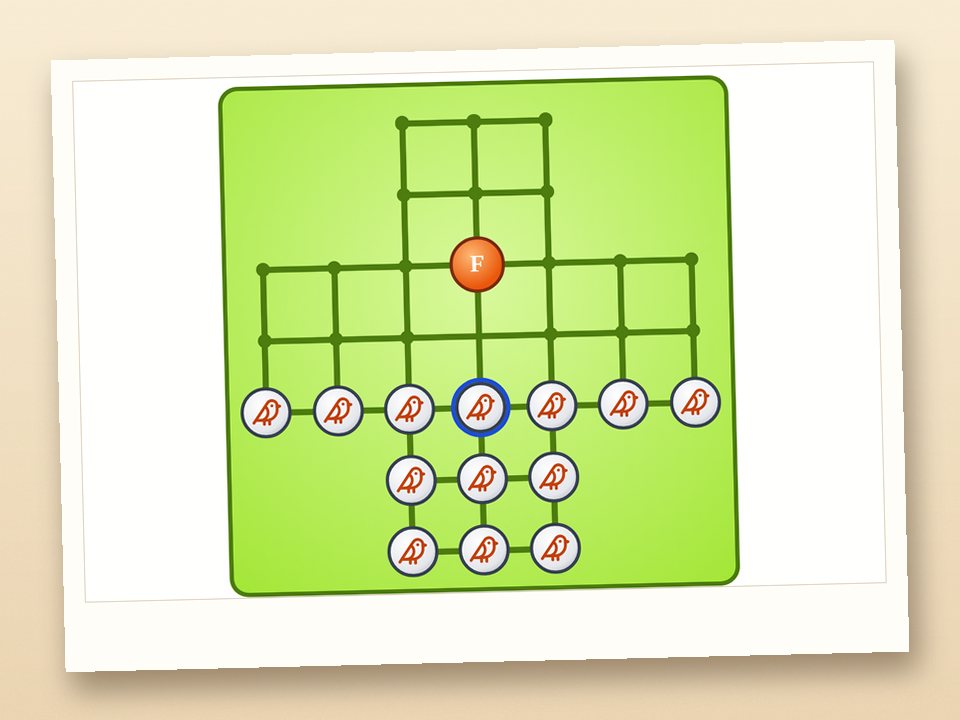
The farmhouse hunt game: march your geese to trap the fox.
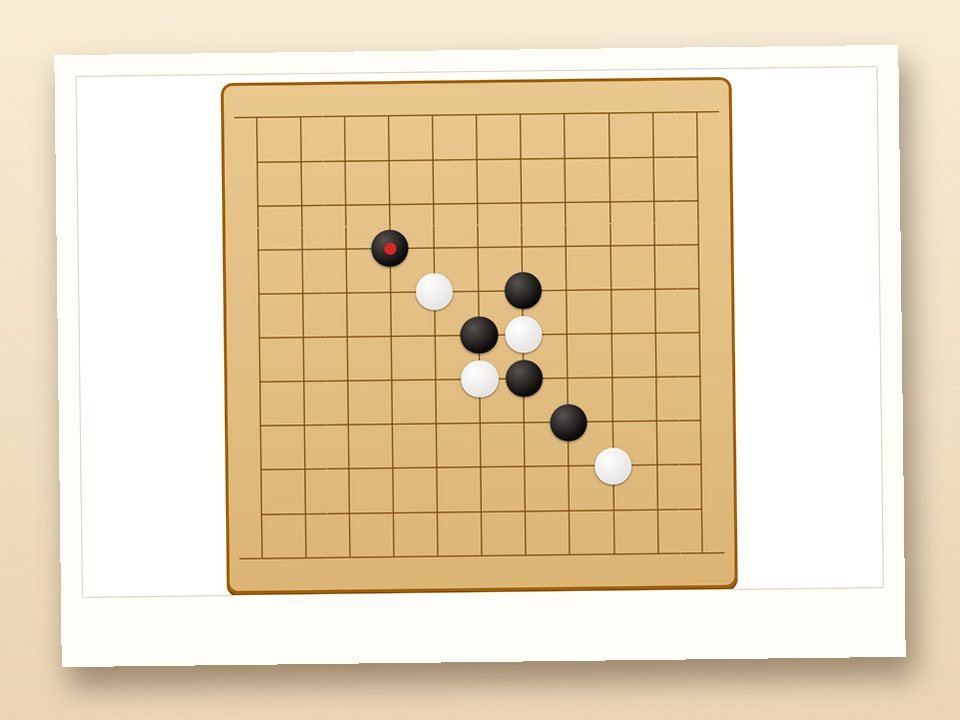
Place stones on the board and line up five before the computer.
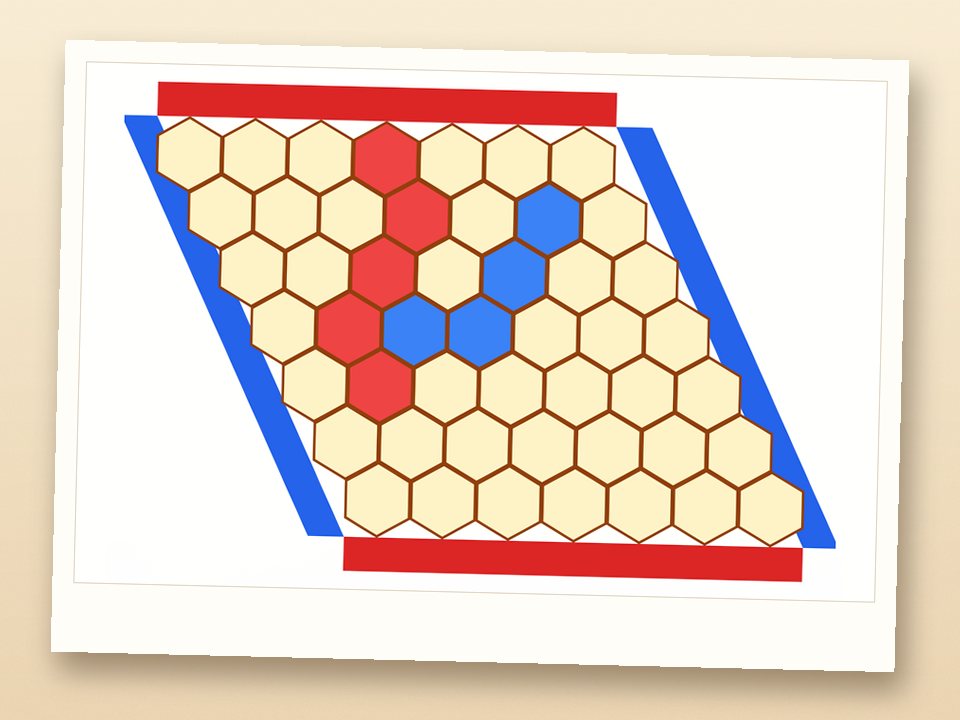
Join your two edges of the diamond board before the computer joins its own.
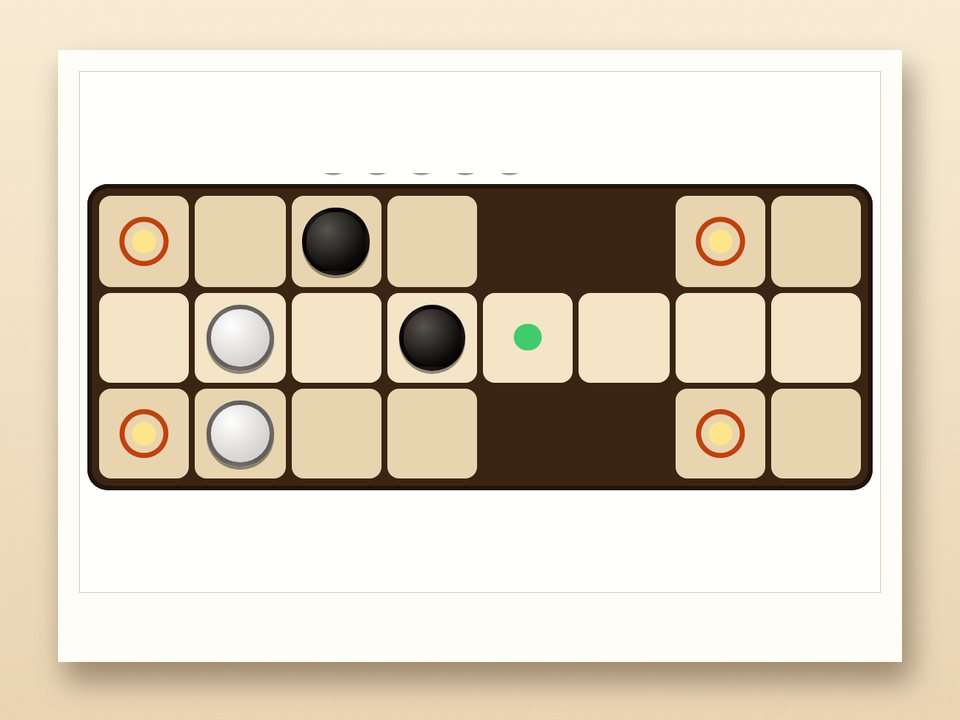
The 4,500-year-old race game: seven pieces, four dice and lucky flowers.
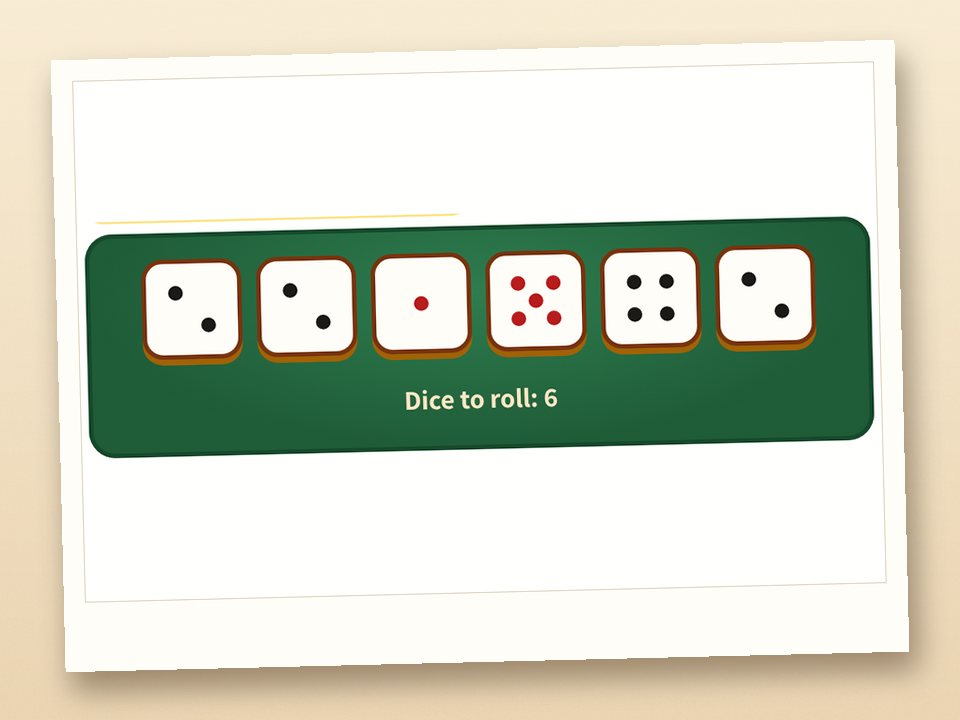
Roll six dice, keep the scorers and decide when to bank.
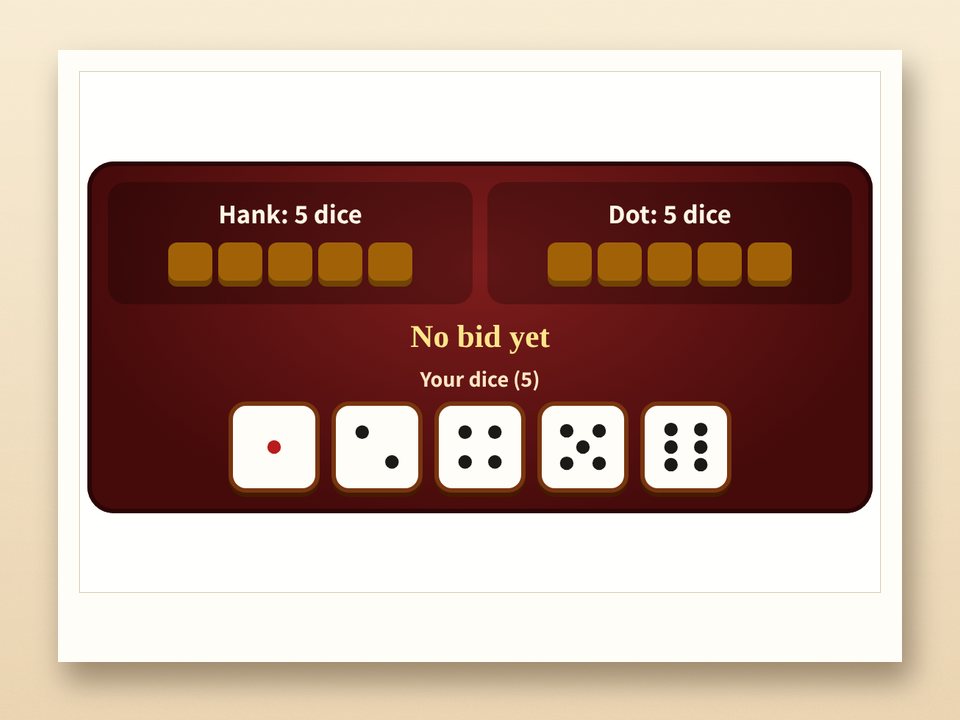
The bluffing dice game: raise the bid or call Liar!
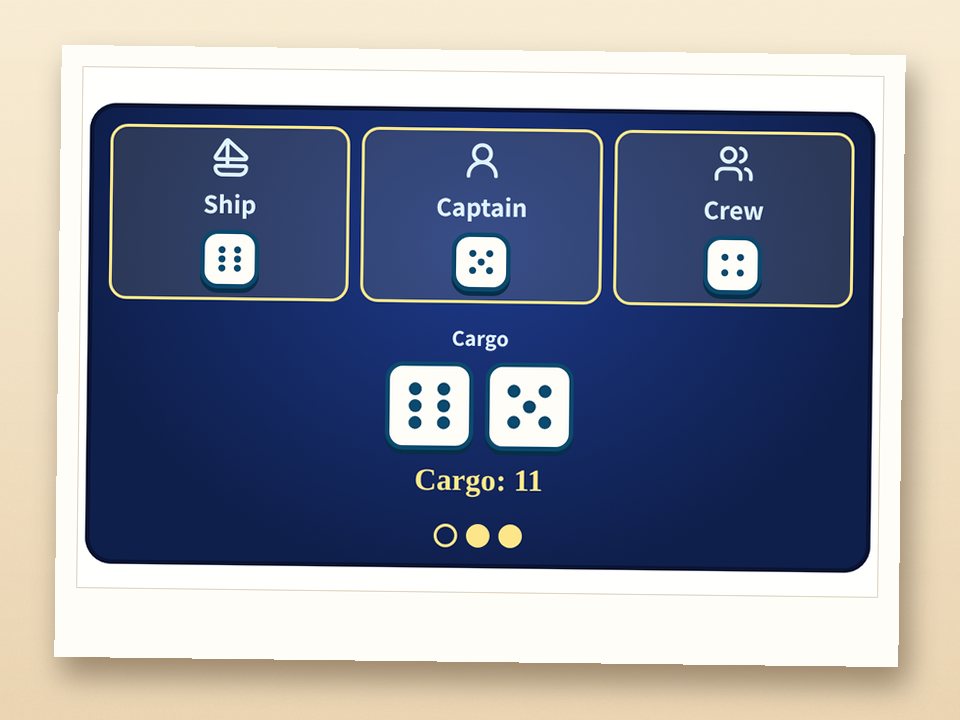
The tavern dice game: roll a 6, 5 and 4, then load the best cargo.
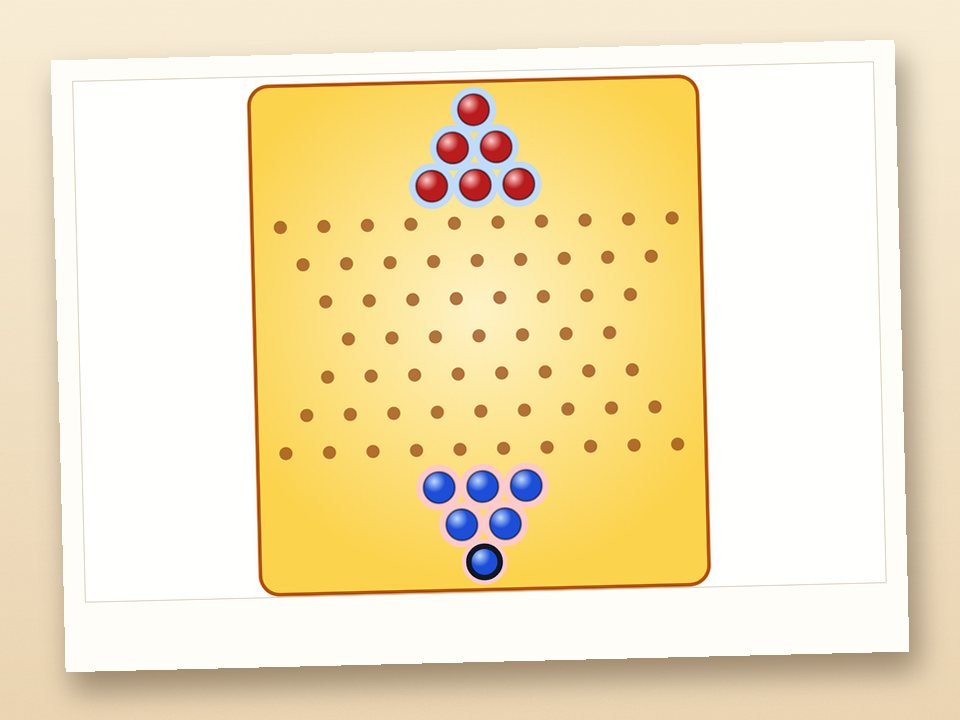
Race your marbles across the star board, hopping as far as you can.
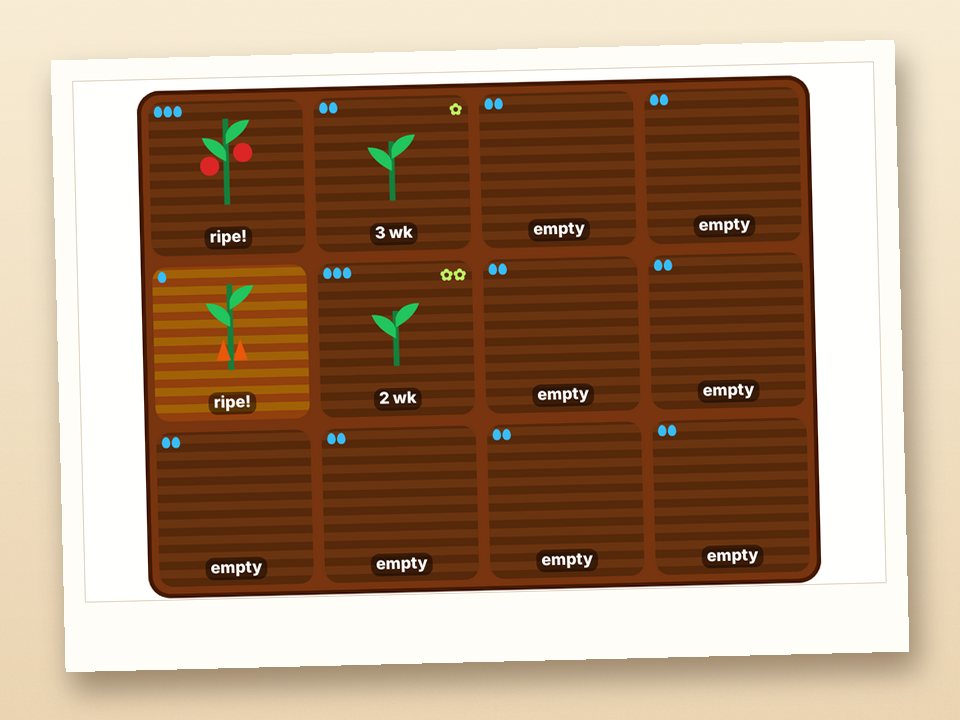
Grow a backyard vegetable garden one week at a time.
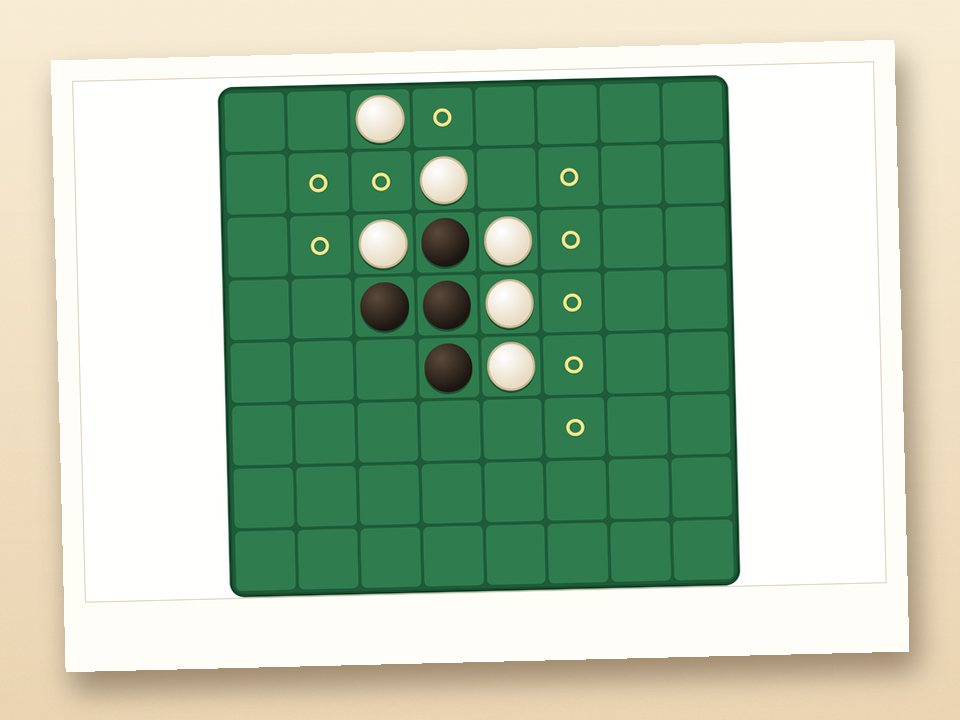
The disc-flipping board game: trap the computer's discs to turn them your color.
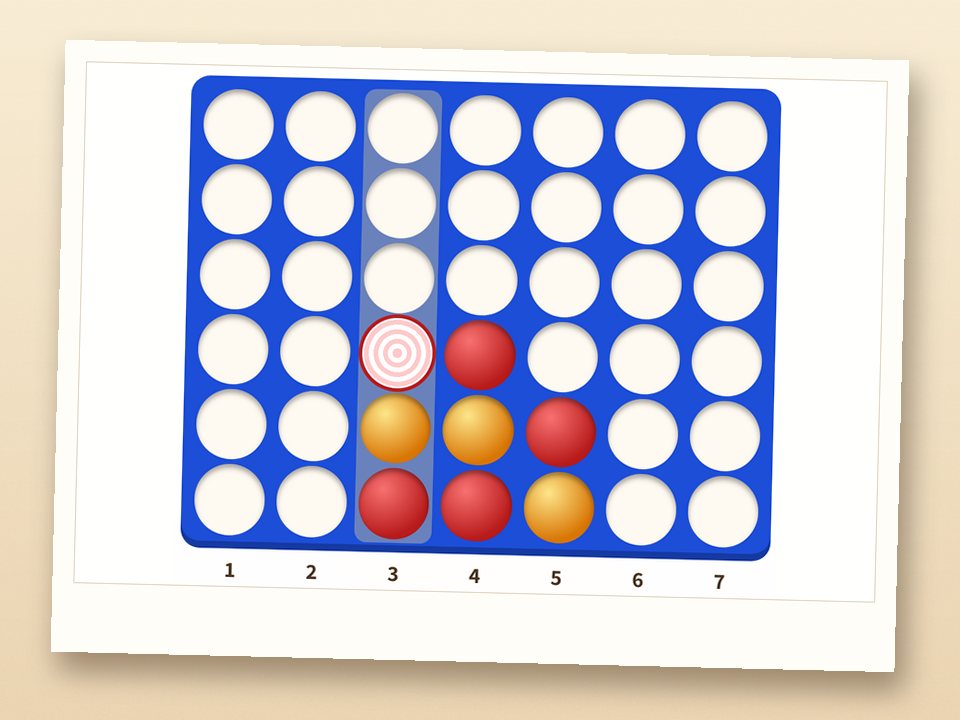
Drop checkers into the upright grid and line up four before the computer.
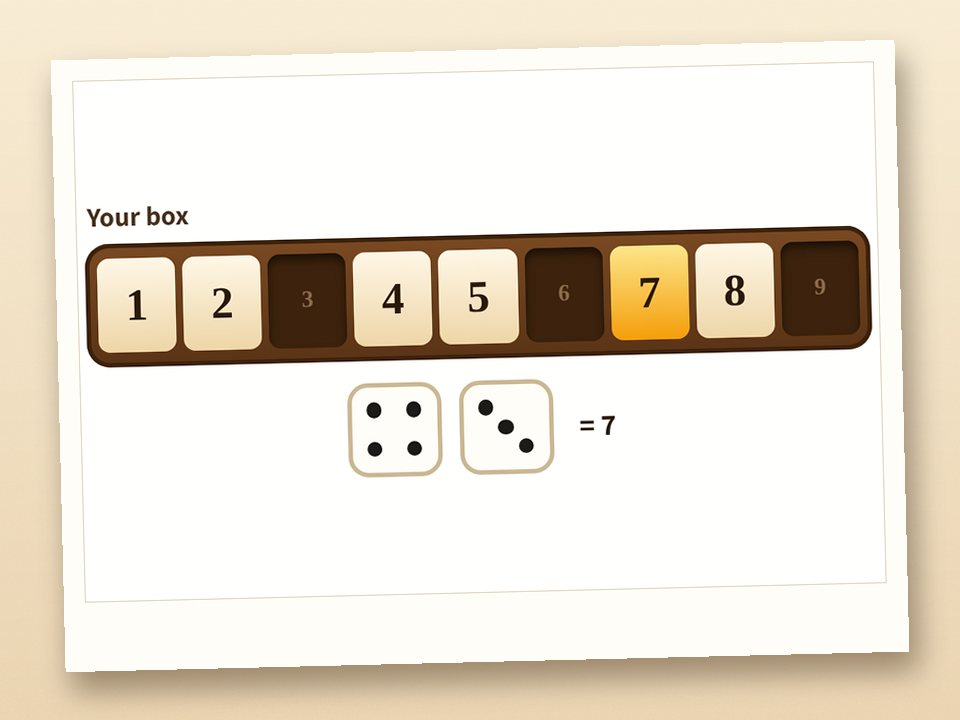
The old pub dice game: shut the number tiles that add up to your roll.
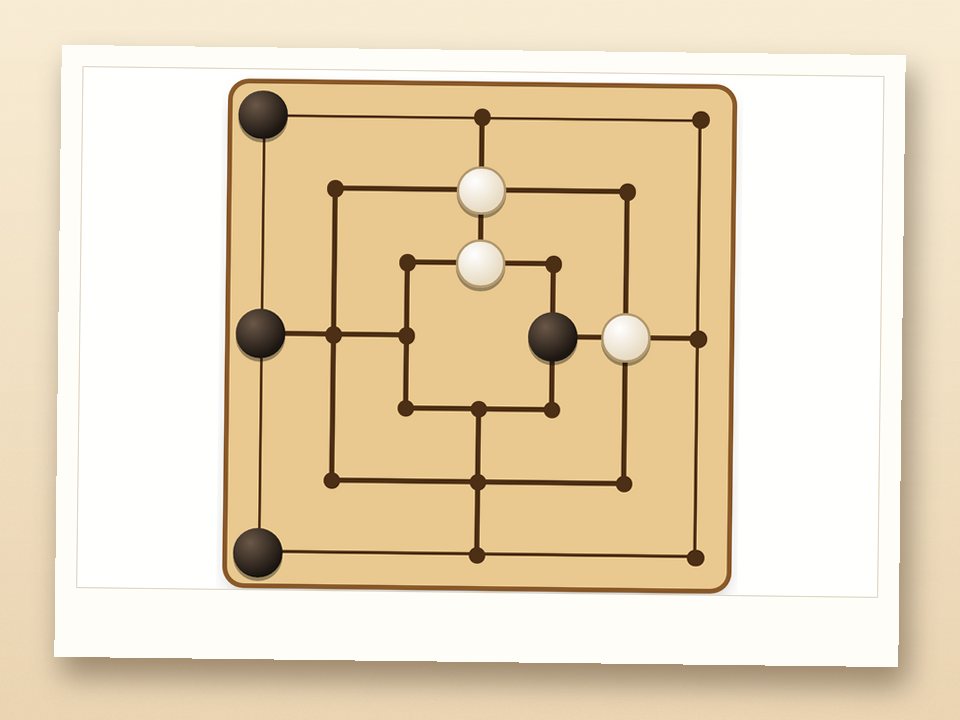
The centuries-old mill game: line up three to take a piece.
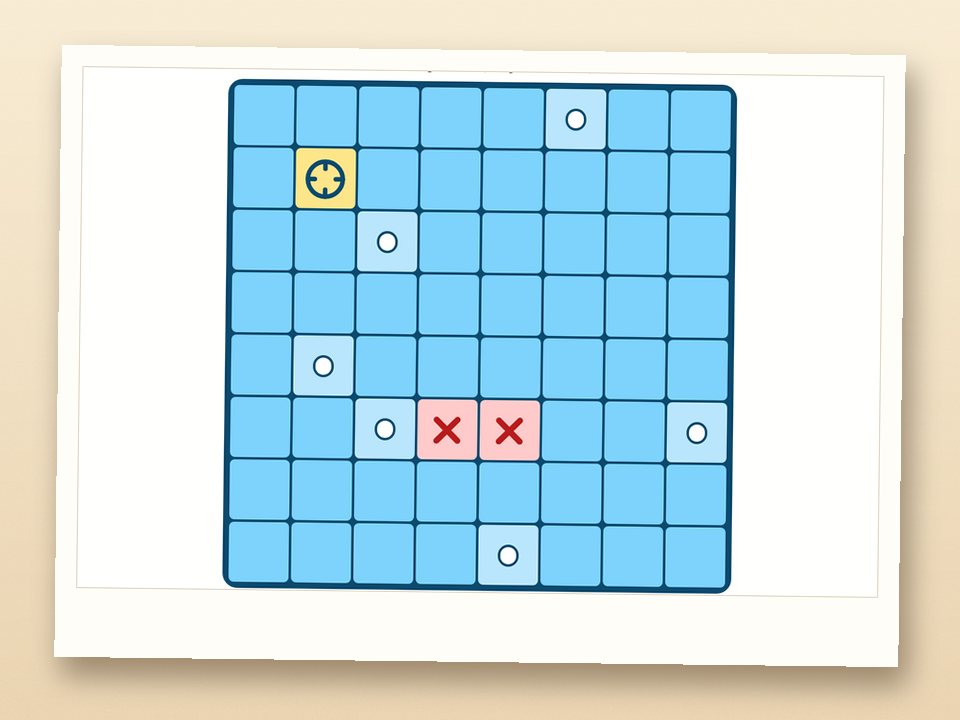
The squared-paper fleet game: find and sink the hidden ships first.
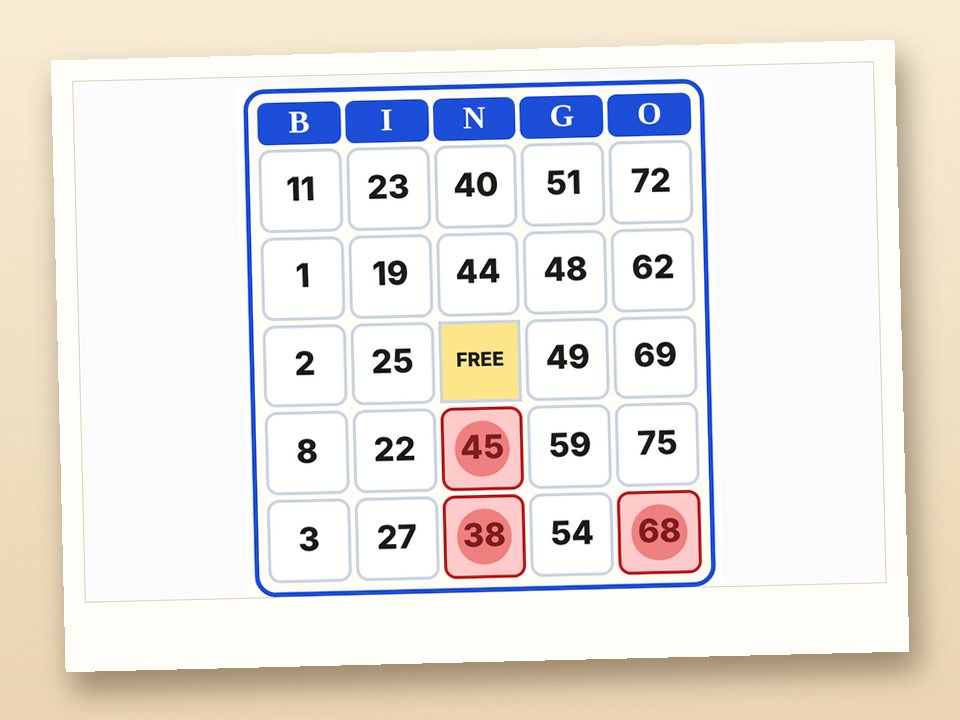
Community-hall bingo: daub your cards and call it before the other tables.
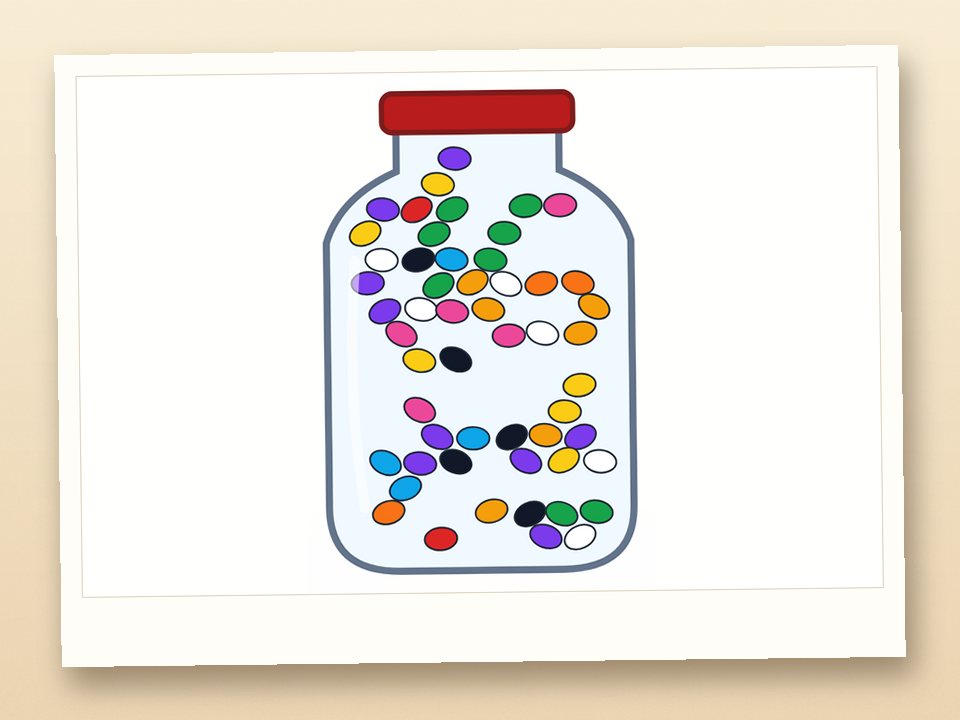
The county fair guessing jar: how many beans are inside?
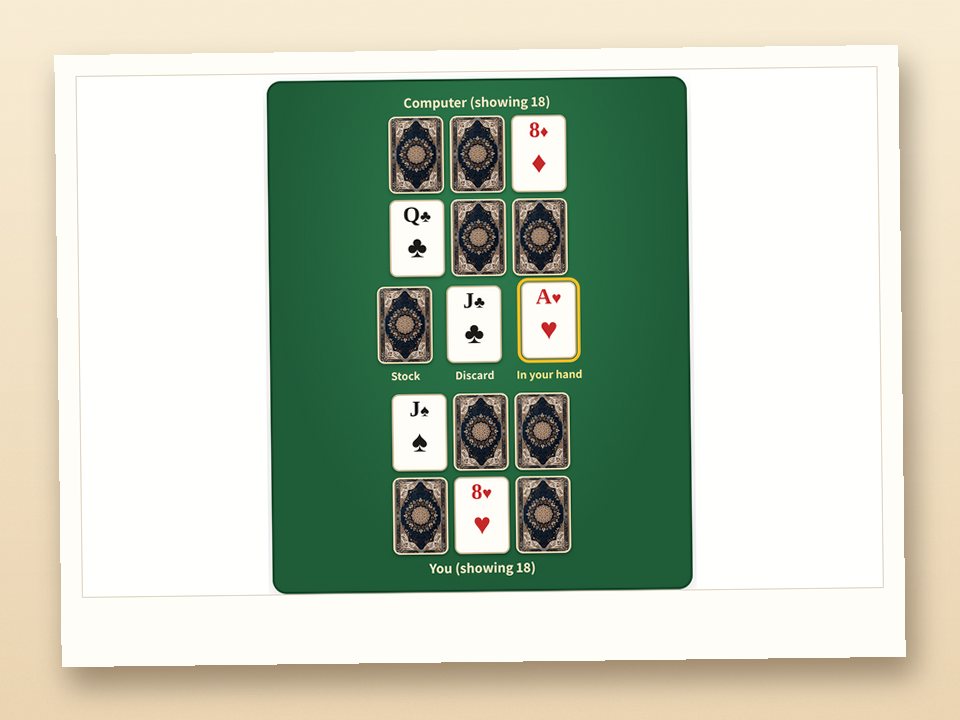
The kitchen-table card game where the lowest score wins, over three holes.
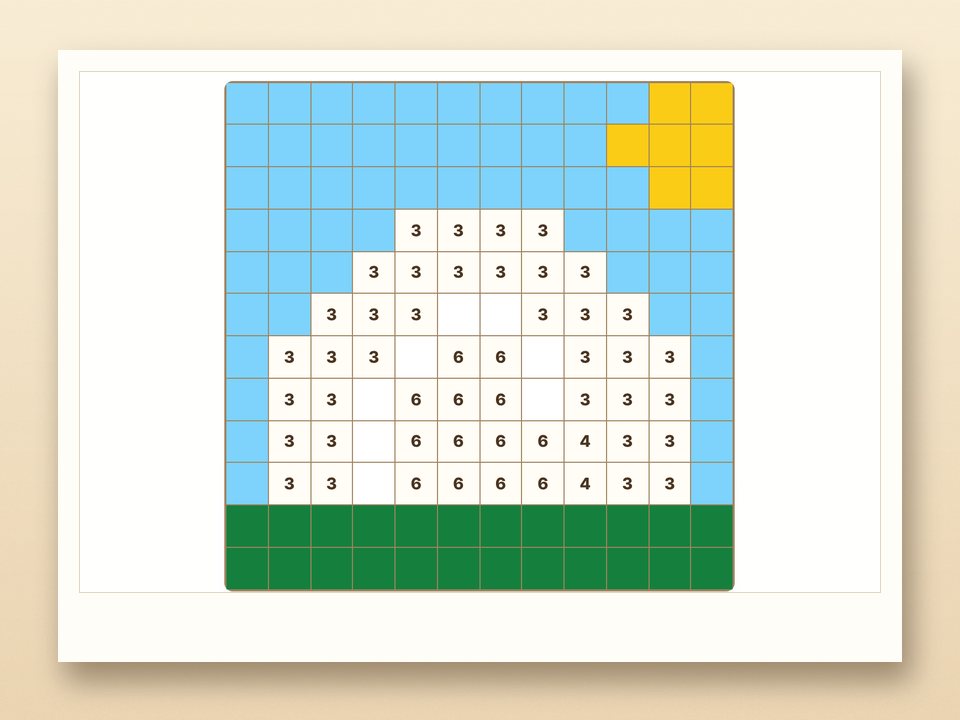
The paint-by-number pastime: fill each area with its numbered paint.
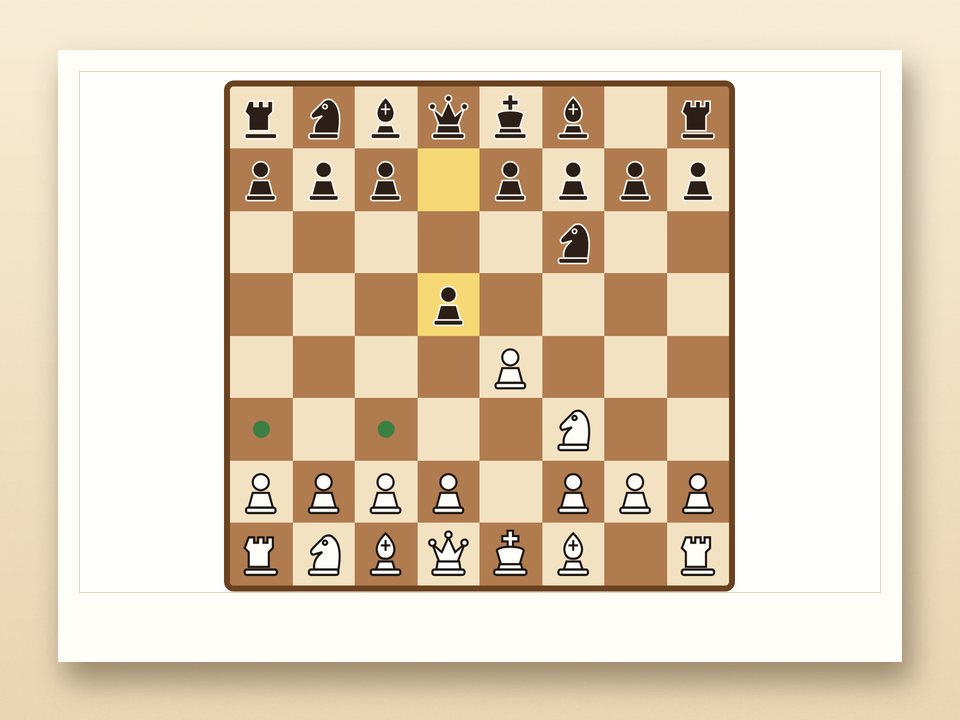
Park-bench chess against a patient computer, with take-backs whenever you like.
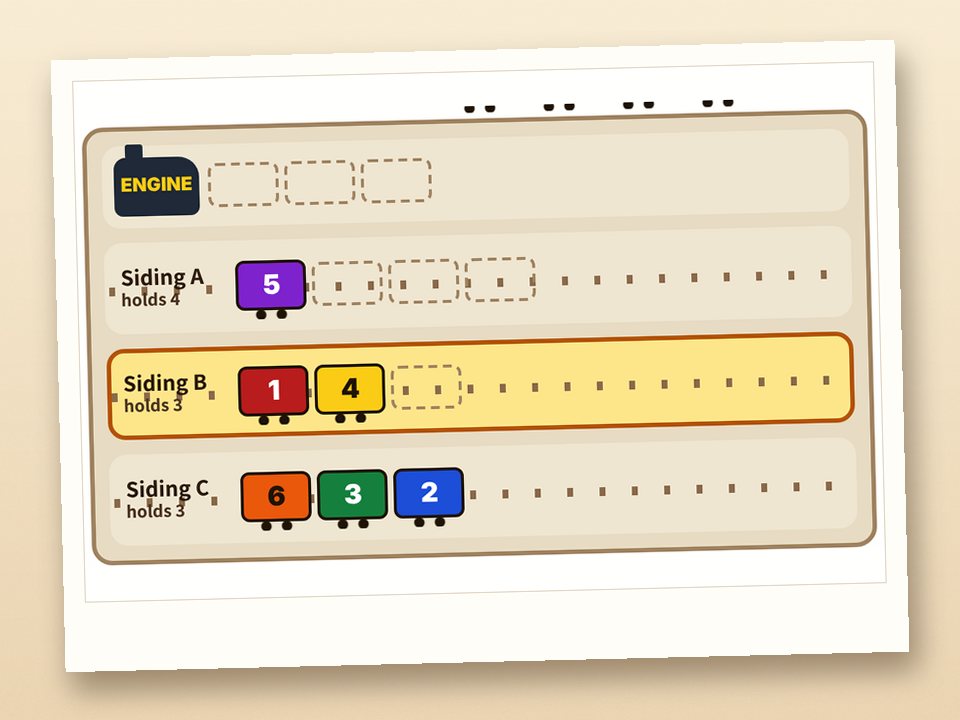
The model railroader's switching puzzle: make up the train in the right order.
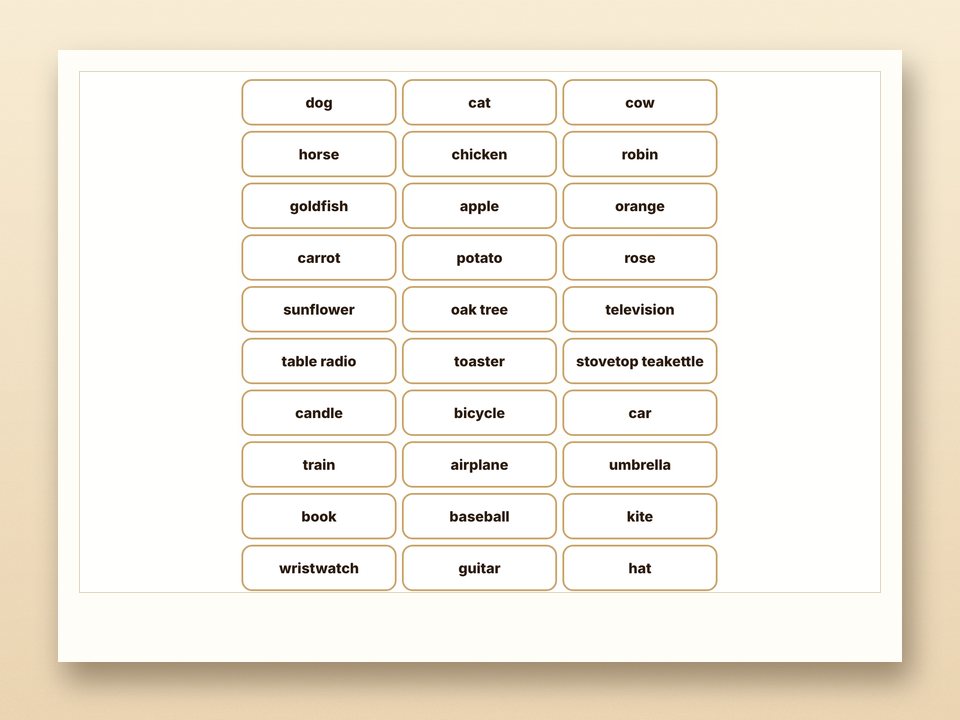
Animal, vegetable or mineral? Find the hidden thing with yes-or-no questions.
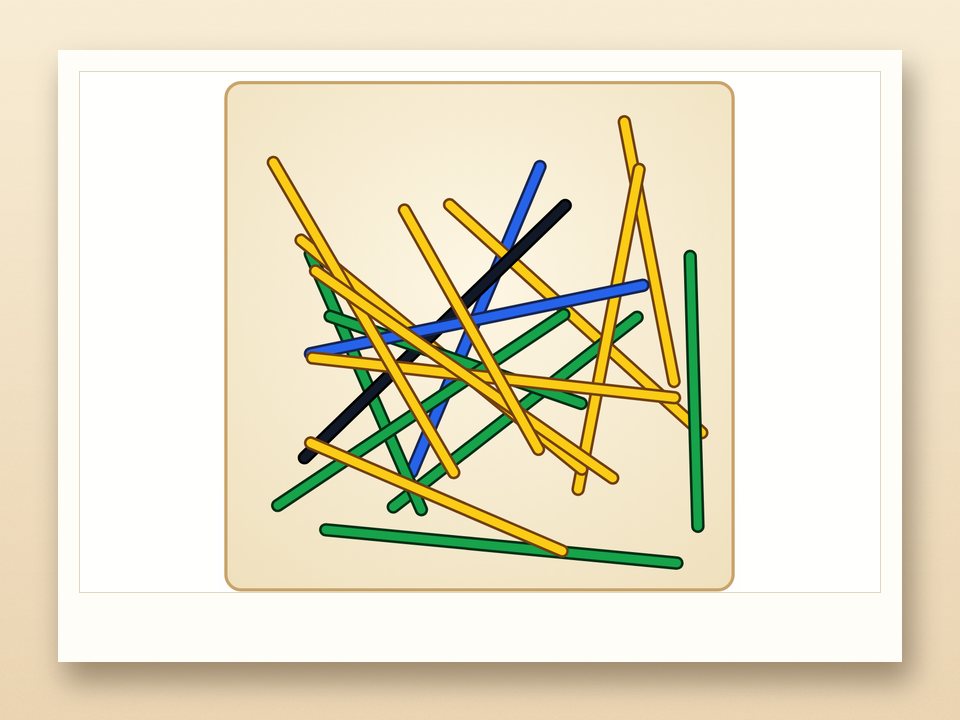
The toy-box classic: lift each stick without disturbing the pile.
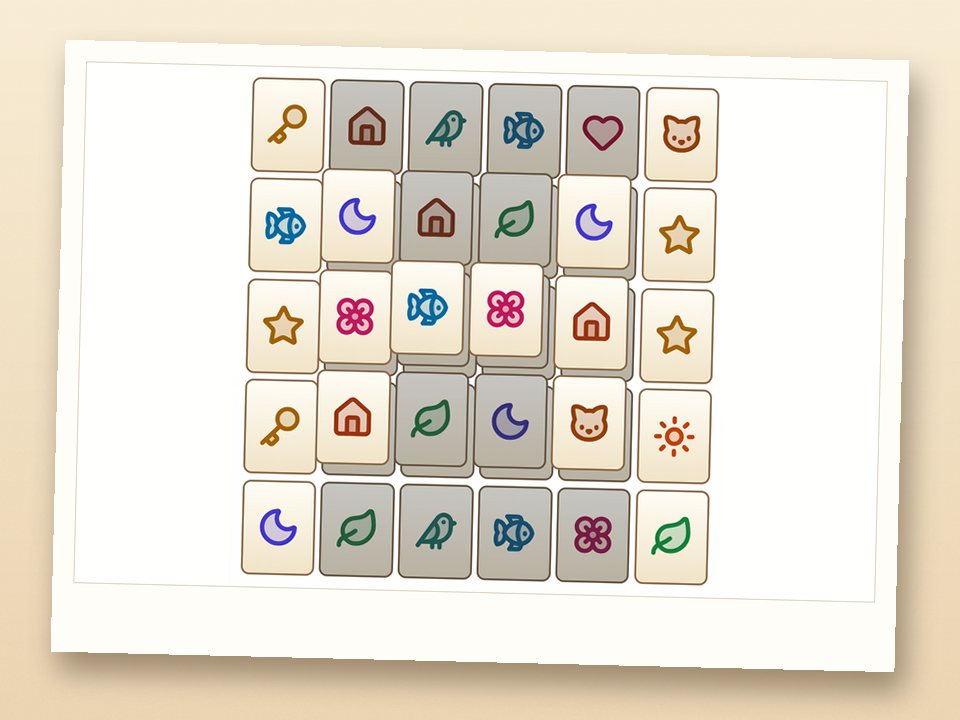
Mahjong-style tile solitaire: clear the stack in matching pairs.
The puzzles from the back pages, the placemat and the puzzle magazine. Pencil optional.
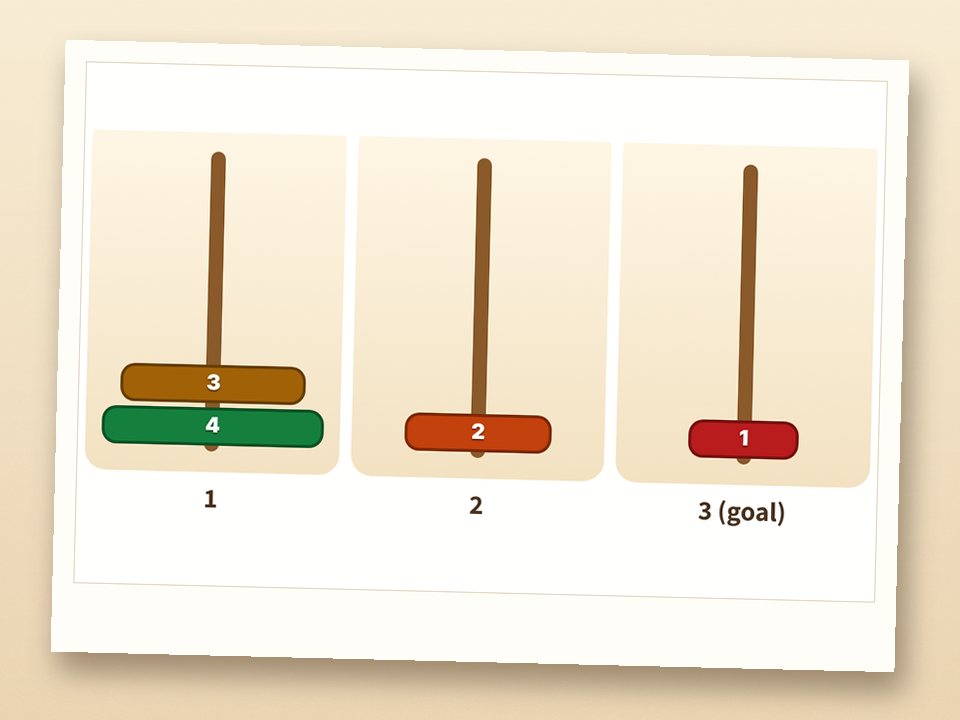
The toy-box disk puzzle: move the tower one disk at a time.
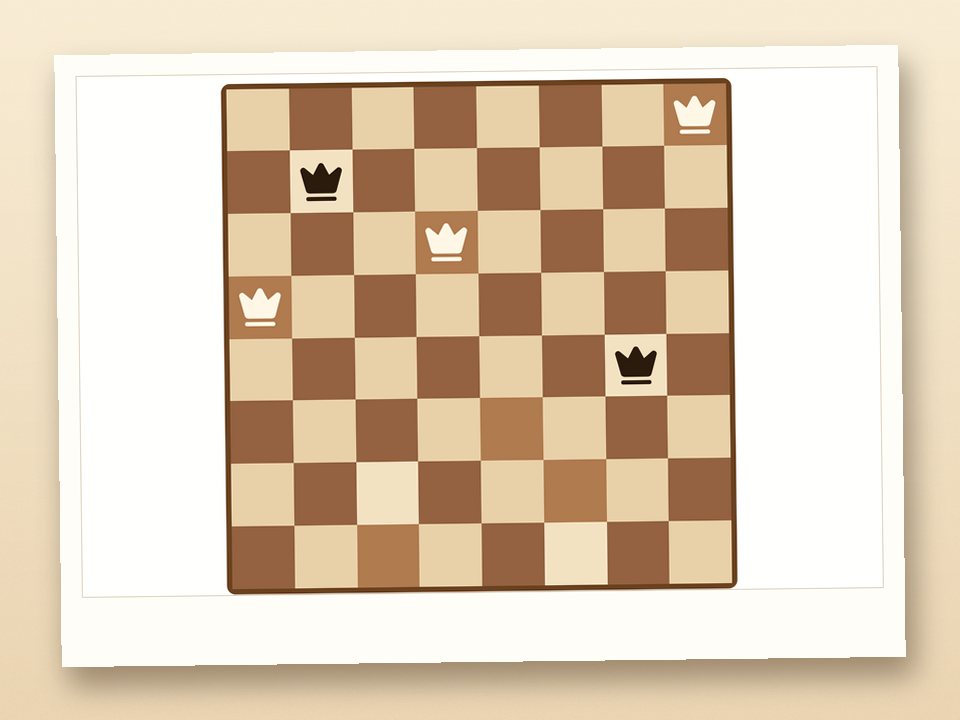
The chess-board puzzle: place queens so none can attack another.
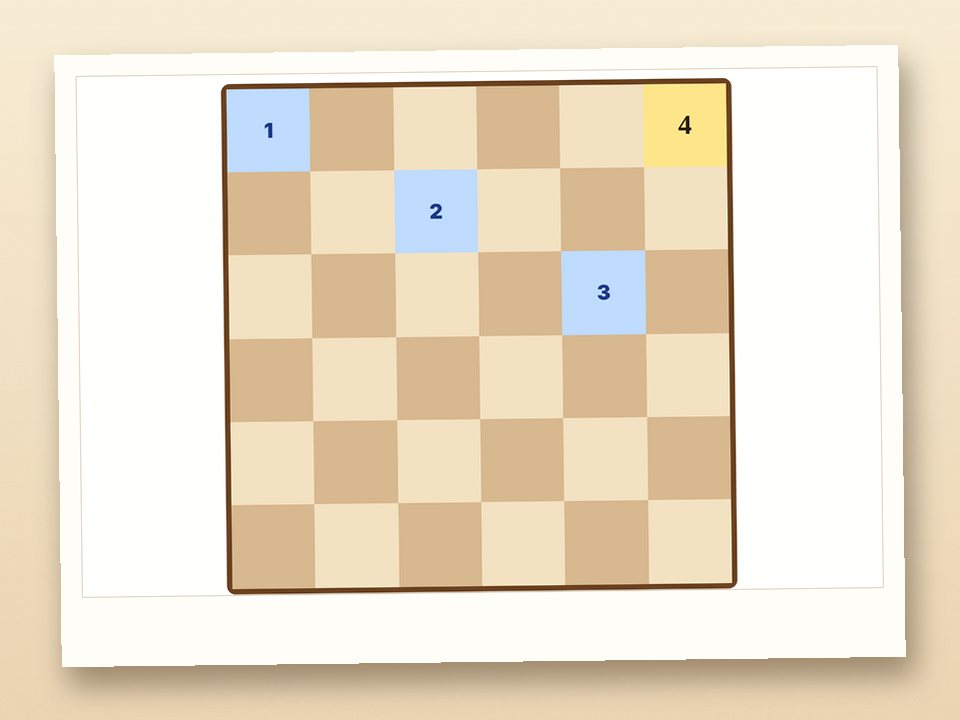
Hop a chess knight onto every square of the board, once each.
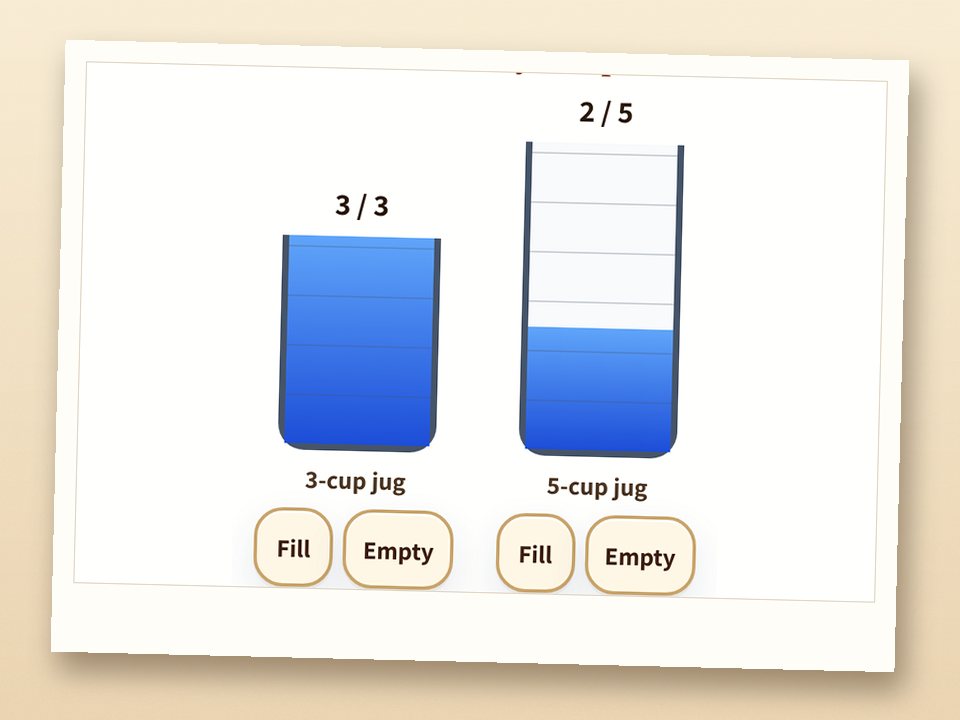
Measure an exact amount with jugs that have no marks.
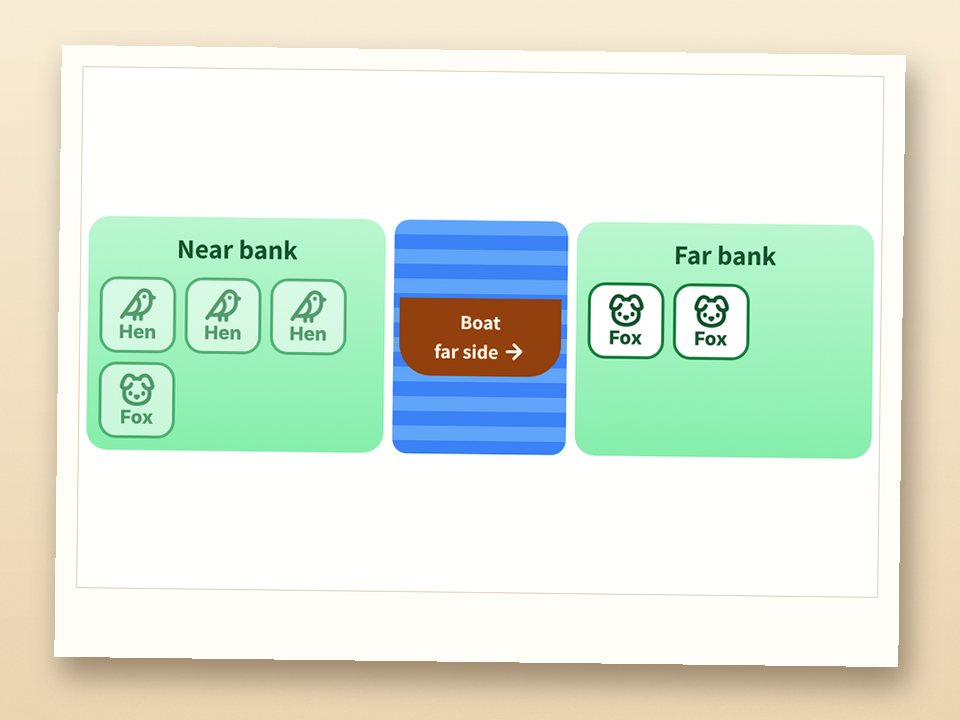
The old riddles: get everyone across without trouble on either bank.
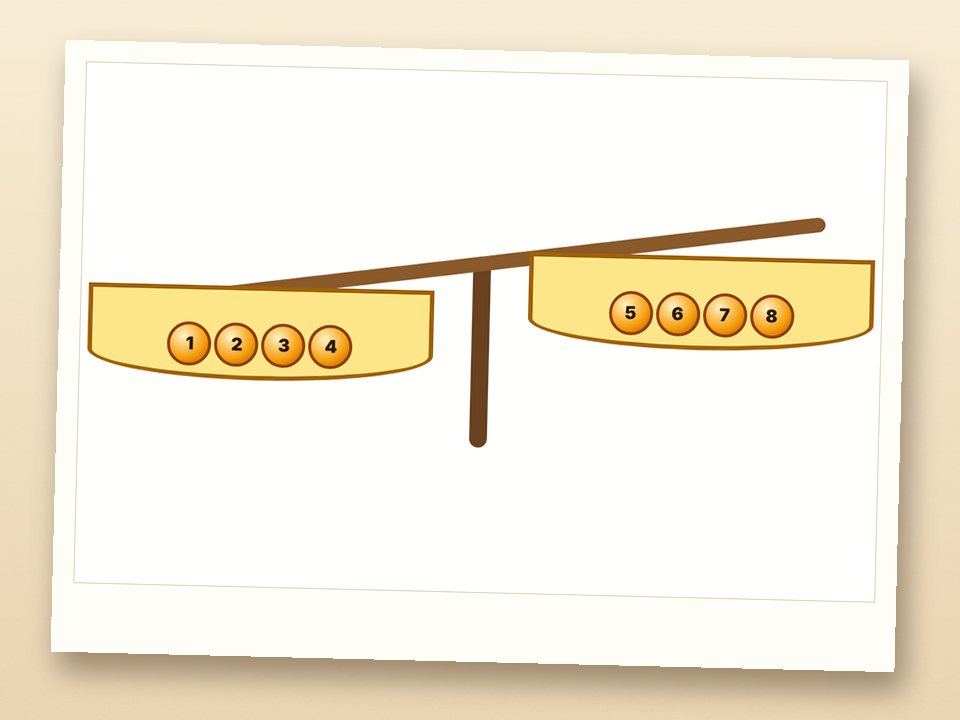
Find the one fake coin with only a few weighings.
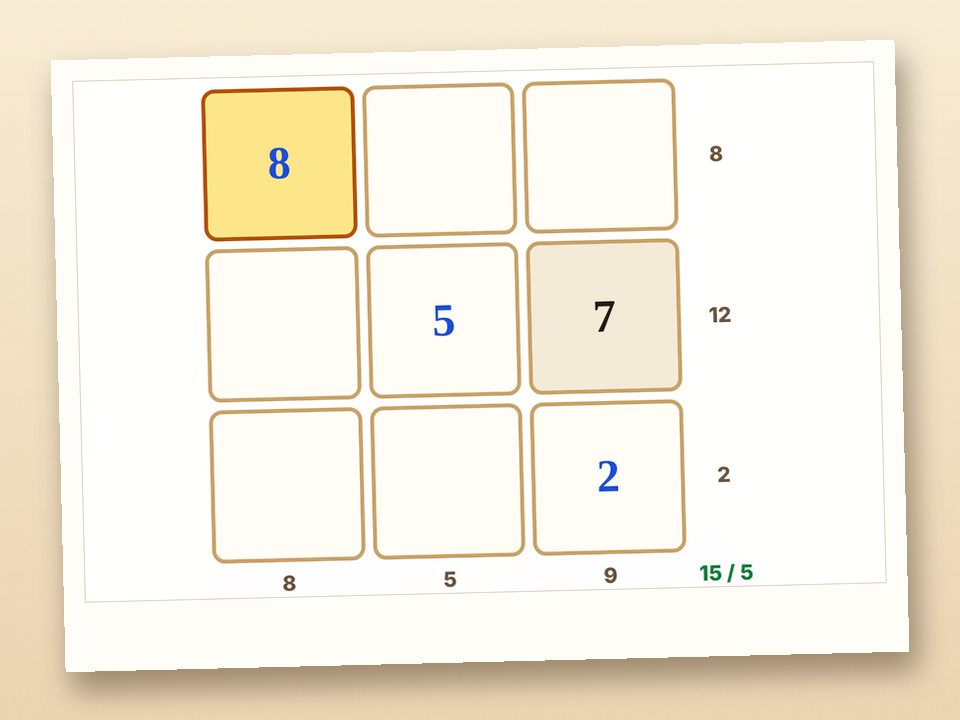
Fill the grid so every row, column and diagonal adds to the same total.
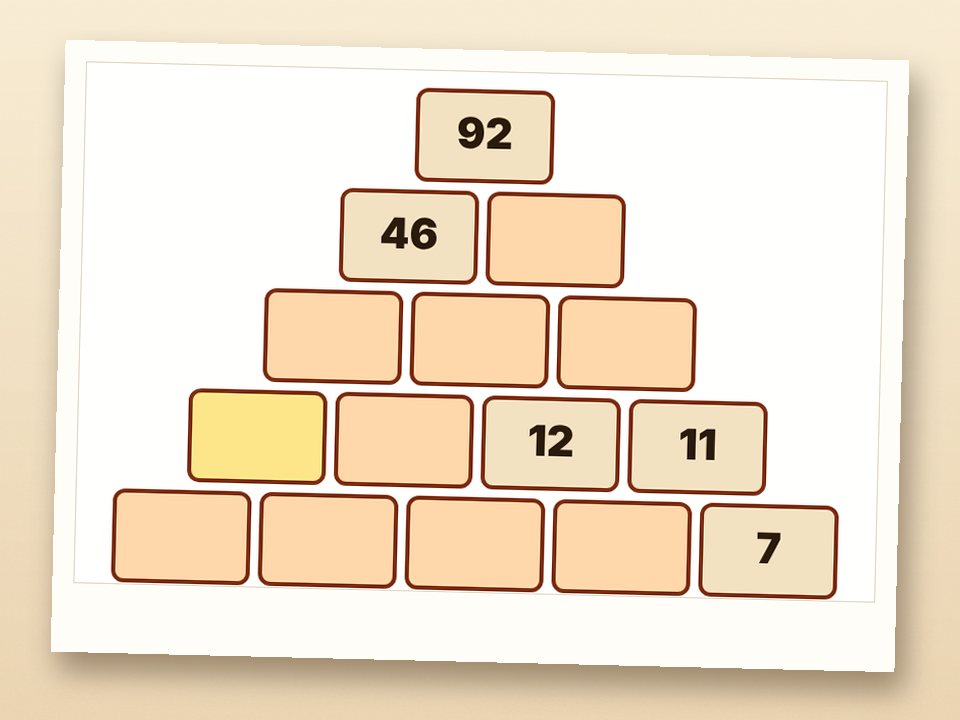
Every brick is the sum of the two below it. Fill in the missing ones.
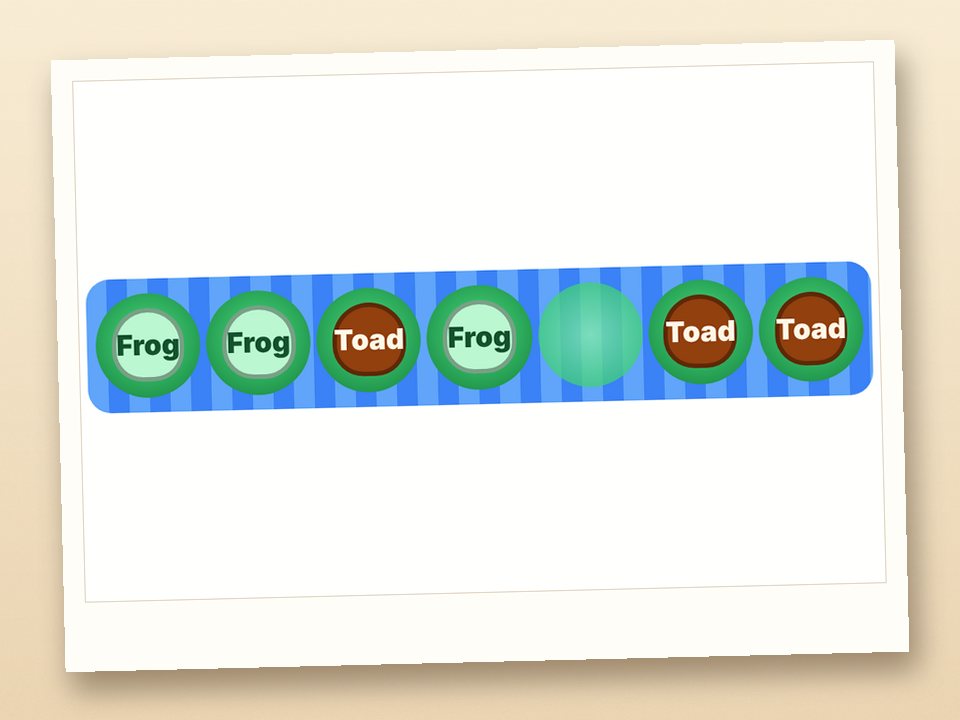
Swap the frogs and toads on the lily pads, moving forward only.
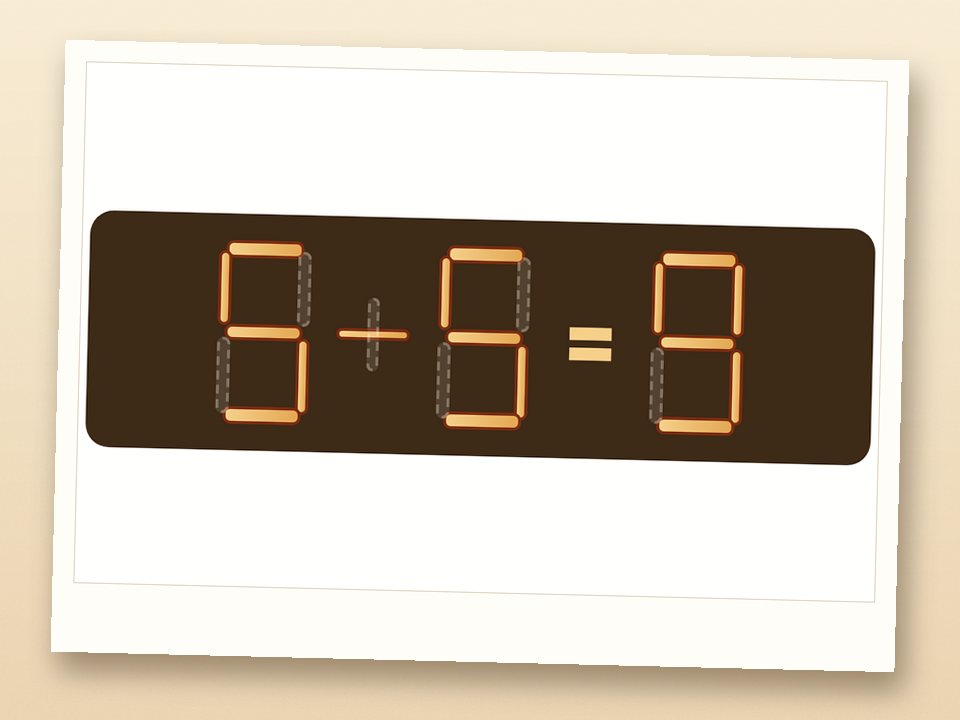
The pub puzzle: move one match to make the sum true.
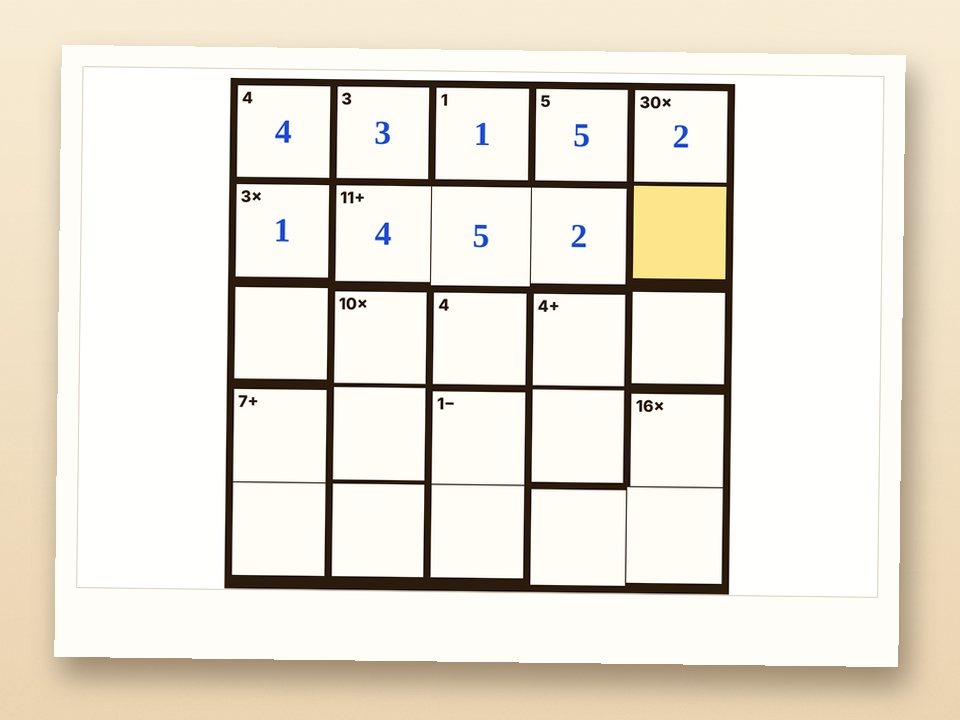
The puzzle-page number grid: every row and column once, every cage adds up.
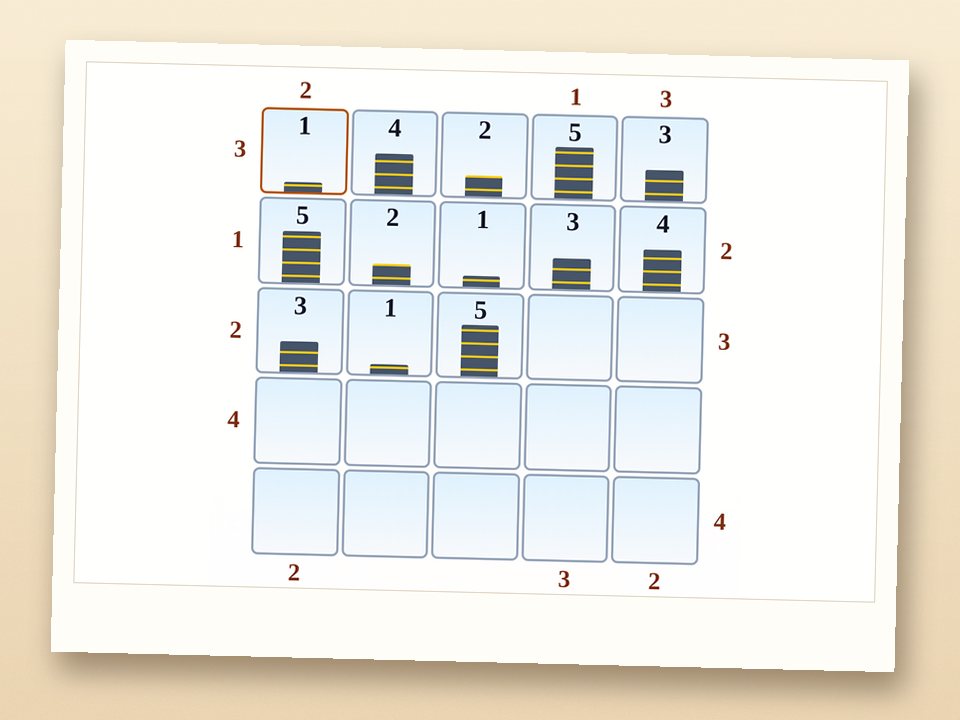
Build the city so the edge numbers count the buildings you can see.
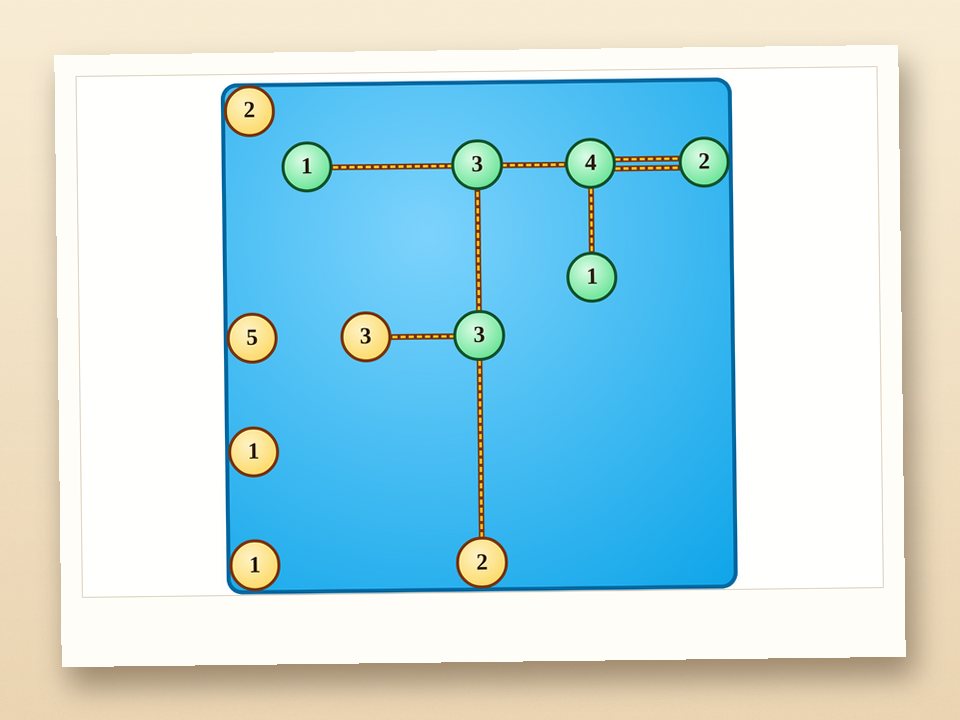
Join every island with straight bridges, as many as its number.
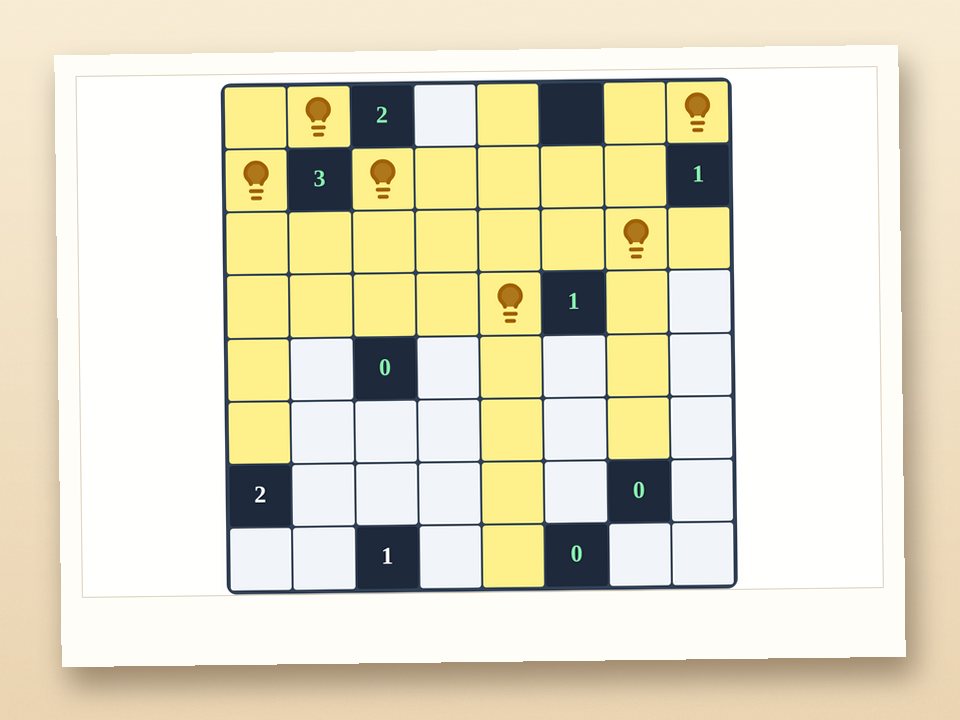
Light every white square with lamps that never shine on each other.
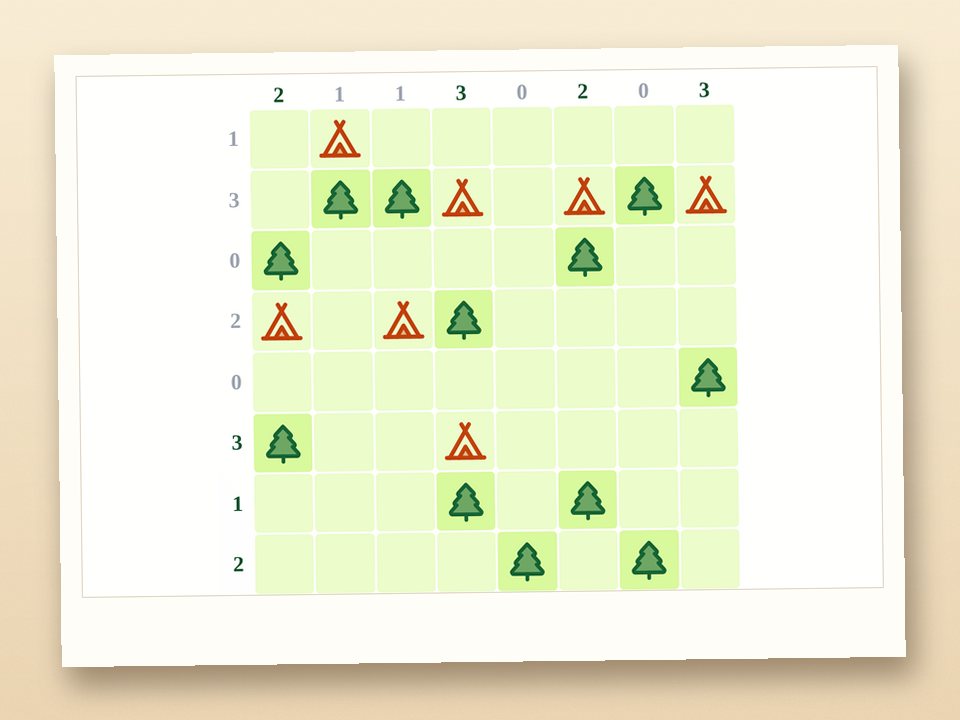
Pitch one tent beside every tree, with the right count in each row.
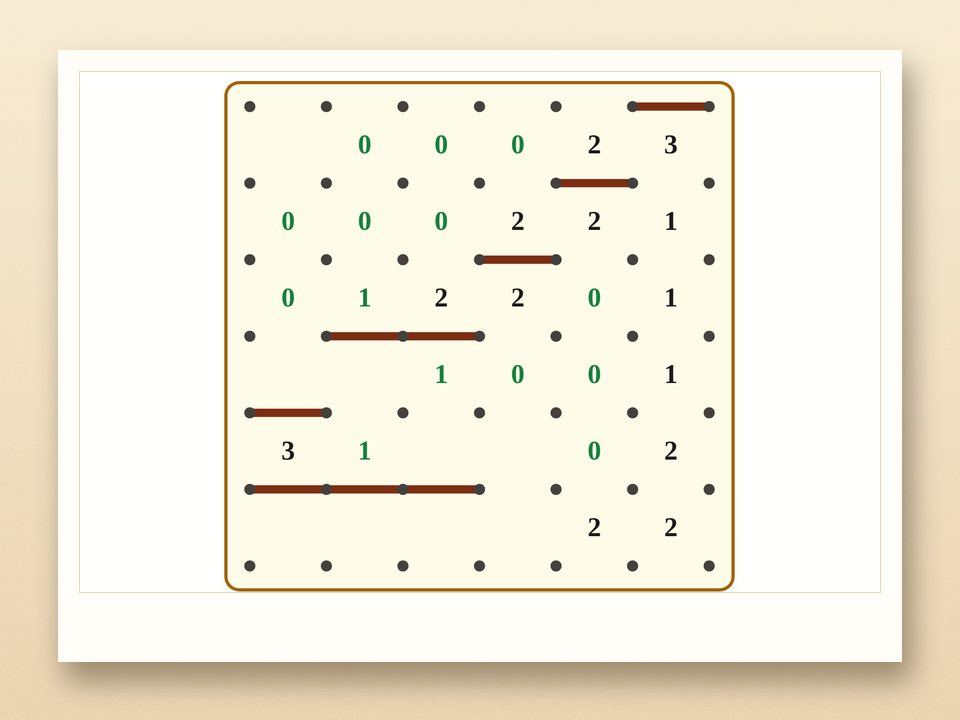
Draw one closed fence that fits every number in the field.
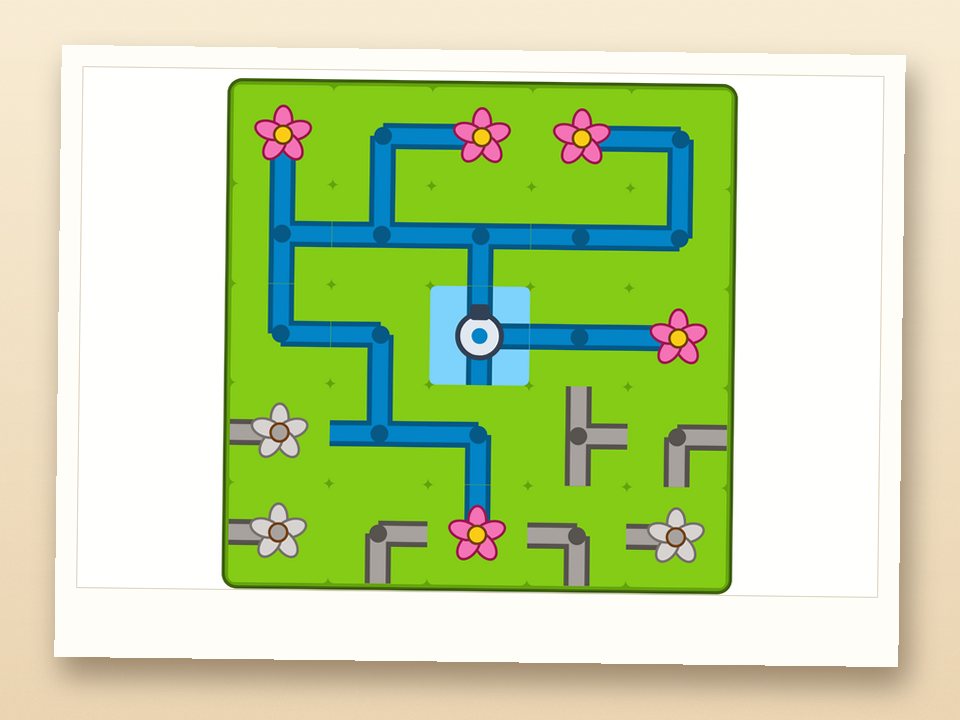
Turn the hose pieces until water reaches every flower.
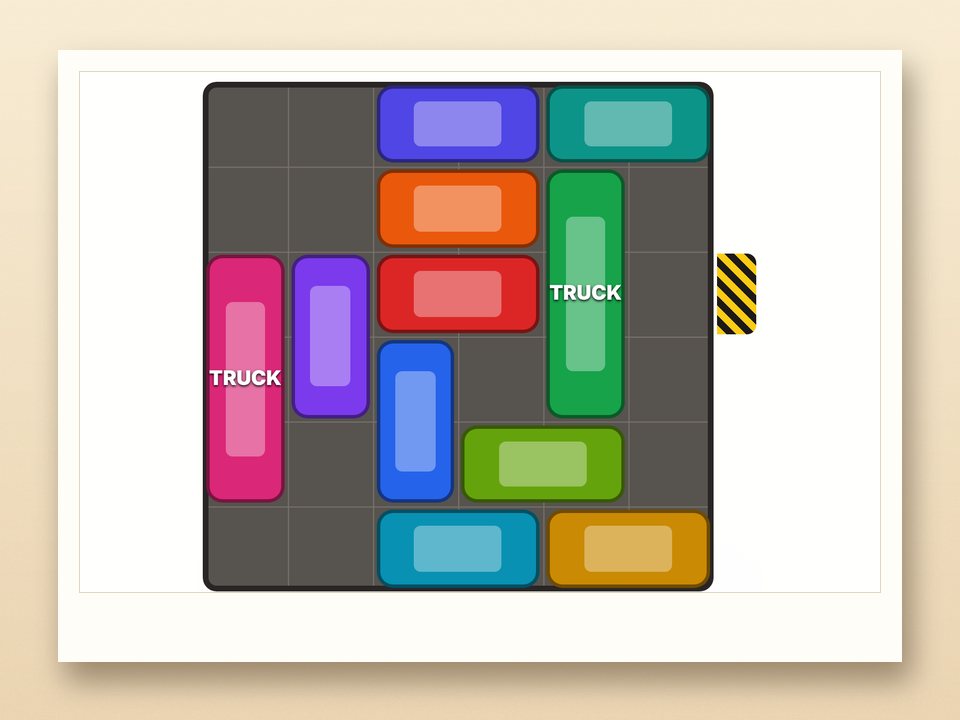
Slide the cars out of the way and drive the red car out of the gate.
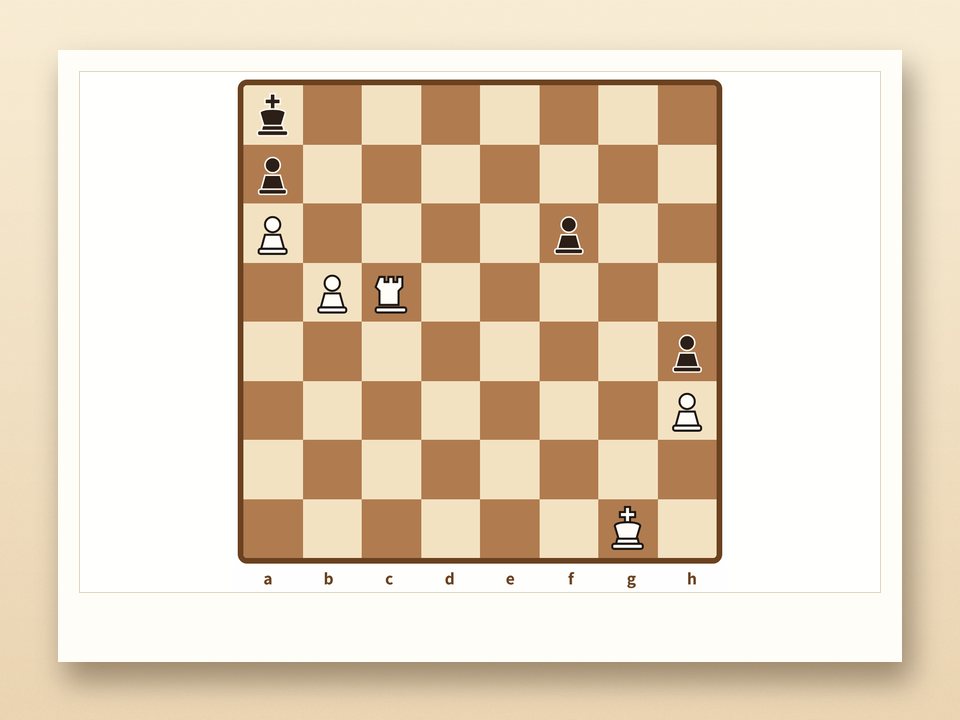
The newspaper chess column: find the checkmate in one move.
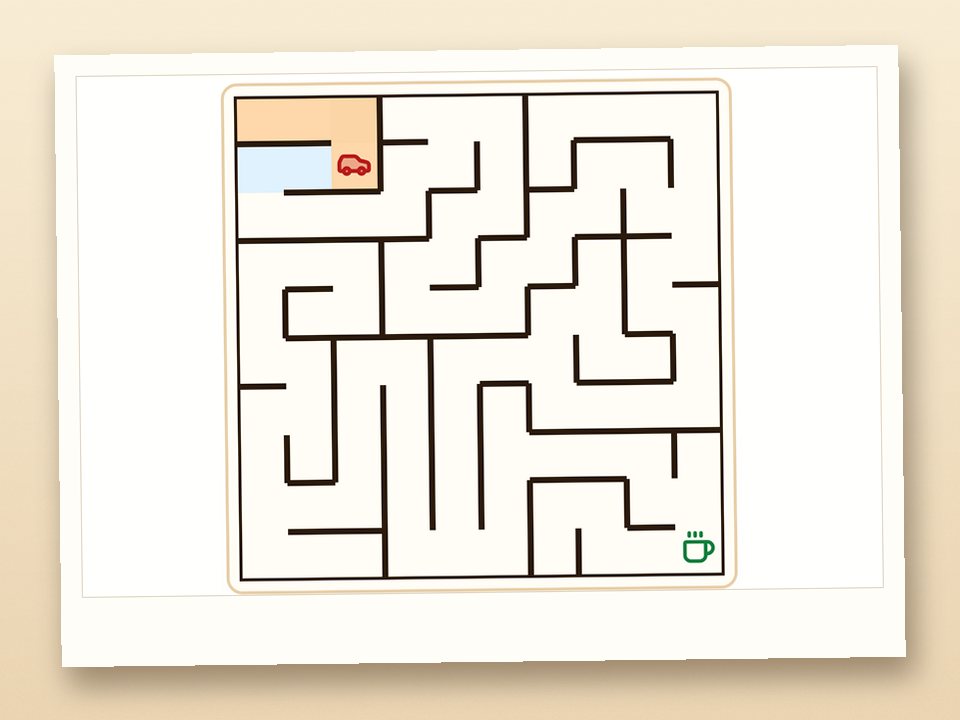
The pencil maze from the diner placemat: drive the car to the diner.
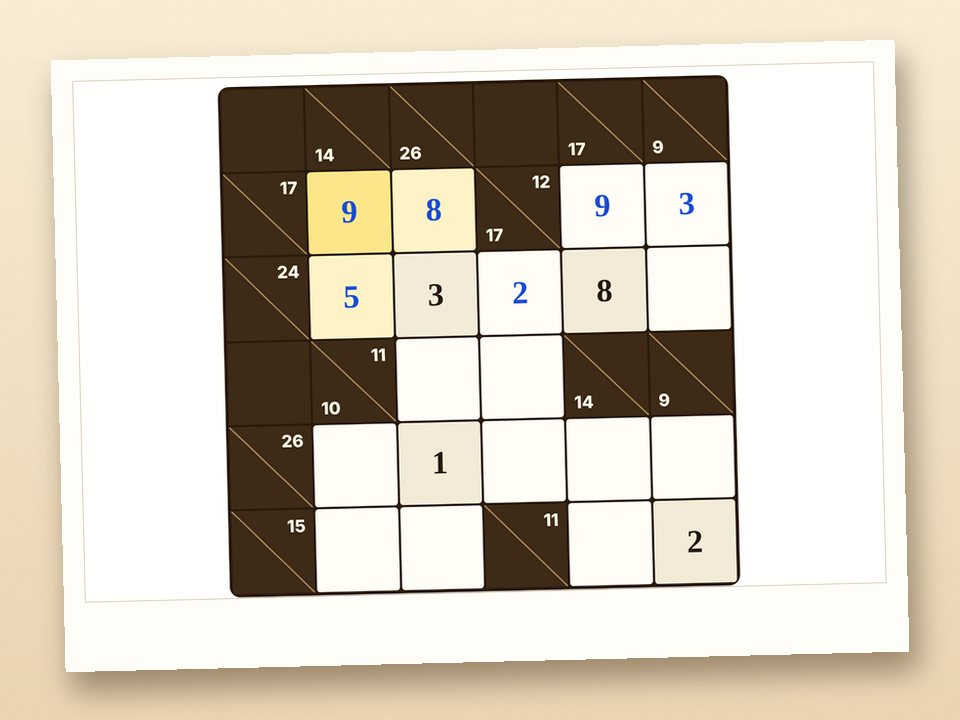
The number crossword from the puzzle magazines: every run adds up to its clue.
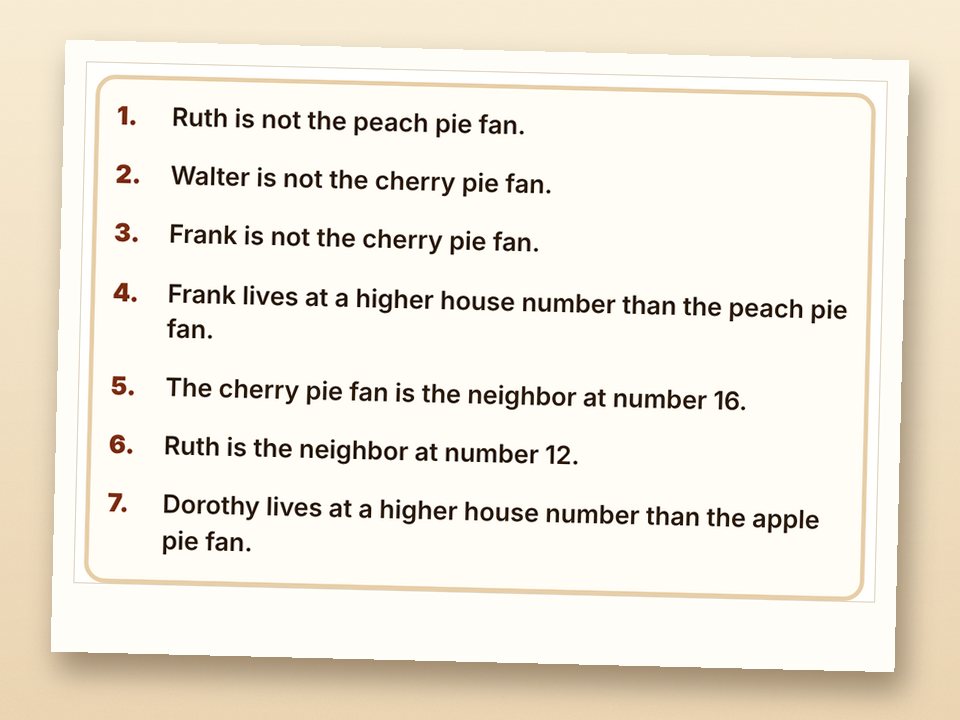
Who owns the canary? Work it out from the clues, puzzle-magazine style.
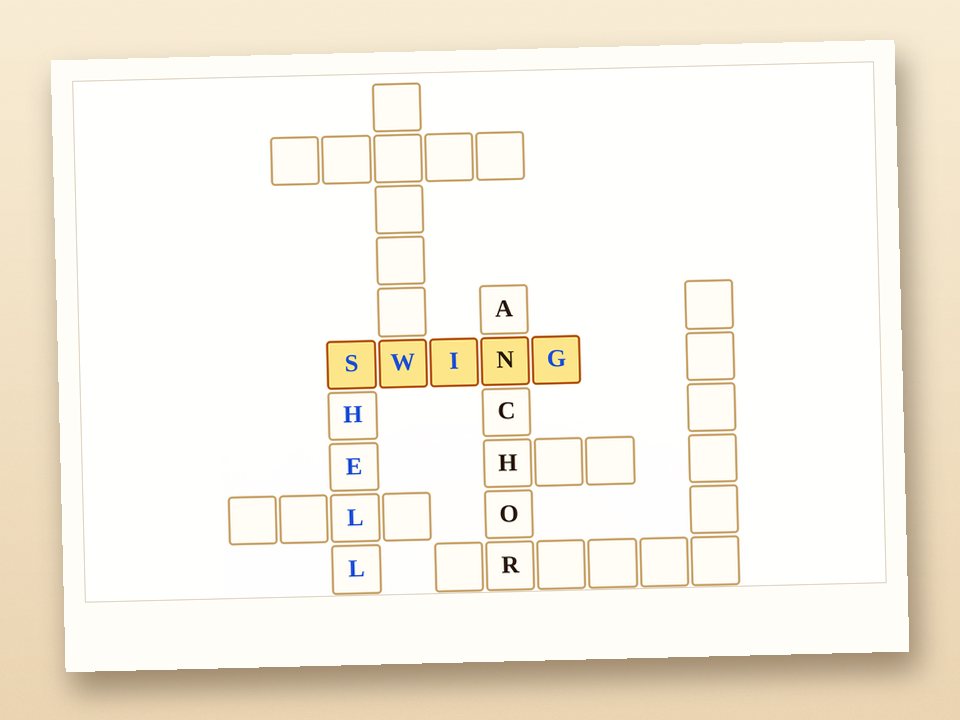
No clues, just a word list: fit every word into the grid.
Original takes on the first screen and handheld games. Every one waits for you.
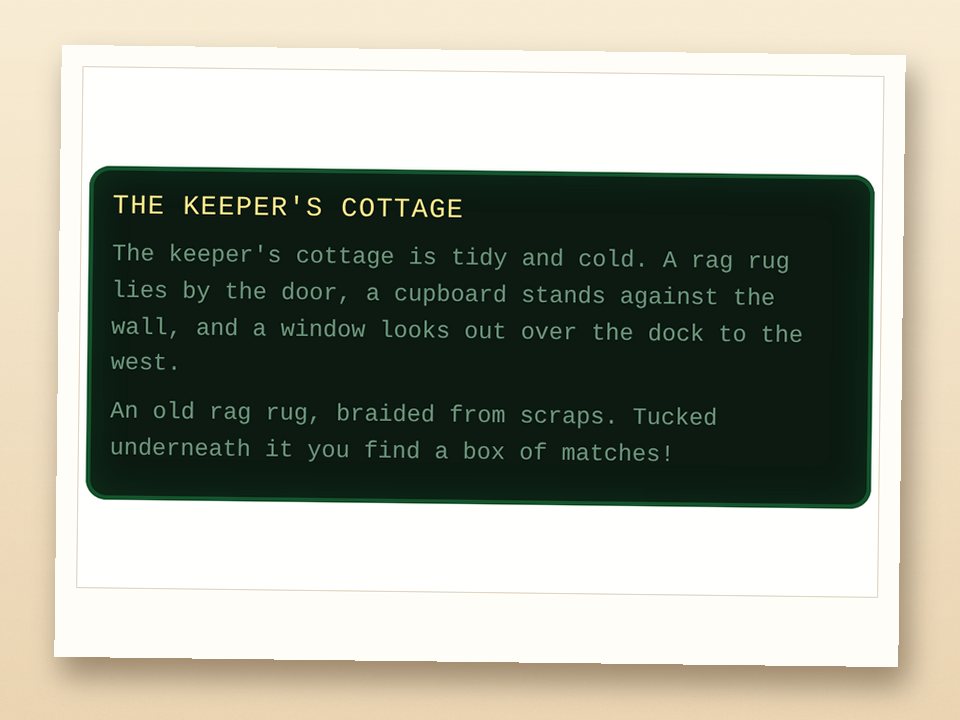
A short text adventure: light the lighthouse before the boat comes in.
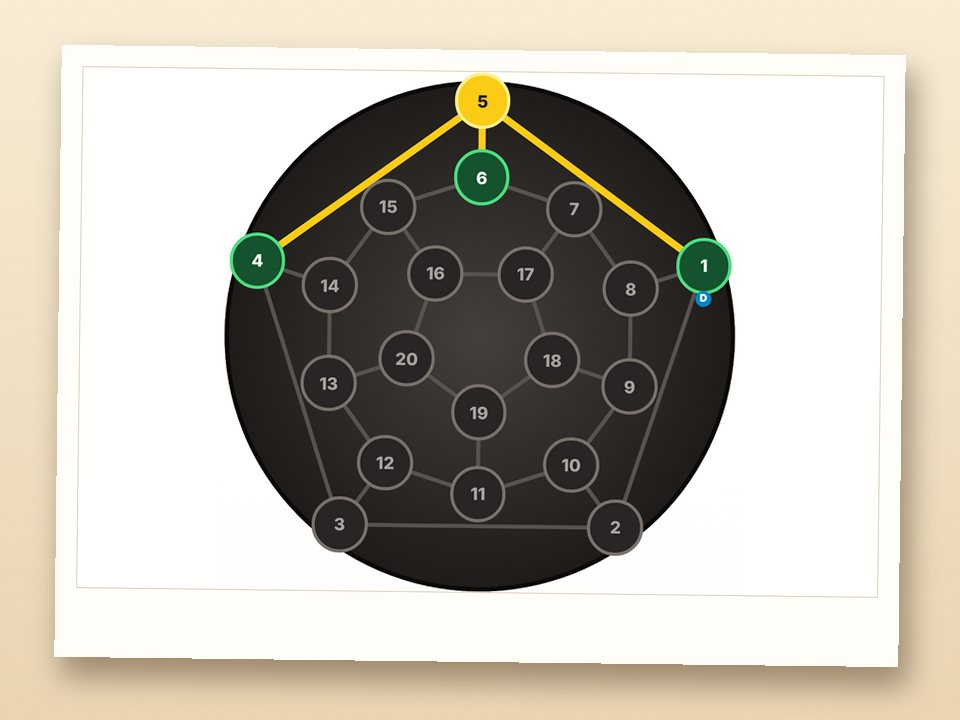
Find the sleeping bear in a cave of twenty caverns, by clues alone.
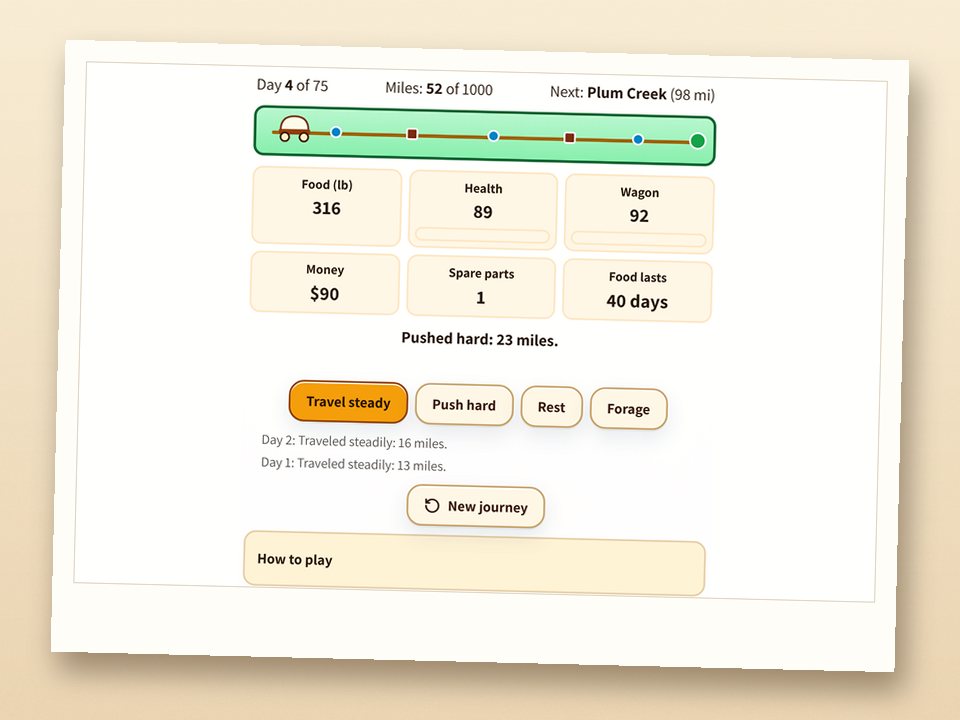
Lead a wagon 1,000 miles west before the snow, day by day.
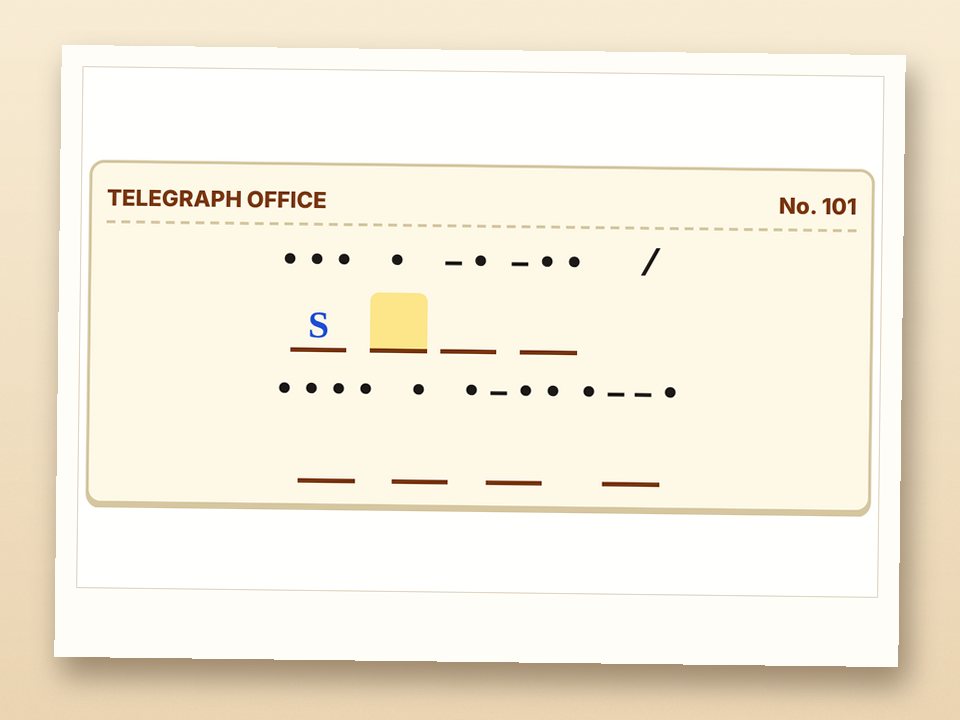
Decode telegrams sent in dots and dashes.
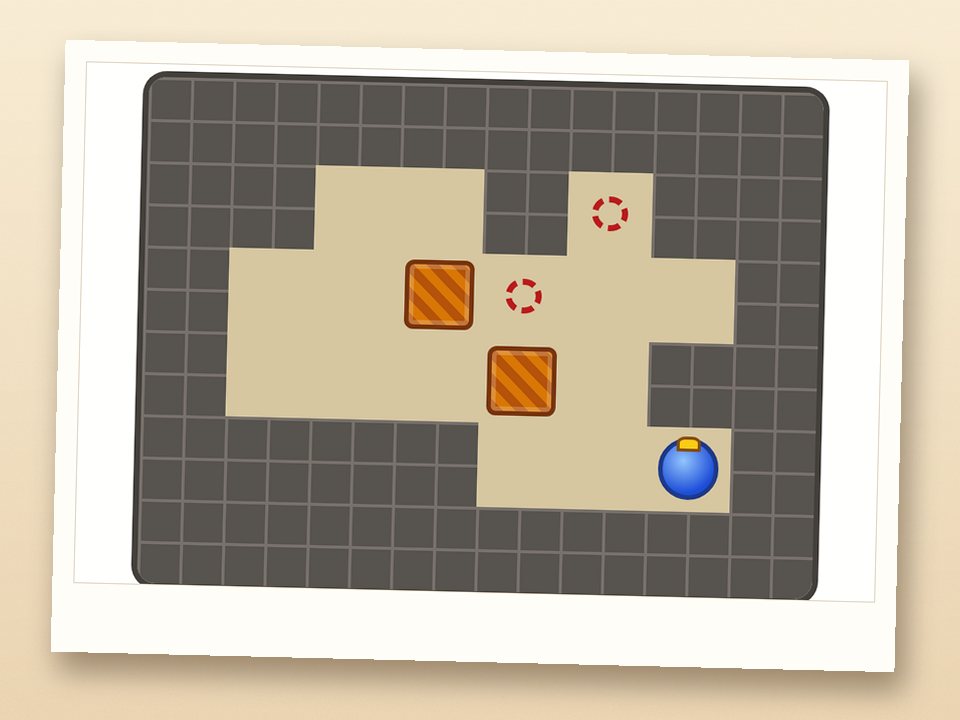
Push every crate onto its spot in the little warehouse.
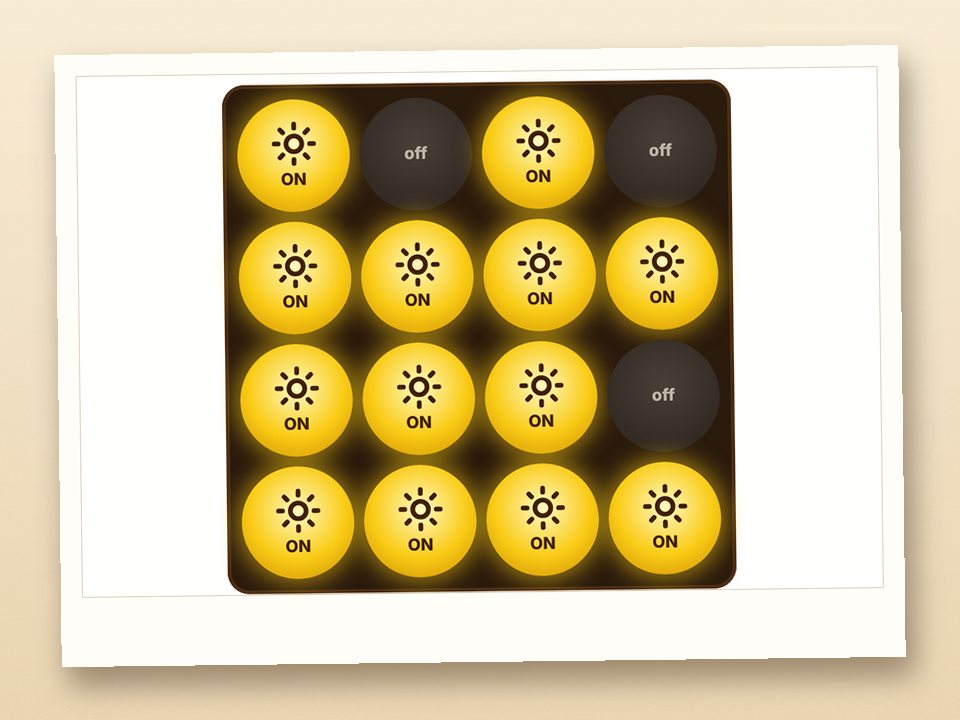
A grid of lamps where every press also flips the neighbors. Turn them all off.

The turn-by-turn lunar lander from the old computer terminals.
Original games in the spirit of the arcade classics. Slow to start, with big controls.
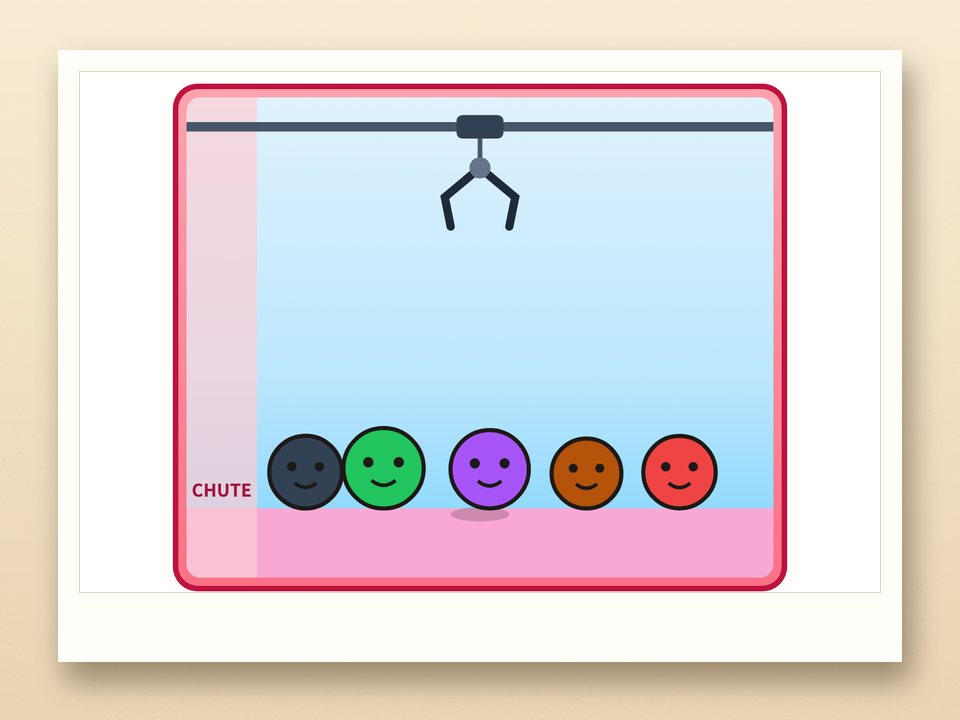
The glass-box prize grabber, with free tokens and no rush.
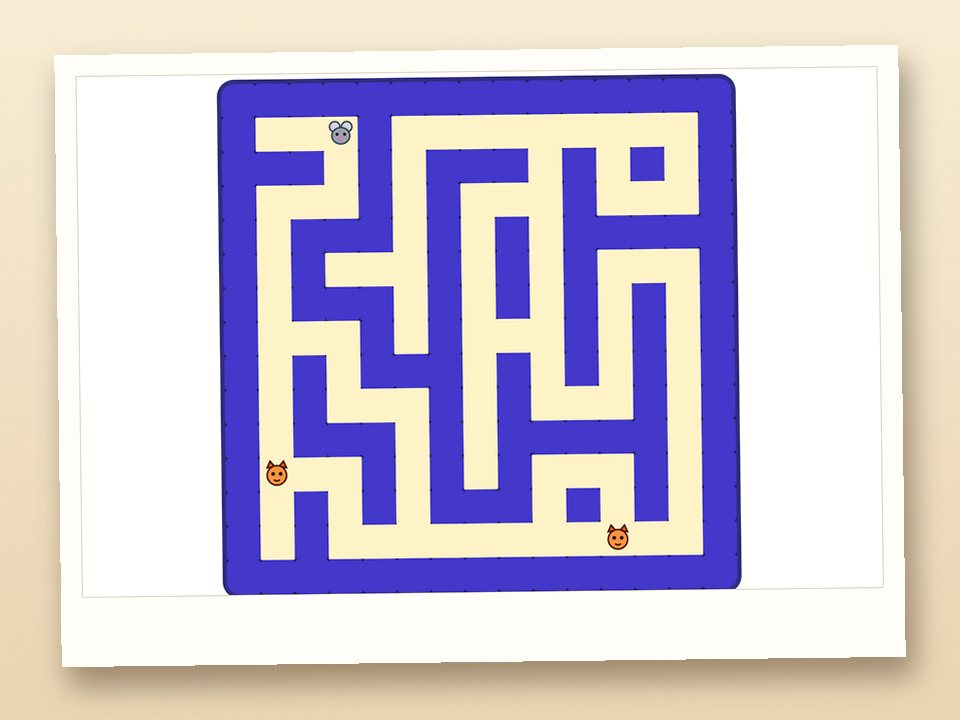
A turn-by-turn maze chase: eat every crumb while the cats follow.
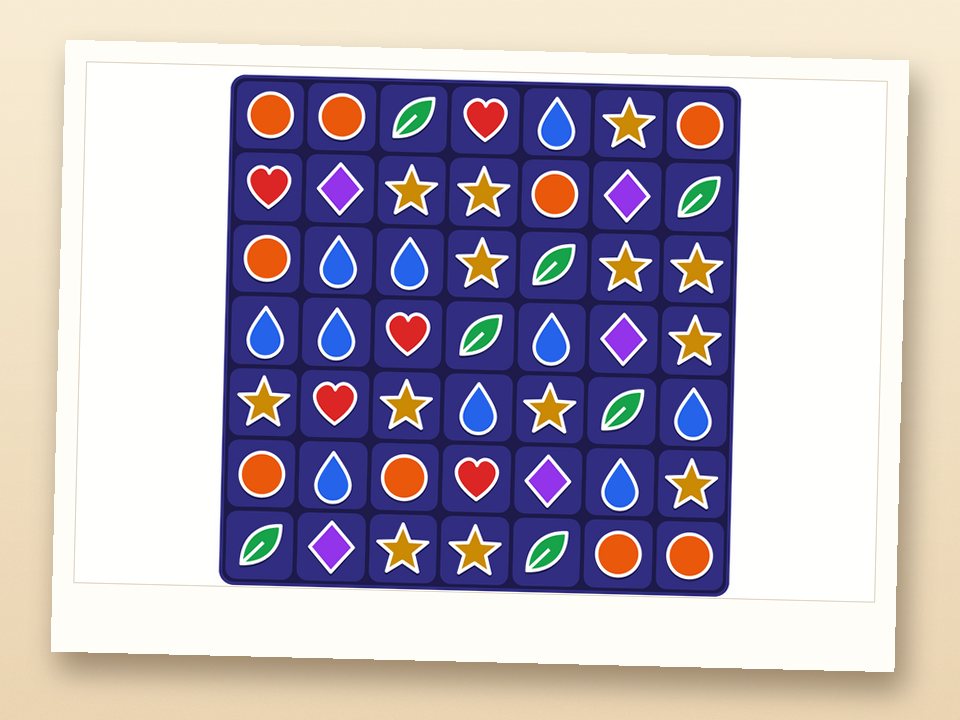
Swap neighboring gems to line up three or more, with no clock.
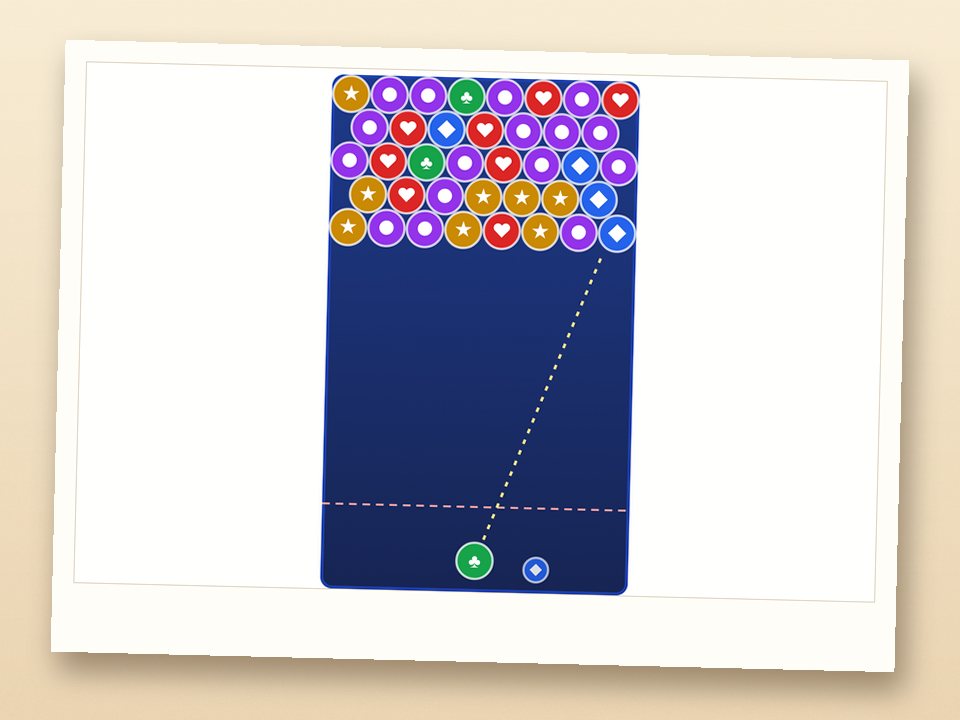
Aim and pop groups of three, bouncing shots off the walls.
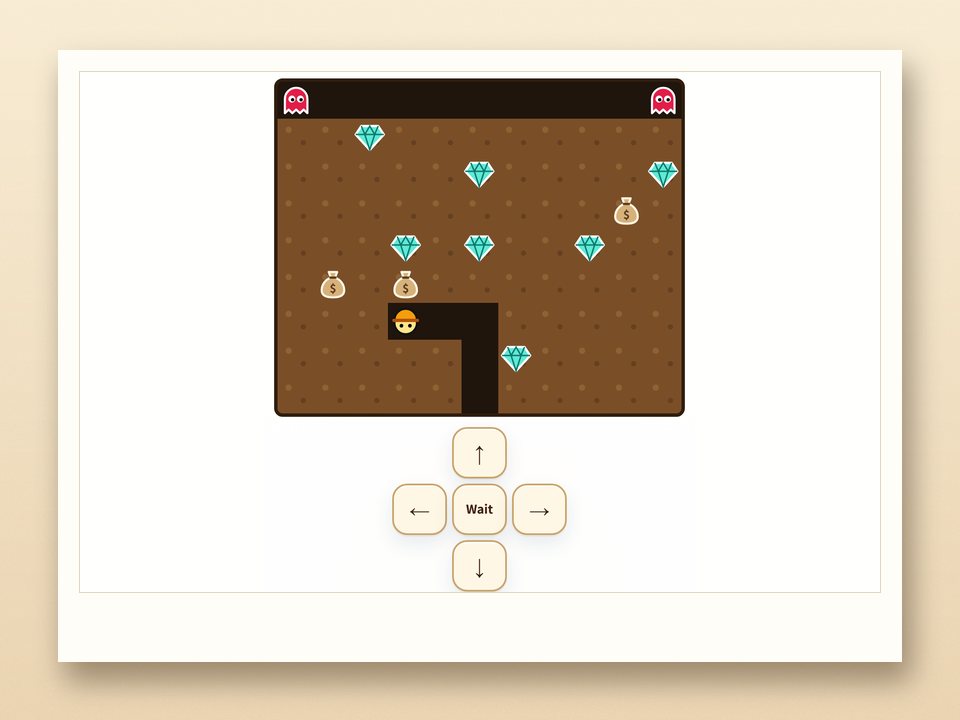
Dig for gems, drop sacks of gold and stay clear of the creatures. Nothing moves until you do.
Calm, untimed games for enjoyment and practice. Each one has a short article about the research behind the idea - and what that research does not show.
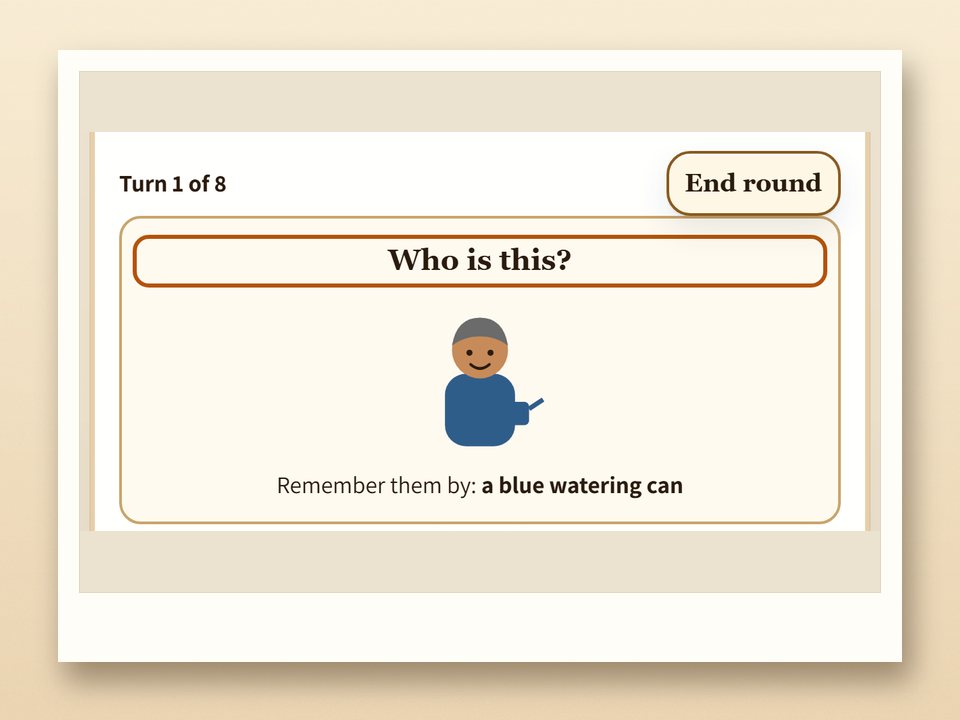
Meet four neighbors, then see who is who. The answer is always shown.
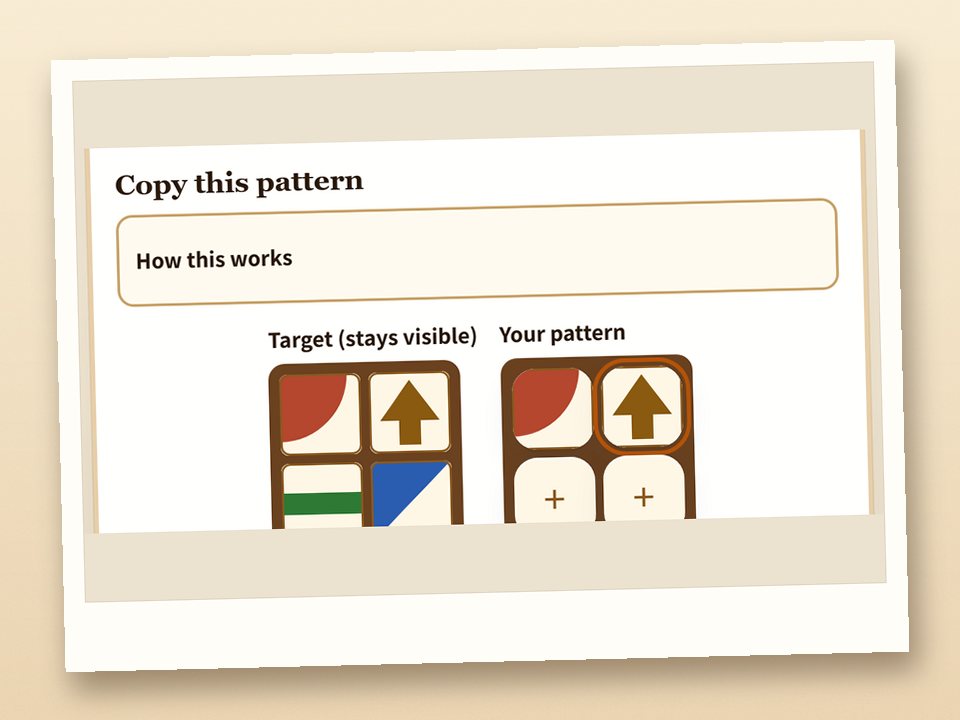
Copy a small mosaic at your own pace, with a rule example and Undo.
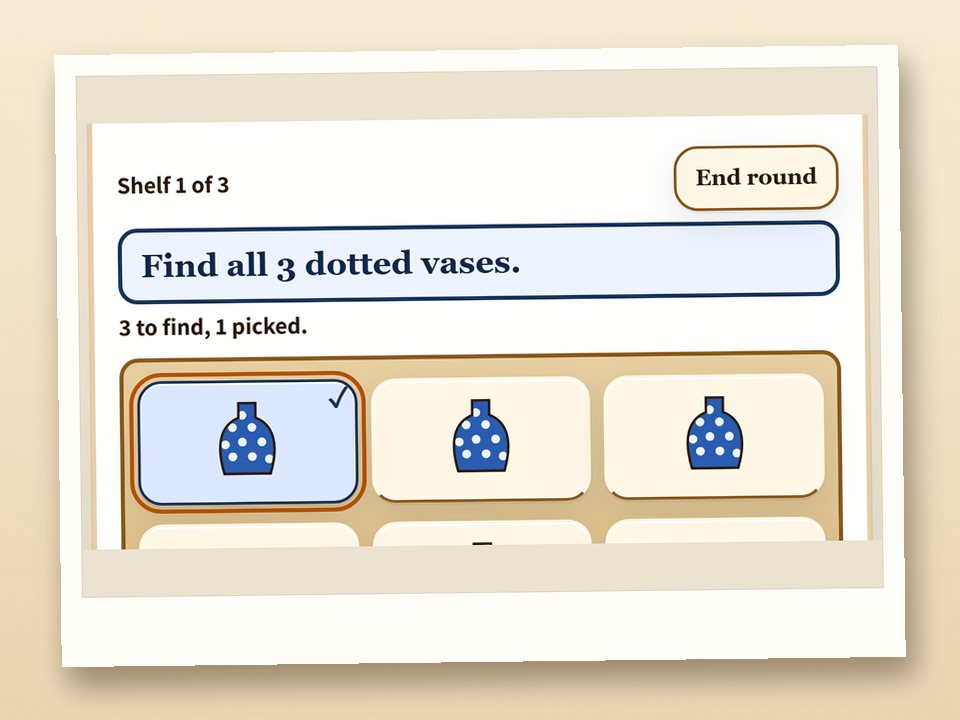
Find the objects that match one clear rule on a calm shelf.
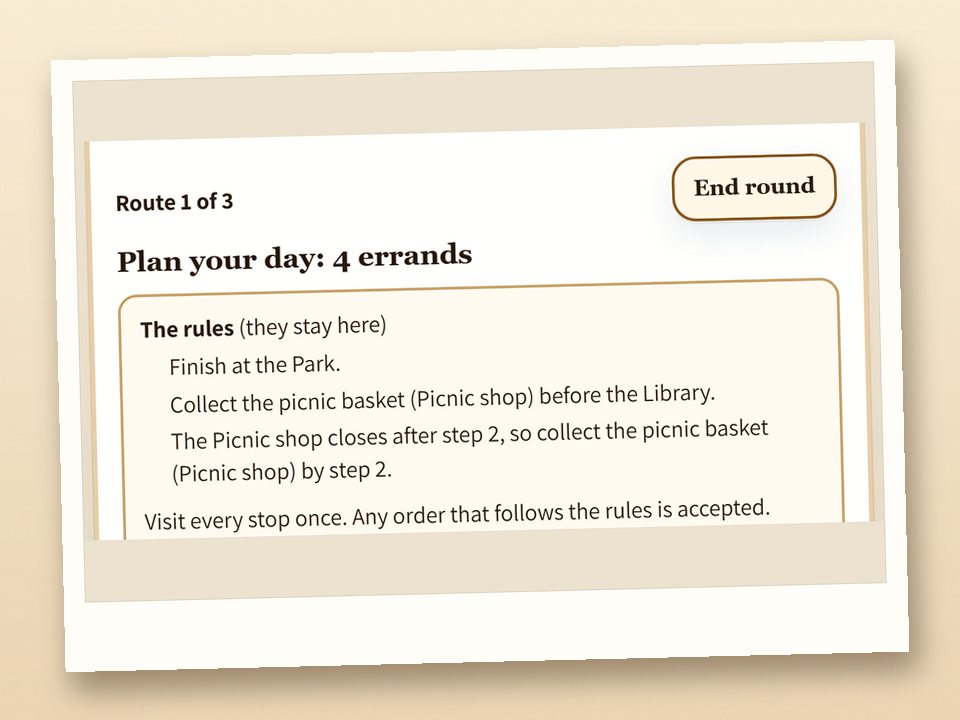
Plan a few errands in a made-up town, or follow a small map.